

Key Takeaways
Our Verdict
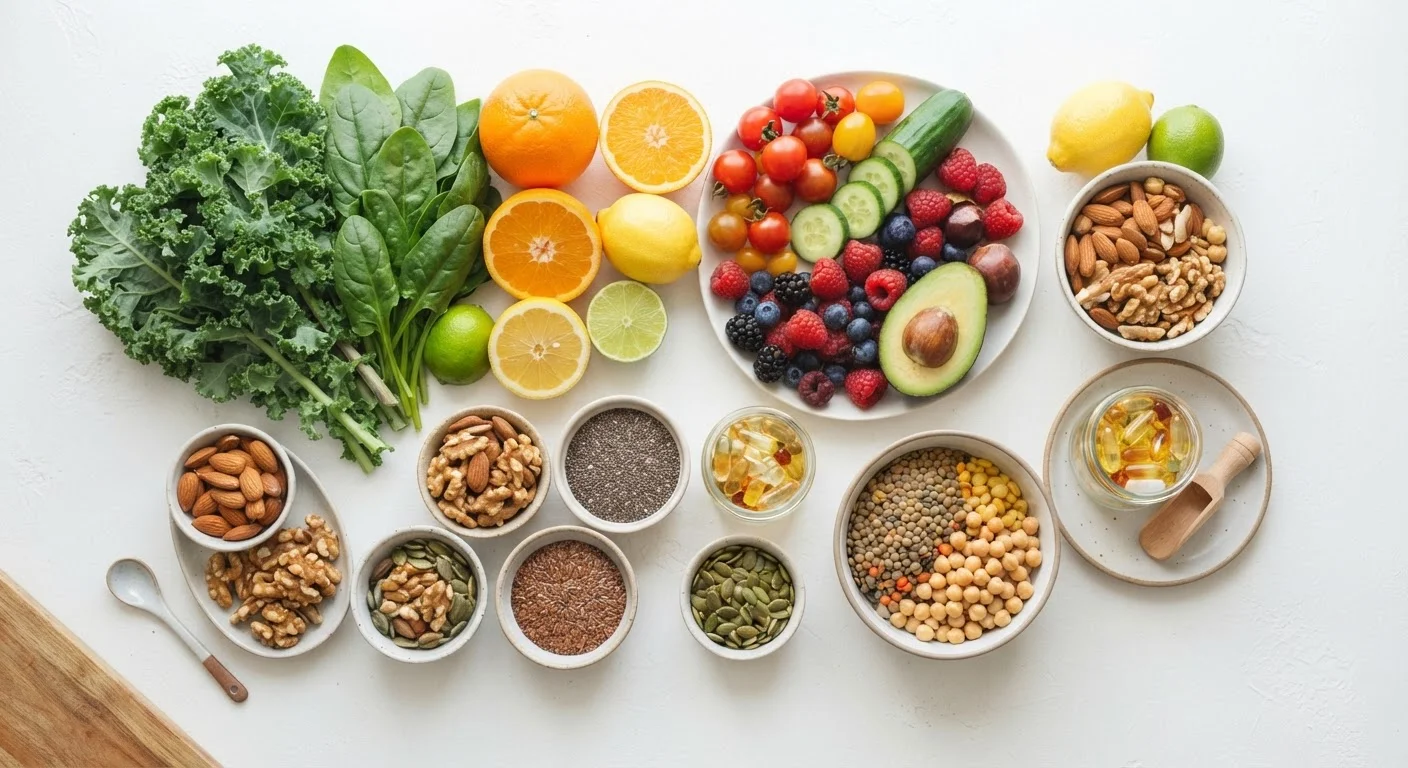
Whole foods remain the gold standard for obtaining most nutrients because they deliver a complex matrix of compounds that work synergistically - something a pill cannot replicate. Supplements are most justified when a documented deficiency exists, dietary access is genuinely limited, or a specific life stage creates an elevated need. Neither approach is universally right for everyone.
| Best for | Recommended |
|---|---|
| Most generally healthy adults without documented deficiencies | Whole Foods |
| Those with confirmed deficiencies or elevated needs (e.g., pregnancy, strict vegan diets) | Targeted Supplements |
| People with dietary restrictions limiting entire food groups | Targeted Supplements |
| Anyone seeking to improve overall diet quality and long-term health | Whole Foods |
Why Food Has a Structural Advantage
Nutrients in whole foods rarely travel alone. A piece of salmon delivers omega-3 fatty acids, but also protein, selenium, and B vitamins - all within a biological matrix that influences how the body absorbs and uses each compound. Spinach provides iron alongside vitamin C, which naturally enhances iron absorption in the same meal. This built-in synergy is sometimes called the "food matrix effect," and it helps explain why nutritional research consistently finds stronger associations between dietary patterns and health outcomes than between individual isolated nutrients and those same outcomes.
Supplements, by design, isolate one or a handful of compounds and deliver them in concentrated form. That can be exactly what's needed in certain circumstances - but it bypasses the complex packaging that evolution and food culture developed over millennia. For a deeper look at how whole grains illustrate this principle, see what changes when grain is processed.
Build Variety Before Reaching for a Pill
Before adding a supplement, it is worth auditing dietary variety over a typical week. Rotating through different vegetables, proteins, and whole grains often closes nutritional gaps more effectively - and more safely - than adding individual supplements. Tools like nutrition tracking apps can surface patterns worth discussing with a healthcare provider.
When Supplements Fill a Real Gap
Despite the advantages of food, there are well-documented situations where dietary intake alone is insufficient or impractical. The following examples reflect current nutritional science and public health guidance:
- Vitamin D: Few foods contain meaningful amounts, and many Americans - particularly those in northern latitudes or who spend limited time outdoors - have insufficient blood levels. Public health bodies widely support supplementation for those at risk.
- Vitamin B12: Found almost exclusively in animal products, B12 is a genuine concern for people following strict plant-based diets. A deficiency develops slowly but can cause serious neurological harm. See the trade-offs of plant-based eating for more context.
- Folate in pregnancy: Neural tube development occurs very early in pregnancy, often before a person knows they are pregnant. Medical guidance consistently recommends folic acid supplementation for those who could become pregnant.
- Iron: Needs vary significantly by age, sex, and health status. Iron supplementation is not appropriate for everyone - it requires confirmed need.
| Whole Foods | Dietary Supplements | |
|---|---|---|
| Nutrient complexity | Delivers multiple nutrients in natural matrix | Isolated or limited compound range |
| Fiber content | Significant in plant foods | Absent in most supplements |
| Toxicity risk | Very low from food sources alone | Possible with fat-soluble vitamins at high doses |
| Addressing deficiency | May be insufficient for some conditions | Effective when dose-matched to confirmed need |
| Phytonutrient delivery | Rich and diverse in whole plant foods | Limited; science is still catching up |
| Cost | Variable; whole foods can be affordable | Adds ongoing out-of-pocket expense |
| Regulatory oversight | N/A - standard food safety rules apply | Less rigorous than pharmaceutical drugs |
If you are considering supplements, starting supplements for the first time offers a practical framework for assessing your needs with a healthcare provider.
What Supplements Cannot Replace
No supplement currently on the market replicates dietary fiber - and most Americans already fall well short of recommended intake. Fiber supports digestive health, blood sugar regulation, and cardiovascular function through mechanisms that depend on gut bacteria, physical bulk, and fermentation in the colon. Fiber is one nutrient where food truly has no substitute.
Phytonutrients - the thousands of biologically active plant compounds such as polyphenols, flavonoids, and carotenoids - are another category where supplementation is far behind the science. Research on isolated phytonutrient supplements has produced mixed results, while diets rich in whole plant foods consistently show benefits. The full picture almost certainly involves the interplay of hundreds of compounds rather than any single one.
More Nutrients Is Not Always Better
Supplements can push intake above safe upper limits, particularly for fat-soluble vitamins and minerals like iron and zinc. Unlike excess water-soluble vitamins, which are generally excreted, fat-soluble nutrients accumulate in tissue and can cause toxicity over time. Always consult a healthcare provider before starting a supplement, especially if you already take a multivitamin or multiple individual products.
There is also the question of excess. Fat-soluble vitamins (A, D, E, and K) accumulate in the body and can reach harmful levels from supplementation in ways that dietary intake rarely causes. More of a vitamin is not always better, and tolerable upper limits exist for good reason. Understanding how fat-soluble and water-soluble vitamins differ helps clarify where those risks are concentrated.
Making a Practical Decision
The most useful question is not "should I take supplements?" but rather "do I have a specific, identified need that food alone cannot meet?" That distinction matters because supplements are not a nutritional safety net for a poor diet, and they are not without risk. Evaluating any supplement before adding it to your routine involves checking for third-party testing, understanding ingredient sourcing, and knowing how to read labels - see our guide on reading supplement labels without getting lost.
A registered dietitian or physician can order blood work to identify actual deficiencies rather than relying on guesswork. This approach avoids both under-supplementing (missing a genuine gap) and over-supplementing (creating toxicity risk or unnecessary expense). For anyone taking prescription medications, some supplement-drug combinations carry real risks worth discussing with a provider before starting anything new.
Ultimately, a varied diet built around whole foods - vegetables, fruits, legumes, whole grains, lean proteins, and healthy fats - provides most adults with the nutrients they need. Supplements work best as a targeted tool guided by professional assessment, not as a first resort.
This article is for general informational purposes only and does not constitute medical or nutritional advice. Consult a qualified healthcare professional for guidance specific to your health needs.