

Key Takeaways
Summary
22 items · 30-60 minutes once a week
Why a Weekly Prep Session Changes Everything
Most weeknight cooking struggles don't happen at the stove - they happen earlier, when you're staring into the fridge at 6 p.m. with no plan. A structured weekly prep session solves that problem before it starts.
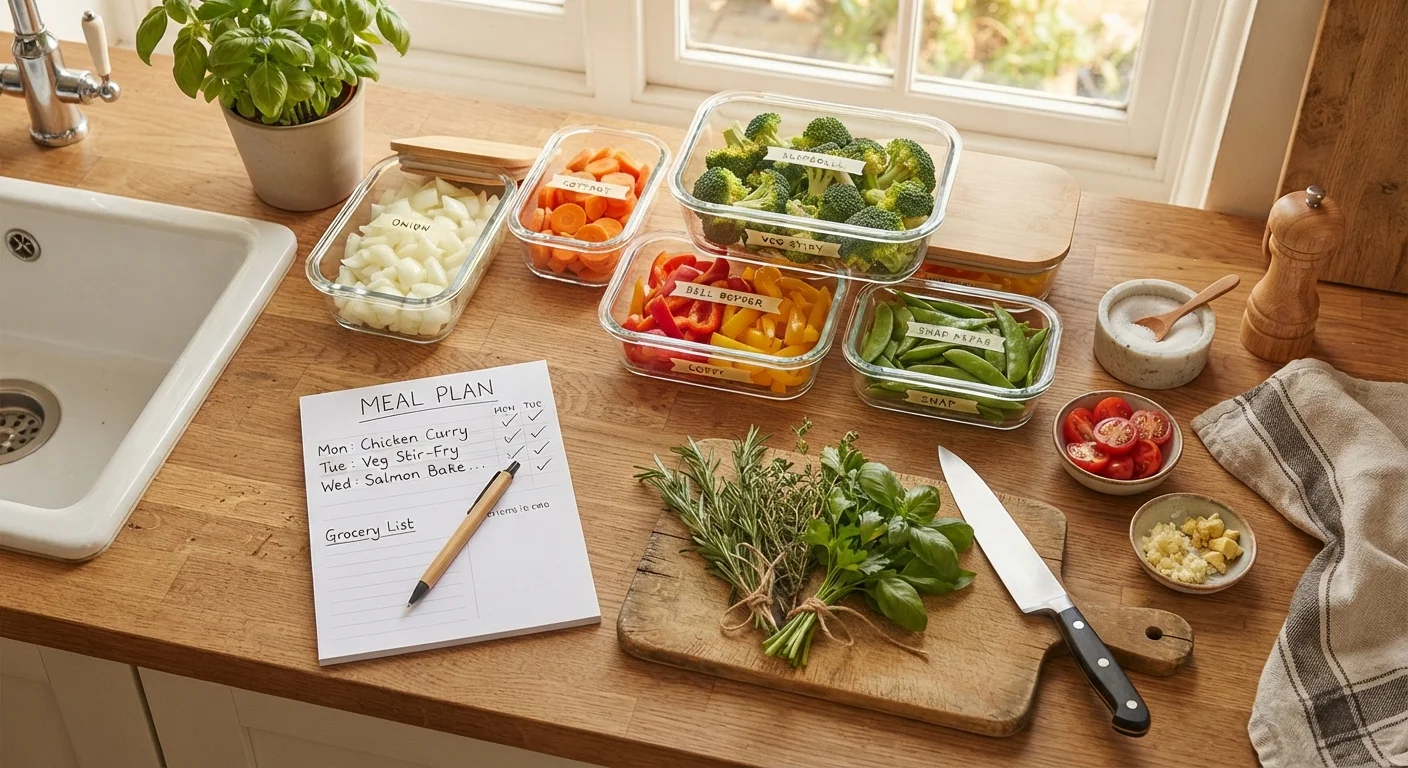
This checklist walks you through everything to do once a week - typically on a Sunday or whenever your schedule allows - so that cooking on busy nights becomes a matter of assembly rather than effort. Think of it as doing the hard work when you have the time, so future-you can coast.
If you want to go even deeper on the philosophy behind preparation, our guide on mise en place in a home kitchen explains why prepping before cooking is a habit worth building at any skill level.
Plan Your Meals
Organize Your Fridge and Pantry
Wash and Prep Produce
Cook Batch Staples
Set Up for the Week
What You'll Need Before You Start
You don't need a professional kitchen to pull this off - just a few reliable tools and some basic containers. Having the right equipment on hand makes the prep session itself faster and less frustrating.
Airtight food storage containers
Keep prepped vegetables, cooked grains, and batch proteins fresh in the fridge throughout the week.
Chef's knife and cutting board
Essential for efficiently chopping, dicing, and prepping all produce during your session.
Sheet pan
Used for batch-roasting vegetables with minimal hands-on time.
Large pot
For cooking big batches of grains, pasta, beans, or soups that will last several days.
Masking tape and a marker
Label containers with contents and the date prepped so nothing gets forgotten or mistaken.
Kitchen scale
Useful for portioning proteins or ingredients precisely when following specific recipes.
If you're unsure which tools are genuinely worth keeping in your kitchen, our rundown of kitchen equipment that actually earns its counter space can help you cut through the clutter.
Making the Most of Your Prep Time
Once your checklist is in motion, a few habits will help the session run smoothly. Start with tasks that take the longest - roasting vegetables or cooking grains - then use that hands-off time to handle quicker jobs like washing greens or portioning snacks.
Don't Prep Too Far Ahead
Most cut vegetables stay fresh in the fridge for 3-5 days, and cooked grains and proteins are generally good for 4-5 days when stored properly in airtight containers. Prepping more than you'll realistically use leads to waste rather than savings. When in doubt, prep the components that take the longest and leave quick-cooking items for the night of.
Sharpening your knife skills also pays dividends here. Faster, more confident chopping makes prep feel less like a chore. Our guide to knife skills every home cook should know covers the basics that make prep faster and safer.
Once your prep routine is solid, you can layer in more strategies for eating well throughout the week. Our article on eating well on a tight schedule offers practical approaches that pair naturally with weekly prep. And before you cook any specific recipe, it also helps to read through the recipe first - a small habit that prevents most kitchen mistakes.
Food Safety Applies to Meal Prep Too
Batch-cooked foods need to cool to room temperature before going into the fridge - but don't leave them out for more than two hours, as this enters the temperature range where bacteria multiply quickly. Store cooked proteins and grains separately, and when reheating, make sure food reaches a safe internal temperature (165°F for most cooked proteins). If something smells off or has been in the fridge longer than five days, err on the side of discarding it.