

Key Takeaways
Reduces stress during the active cooking phase
When every ingredient is prepped and within reach, you can focus on technique and timing rather than multitasking prep and cooking simultaneously.
Lowers the risk of burning or overcooking
Many cooking mistakes happen when a cook steps away from the stove to find an ingredient. Prepping everything first keeps you present and attentive.
Improves accuracy and consistency
Measuring spices and portioning ingredients before the heat is on means you're less likely to eyeball incorrectly under pressure or add something twice.
Makes cooking genuinely more enjoyable
Cooking from a state of calm rather than chaos tends to feel more like a skill and less like a chore - which matters for building a lasting habit.
Helps you learn recipes faster
Physically handling and organizing each ingredient cements your understanding of the dish's structure, making it easier to cook from memory over time.
Adds prep time before cooking begins
For simple meals, fully prepping everything first can feel like unnecessary overhead - especially on busy evenings when you just want dinner on the table.
Creates more dishes and cleanup
Using prep bowls and extra utensils means more to wash afterward. For single-ingredient dishes, this trade-off may not feel worth it.
Can feel rigid for intuitive or improvisational cooks
Some cooks prefer a looser, adaptive style - deciding amounts as they go. A strict mise en place approach can feel constraining for that cooking personality.
Requires counter space not everyone has
Laying out multiple prep bowls assumes a reasonably clear workspace. In smaller kitchens, this requires deliberate organization before prep even begins.
Our Verdict
Mise en place is one of the highest-leverage habits a home cook can build. The upfront investment of time pays off in fewer mistakes, calmer cooking, and more consistent results. That said, it works best when scaled to what the recipe actually demands - rigid full prep isn't necessary for a simple weeknight scramble.
Anyone learning to cook, tackling an unfamiliar recipe, or trying to make weeknight cooking feel less chaotic.
What Mise en Place Actually Means
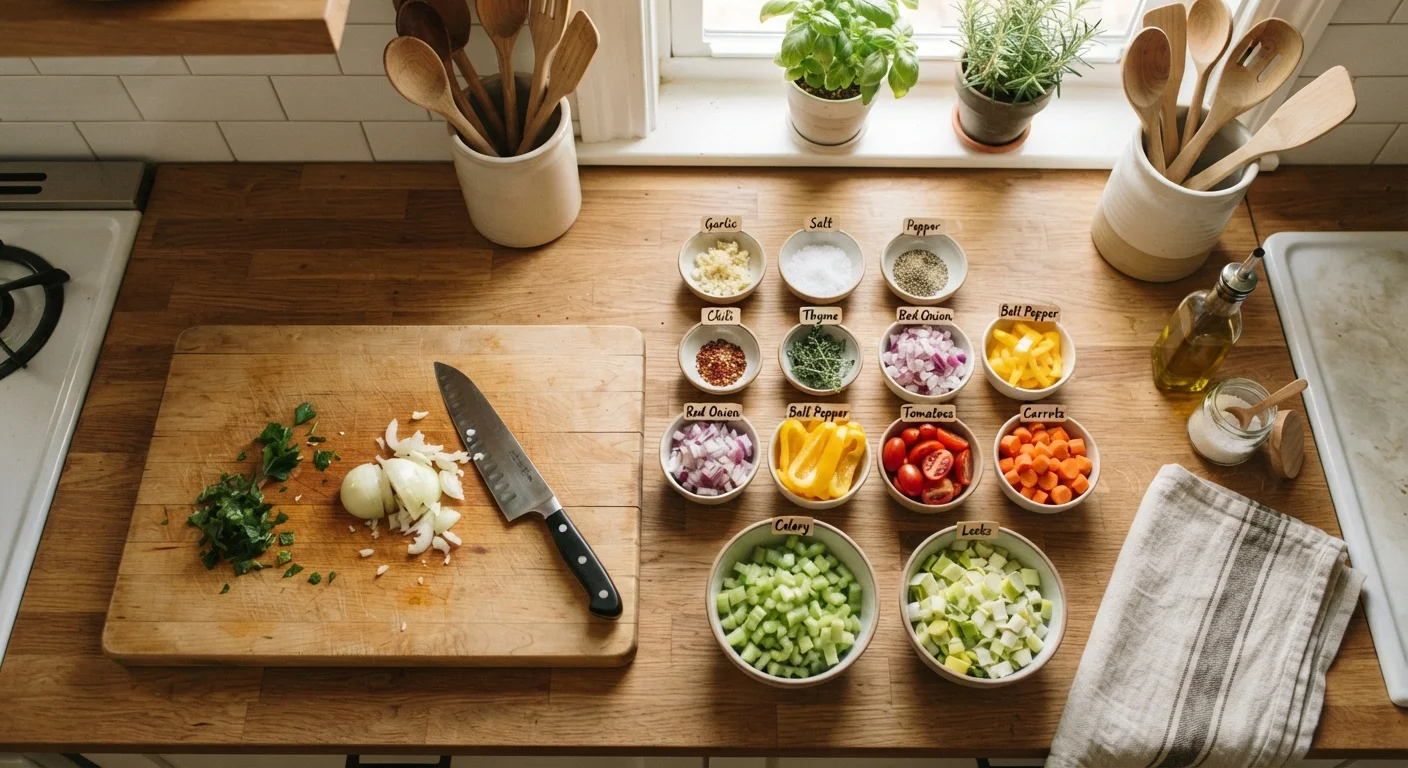
Mise en place is a French phrase that translates roughly to "everything in its place." In professional kitchens, it describes the practice of measuring, chopping, portioning, and organizing every ingredient before the first burner turns on. By the time a line cook starts cooking, the work of thinking has largely been done.
For home cooks, the concept is the same but the scale is smaller. It might mean dicing an onion and measuring out your spices before heating oil in the pan. It might mean reading through the whole recipe and pulling every ingredient out of the pantry before anything else happens. The core idea is simple: cooking goes better when you're not scrambling mid-process.
If you've ever burned garlic while searching for a lid, or added twice the salt because you lost your place in a recipe, you've already felt the problem that mise en place solves. Pair this habit with reading a recipe before you start cooking, and you'll remove most of the friction that causes things to go wrong.
The Real Advantages of Prepping Ahead
The benefits of mise en place go beyond organization for its own sake. They change the actual experience of cooking.
Reduces stress during the active cooking phase
When every ingredient is prepped and within reach, you can focus on technique and timing rather than multitasking prep and cooking simultaneously.
Lowers the risk of burning or overcooking
Many cooking mistakes happen when a cook steps away from the stove to find an ingredient. Prepping everything first keeps you present and attentive.
Improves accuracy and consistency
Measuring spices and portioning ingredients before the heat is on means you're less likely to eyeball incorrectly under pressure or add something twice.
Makes cooking genuinely more enjoyable
Cooking from a state of calm rather than chaos tends to feel more like a skill and less like a chore - which matters for building a lasting habit.
Helps you learn recipes faster
Physically handling and organizing each ingredient cements your understanding of the dish's structure, making it easier to cook from memory over time.
One underrated benefit: mise en place makes you a better decision-maker at the stove. When you're not hunting for an ingredient or rushing to chop something, you can pay attention to what's actually happening in the pan - whether the onions need more heat, whether the sauce is reducing too fast. That attentiveness is where cooking skill really develops.
Good knife work makes prep faster and more consistent. Our guide to knife skills every home cook should know covers the foundational techniques that make the prep stage feel less like a chore.
The Honest Downsides
Mise en place isn't without real trade-offs, and it's worth being upfront about them.
Adds prep time before cooking begins
For simple meals, fully prepping everything first can feel like unnecessary overhead - especially on busy evenings when you just want dinner on the table.
Creates more dishes and cleanup
Using prep bowls and extra utensils means more to wash afterward. For single-ingredient dishes, this trade-off may not feel worth it.
Can feel rigid for intuitive or improvisational cooks
Some cooks prefer a looser, adaptive style - deciding amounts as they go. A strict mise en place approach can feel constraining for that cooking personality.
Requires counter space not everyone has
Laying out multiple prep bowls assumes a reasonably clear workspace. In smaller kitchens, this requires deliberate organization before prep even begins.
You Don't Have to Prep Everything
Full mise en place - every ingredient measured and portioned - makes sense for baking, multi-component dishes, or anything with fast-moving steps. For simpler recipes, a partial approach works fine: prep only what can't wait, and keep the rest close at hand. The goal is awareness and readiness, not a perfectly staged cooking show.
For everyday weeknight cooking, a strict full mise en place isn't always practical. A more realistic version - reading the recipe first, prepping anything that takes time, and organizing the counter before you heat anything - gets you most of the benefit with less overhead. Our weekly prep checklist offers a scaled-down version you can actually sustain.
How to Start Without Overhauling Your Routine
You don't need to adopt restaurant-style mise en place all at once. A few targeted habits build the same foundation:
- Read the full recipe first. Every step, every ingredient, every instruction. This alone prevents most kitchen surprises.
- Pull all ingredients before you prep. Discovering a missing ingredient after you've already started cooking is frustrating and avoidable.
- Prep the time-sensitive things first. If garlic burns in 30 seconds, have it ready before the oil goes in - not while you're fumbling with the press.
- Use small bowls or ramekins. You don't need professional equipment. A set of small prep bowls keeps portions organized and visible.
~80%
Of cooking errors occur before the stove is turned on
Culinary educators commonly observe that most home-cooking failures trace back to skipped reading or missing prep steps, not technique at the stove.
5-10 min
Typical upfront prep time for a weeknight meal
For most standard home recipes, a full mise en place adds roughly 5 to 10 minutes before cooking - time that's often recovered by smoother execution.
Think of mise en place less as a rigid rule and more as a mindset: the work you do before cooking determines how the cooking goes. For longer or more complex recipes, planning ahead with a prep checklist takes that thinking even further.