

Key Takeaways
Start here
What to Expect in Your First Year of Ownership
Next
Repairs Worth Learning How to Do Yourself
Then
Your Starter Toolkit
Important boundary
When to Call a Licensed Professional
Long game
Building Confidence Over Time
What to Expect in Your First Year of Ownership
The first year of homeownership is rarely quiet. Most new owners encounter a handful of issues within months: a toilet that runs constantly, a door that sticks, a slow drain, a small hole in the drywall. These aren't emergencies - but ignoring them lets minor problems become bigger ones.
The good news is that the most common first-year repairs are also among the most learnable. You don't need a contractor for a dripping faucet or a loose cabinet hinge. What you do need is a basic understanding of how your home works and a realistic sense of what's within your skill level. See our first-time owner's maintenance guide for a broader look at the upkeep responsibilities you'll be taking on.
Your Home Is Unique
Repair approaches can vary depending on your home's age, construction type, and local building codes. A fix that's straightforward in a newer home may be more complex in an older one with outdated materials or systems. When in doubt, consult a qualified professional before proceeding.
Repairs Worth Learning How to Do Yourself
These are the repairs that offer the best return on learning - frequent enough to be worth your time, manageable enough to be safe for a careful beginner.
- Running or leaking toilet. Usually caused by a worn flapper or a faulty fill valve. Replacement parts are inexpensive and the process requires no special tools.
- Patching drywall. Small holes from anchors, nails, or doorknobs are routine. For a thorough walkthrough, see our guide on patching drywall from small holes to large sections.
- Unclogging drains. A drain snake or plunger handles most slow or blocked drains without chemicals that can damage older pipes.
- Caulking and weatherstripping. Gaps around windows, doors, tubs, and sinks let in moisture and drafts. Recaulking is inexpensive and makes a measurable difference in comfort and water damage prevention.
- Replacing light switches and outlet covers. Swapping a cracked cover plate or a faulty light switch is low-voltage work most homeowners can handle - always turn off the circuit at the breaker first.
Practice on Low-Stakes Projects First
Before attempting a repair in a visible or critical area, practice the technique somewhere less conspicuous. Patch a hole inside a closet before you tackle a living room wall. This builds muscle memory and saves you from visible mistakes while you're still learning.
Your Starter Toolkit
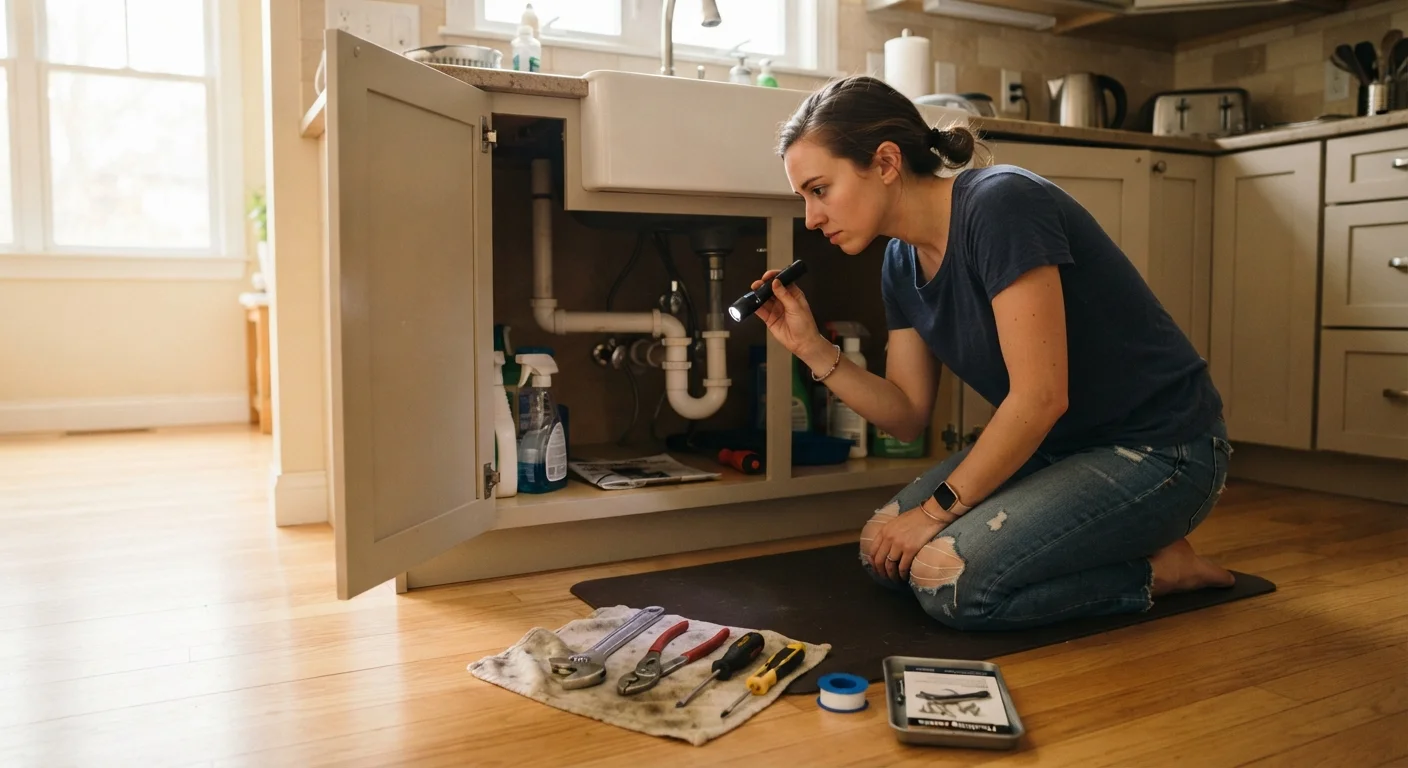
You don't need every tool in the hardware store. A compact, well-chosen set handles the vast majority of everyday repairs. At minimum, keep on hand: a claw hammer, flathead and Phillips screwdrivers (multiple sizes), an adjustable wrench, slip-joint pliers, a tape measure, a utility knife, and a cordless drill with basic bits.
Beyond that, add tools as specific needs arise rather than buying speculatively. Our homeowner's toolkit guide breaks down exactly what earns its space in the toolbox and what you can safely skip as a beginner.
Flapper
A rubber seal inside a toilet tank that controls water flow into the bowl. When it wears out, the toilet runs continuously.
Circuit breaker
A safety switch in your electrical panel that automatically cuts power to a circuit if it detects a fault or overload. Always switch off the relevant breaker before doing any electrical work.
Caulk
A flexible sealant applied around joints and gaps - such as where a tub meets the wall - to block water, air, and pests from getting through.
Load-bearing wall
A wall that supports the weight of the structure above it. Removing or modifying one without professional guidance can cause serious structural damage.
Drain snake
A flexible metal coil that is fed into a drain to break up or pull out a clog. More effective than chemical drain cleaners for most blockages.
Permit
Official authorization from your local government required for certain types of construction or renovation work. Unpermitted work can create problems when you sell the home or make an insurance claim.
When to Call a Licensed Professional
Knowing your limits is as important as knowing your skills. Certain categories of work carry serious risks when done incorrectly - and in many jurisdictions, they're legally required to be performed by licensed tradespeople.
- Electrical panel work. Adding circuits, replacing a breaker panel, or any work inside the main service panel should be handled by a licensed electrician.
- Gas lines. Any repair or modification to gas supply lines - including appliance connections in some jurisdictions - requires a licensed professional. Gas leaks can be fatal.
- Structural elements. Removing or modifying walls, beams, or foundations without engineering guidance can compromise your home's integrity.
- Main plumbing connections. Tying into the main supply line or sewer requires permits and licensed work in most areas.
For a candid assessment of where DIY typically goes wrong, see repairs homeowners commonly overestimate their ability to handle. And before starting any project, run through this pre-project safety checklist.
Never Skip the Permit Step
Skipping a required permit might seem like a time-saver, but unpermitted work can void your homeowner's insurance coverage for related claims and create legal complications when you sell. Always check with your local building department before beginning any significant repair or improvement.
Building Confidence Over Time
Competence in home repair is built the same way as any practical skill: through repeated, low-stakes practice. Start with the simplest version of a task - replace a single faucet washer before you tackle a full faucet installation. Patch a nail hole before you take on a larger drywall section.
Keep notes on repairs you've completed, parts you've replaced, and what worked. Over time, this becomes an informal maintenance history that helps you spot patterns and plan ahead. For a balanced look at what DIY genuinely saves - and where it introduces risk - see the real pros and cons of doing home repairs yourself.
When you're ready to move from repairs into planned improvements, renovation basics is a natural next step.