

Key Takeaways
Our Verdict
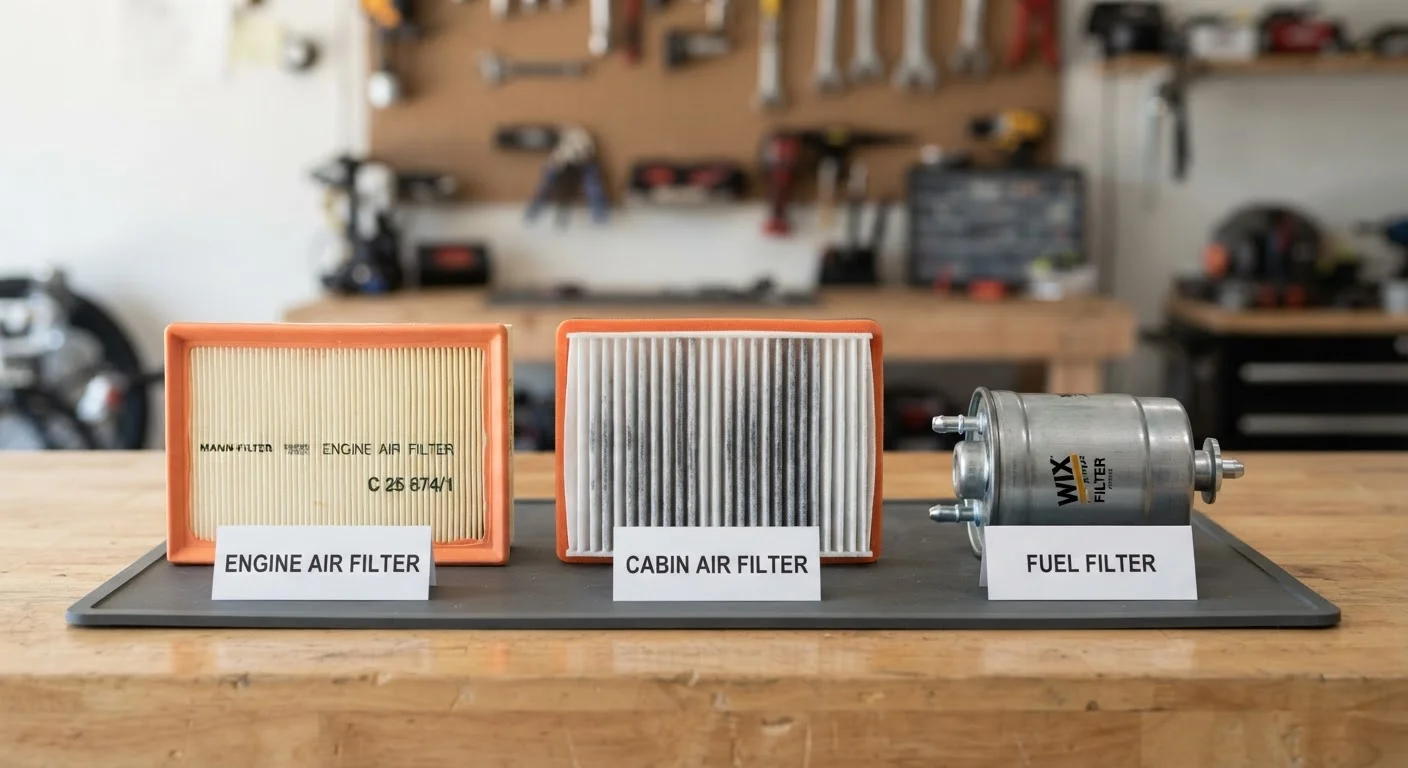
All three filters serve distinct purposes and none should be ignored. Engine air filters protect performance, cabin filters protect the people inside, and fuel filters protect your fuel system. Staying current on all three is one of the most cost-effective forms of routine car care.
| Best for | Recommended |
|---|---|
| DIY-minded drivers who want easy wins | Engine Air Filter & Cabin Air Filter |
| Drivers with fuel system concerns or high mileage vehicles | Fuel Filter (professional replacement recommended) |
| Allergy sufferers or those focused on interior air quality | Cabin Air Filter |
Why Your Car Needs Multiple Filters
Filters are among the most overlooked items in routine car maintenance - partly because they're out of sight and partly because they fail gradually rather than all at once. But your vehicle actually depends on three separate filters, each doing a specific job in a specific system. Confusing them or neglecting any one of them has real consequences for your car's health and your own.
This article breaks down what each filter does, how long it typically lasts, and what you'll notice when it's overdue for a change. For a broader look at how filters fit into your overall service routine, see your car's maintenance schedule explained.
| Engine Air Filter | Cabin Air Filter | Fuel Filter | |
|---|---|---|---|
| What it filters | Dust & debris entering engine | Pollen & particles in cabin air | Sediment & rust in fuel |
| System protected | Engine / combustion system | HVAC / passenger cabin | Fuel injectors / fuel pump |
| Typical replacement interval | 15,000-30,000 miles | 15,000-25,000 miles | 20,000-40,000 miles (varies widely) |
| DIY-friendly? | Yes - usually tool-free | Yes - usually tool-free | Often requires a mechanic |
| Warning signs when neglected | Poor MPG, rough idle, check engine light | Weak airflow, musty smell, poor defrost | Hard starts, engine hesitation, surging |
| Approximate parts cost | $10-$30 typically | $15-$35 typically | $20-$60+ depending on vehicle |
Engine Air Filter: Protecting Your Engine's Breathing
The engine air filter sits in the air intake system and screens out dust, dirt, pollen, and debris before air enters the engine. Internal combustion engines need a precise mixture of air and fuel to run efficiently - contaminated air disrupts that balance.
A clogged engine air filter restricts airflow, which can reduce fuel economy, cause rough idling, trigger a check engine light, and in severe cases, allow abrasive particles to enter the engine itself. Most manufacturers recommend replacing it every 15,000 to 30,000 miles, though drivers in dusty or rural environments may need to change it more frequently.
The good news: this is typically one of the easiest DIY maintenance tasks. On most vehicles, the air filter housing is accessible without tools, and the swap takes under ten minutes. Check your owner's manual for the exact specification - generic advice doesn't always match your vehicle's needs. Your owner's manual contains manufacturer-specific intervals that generic guides often get wrong.
Check the Filter in Good Light
Hold your engine air or cabin air filter up to a bright light source - daylight or a flashlight works well. If you can't see light passing through the filter medium, it's time for a replacement regardless of mileage. Visual inspection is a reliable quick check between scheduled service intervals.
Cabin Air Filter: Protecting the Air You Breathe
The cabin air filter filters the air coming through your car's HVAC system - the same air you and your passengers breathe while driving. It catches pollen, dust, mold spores, and other airborne particles before they circulate through the interior.
When the cabin filter becomes clogged, you may notice reduced airflow from your vents, musty odors, or worsening allergy symptoms during drives. In winter, a blocked filter can also impair defrost performance. Typical replacement interval: every 15,000 to 25,000 miles, or once a year for most drivers.
Like the engine air filter, cabin filters are usually DIY-accessible - often located behind the glove box or under the dashboard. The job usually requires no tools and takes about 15 minutes. If you've ever changed a home HVAC filter, the concept is similar; the same basic mistakes that trip up homeowners with HVAC filters - wrong sizing, skipped schedules - apply here too.
Fuel Filter: Protecting Your Fuel System
The fuel filter screens the gasoline or diesel flowing from the tank to the engine, catching rust particles, sediment, and other contaminants that could damage fuel injectors or the fuel pump. Unlike the other two filters, you won't see or easily access it without getting under the vehicle or removing components.
A failing fuel filter can cause hard starting, engine hesitation or surging, reduced power under load, and - if ignored long enough - damage to expensive fuel system components. Replacement intervals vary widely: older vehicles with inline fuel filters may need them changed every 20,000 to 40,000 miles, while many modern vehicles have filters integrated into the fuel tank assembly with much longer service intervals or replacement tied to fuel pump service.
Fuel System Work Requires Caution
Fuel lines operate under pressure and gasoline is highly flammable. Attempting to replace a fuel filter without proper training, tools, and a safely depressurized system can result in fuel spray, fire risk, or injury. Unless you have hands-on experience with fuel system repairs, have this job performed by a qualified mechanic.
Because fuel system work involves pressurized lines and flammable fuel, this is one job most drivers should leave to a qualified mechanic unless they have specific training and equipment. Your complete car maintenance guide can help you decide which tasks are DIY-appropriate for your skill level.
How to Stay on Top of All Three
The simplest approach is to check all three filters at the same time - during oil changes or annual inspections. A visual inspection of the engine air and cabin filters takes seconds; if they're visibly gray, compacted, or full of debris, replacement is overdue.
For fuel filters, follow the interval in your owner's manual rather than guessing. If your vehicle shows symptoms like hesitation or hard starts, a clogged fuel filter is worth investigating alongside other fuel system checks. Understanding what's under your hood also helps you catch related issues early - fluid condition and filter condition often tell the same story about how well a car has been maintained.
25%
Potential MPG loss from clogged air filter
The U.S. Department of Energy has noted that a severely restricted air filter can measurably reduce fuel economy on older carbureted vehicles; modern fuel-injected engines compensate differently but still suffer performance loss.
3-in-1
Filter types most cars rely on
Engine air, cabin air, and fuel filters all serve distinct protective roles - neglecting any one of them puts a different part of the vehicle at risk.
Staying current on all three filters is straightforward, affordable, and one of the best investments you can make in your vehicle's long-term reliability.