

Key Takeaways
Why Fluid Checks Belong in Every Driver's Routine
Most vehicle problems don't appear without warning - they develop gradually through fluid degradation, small leaks, or simple evaporation. Catching these early through routine checks can prevent breakdowns and protect systems that are costly to repair. This is one maintenance task that doesn't require mechanical experience or a lift - just a few minutes and a basic understanding of what you're looking at.
If you're new to vehicle ownership, this kind of hands-on familiarity is a natural complement to essential first-time owner maintenance tasks. And because every manufacturer has specific fluid requirements, pairing this habit with reading your owner's manual ensures you're using the right products for your exact vehicle.
What you will need
What Each Fluid Does - and What to Watch For
Before getting under the hood, it helps to understand what you're checking and why it matters:
- Engine oil lubricates moving metal parts, reduces friction, and carries heat away from the engine. Running low accelerates wear dramatically.
- Coolant (antifreeze) regulates engine temperature, preventing both overheating in summer and freezing in winter.
- Brake fluid transmits the hydraulic pressure from your brake pedal to the calipers that stop your wheels. It's hygroscopic, meaning it absorbs moisture over time, which lowers its boiling point and reduces effectiveness.
- Power steering fluid (in hydraulic systems) pressurizes the steering rack so turning the wheel doesn't require excessive effort.
- Windshield washer fluid keeps your visibility clear - the only fluid on this list with no mechanical consequence for the engine, but critical for safety.
A low brake fluid level in particular shouldn't be ignored. For a deeper look at how brake components work together, see our article on brake maintenance and what to watch for.
Make It a Monthly Habit
Pair your fluid check with a monthly tire pressure inspection - both take under 20 minutes combined and dramatically reduce the chance of a roadside surprise. A consistent schedule matters more than a perfect one.
Step-by-Step: Checking Each Fluid
Gather your tools and follow the steps below. The entire process typically takes 10-20 minutes for most vehicles.
Lint-free rags or paper towels
Wiping the dipstick clean between readings to get an accurate oil level.
Flashlight or phone torch
Illuminating hard-to-see reservoirs and fluid level markings in the engine bay.
Funnel
Adding fluid precisely to small reservoir openings without spilling onto engine components.
Owner's manual
Confirming the correct fluid specification and fill level for your specific vehicle.
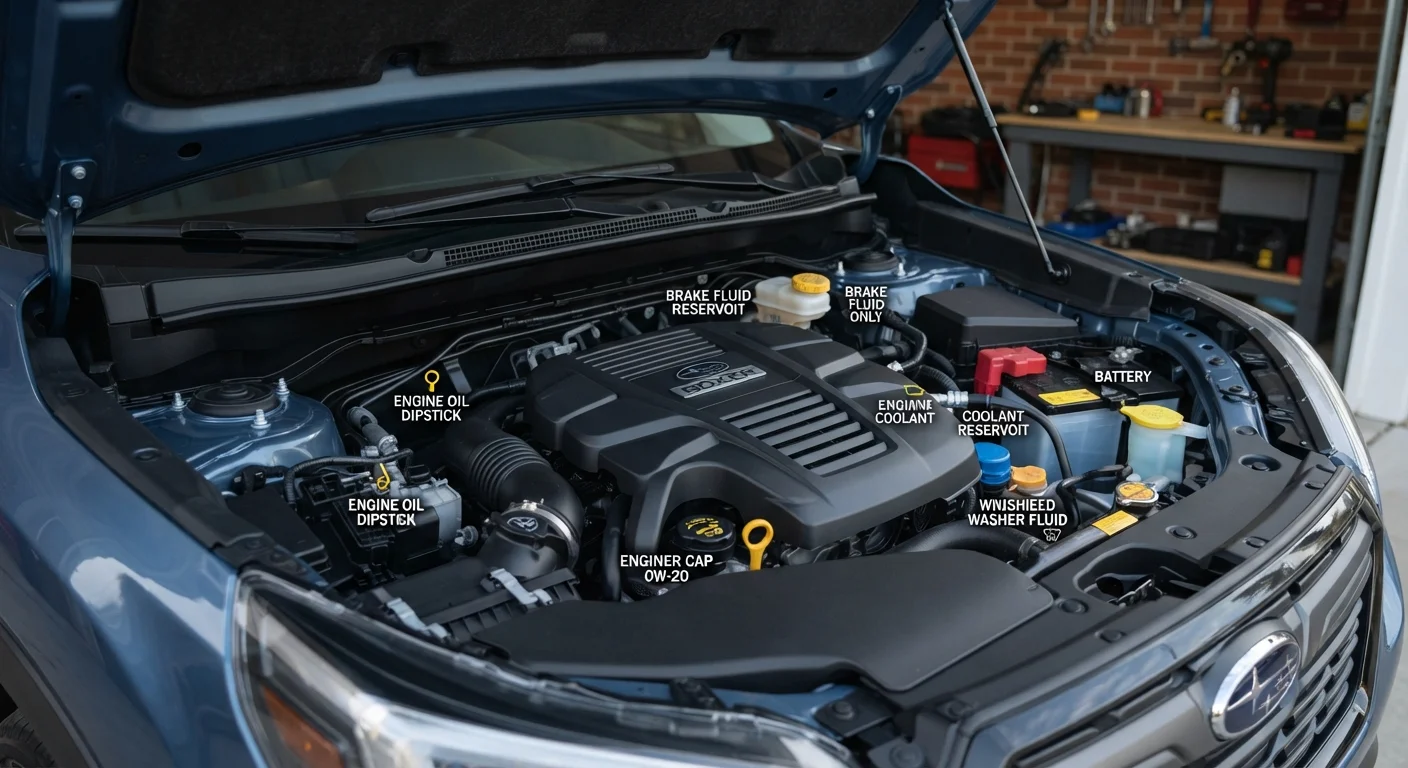
Park safely and let the engine cool
Pull onto a flat, level surface and turn off the engine. A sloped surface skews fluid readings. Give the engine at least 10-15 minutes to settle before checking oil - longer (30 or more minutes) before touching anything coolant-related. Pop the hood using the interior release lever, then locate and lift the secondary safety latch at the hood's front edge.
Check the engine oil
Locate the oil dipstick - it typically has a brightly colored handle (yellow or orange) and sits toward the front or side of the engine block. Pull it out fully and wipe it clean with a rag. Reinsert it all the way, then pull it out again and hold it horizontally. The oil film should fall between the two marks (MIN and MAX, or two dots). Healthy oil is amber to light brown; very dark or gritty oil is a signal to schedule a change soon.
Inspect the coolant reservoir
The coolant (antifreeze) reservoir is a translucent plastic tank, usually marked with MIN and MAX lines visible from the outside. You do not need to open the cap to check the level - read it through the tank wall. The fluid should be between the two lines and appear bright green, orange, pink, or blue depending on the type your vehicle uses. A low level could indicate a slow leak and warrants investigation.
Check the brake fluid
The brake fluid reservoir is a small, semi-translucent plastic container mounted on top of the brake master cylinder, usually near the firewall on the driver's side. Many reservoirs allow a visual level check without removing the cap. The fluid should be between MIN and MAX. Brake fluid naturally darkens with age; very dark fluid may need replacement. A consistently low level can point to worn brake pads or a leak - either warrants professional attention.
Check power steering fluid (if applicable)
Many newer vehicles use electric power steering and have no fluid reservoir at all - check your owner's manual first. If your car has hydraulic power steering, find the reservoir (often marked with a steering wheel icon) and check the level either via dipstick on the cap or visible MIN/MAX markings. Low power steering fluid can make steering heavy or cause pump whine.
Top off windshield washer fluid
The washer fluid reservoir is the one fluid you can safely add at any engine temperature. It's a larger plastic tank, typically marked with a windshield/wiper symbol. Use a premixed washer fluid rated for your climate - in freezing temperatures, a fluid with freeze resistance matters. Plain water is a short-term workaround but can freeze and crack the reservoir or lines in cold weather.
Never Open the Coolant Cap on a Hot Engine
Coolant systems are pressurized. Removing the radiator or coolant reservoir cap while the engine is hot can cause scalding fluid to eject suddenly. Always wait at least 30 minutes after driving before checking or topping off coolant.
When to Call a Mechanic Instead
Fluid checks are a diagnostic tool as much as a maintenance task. Any of the following should prompt a shop visit rather than a simple top-off:
- Oil that is milky, foamy, or has visible metal particles
- Coolant level that drops repeatedly between checks
- Brake fluid that is consistently low without a clear explanation
- Any fluid with a strong burning smell
- Visible puddles or stains under the parked vehicle
Topping off a leaking system buys time but doesn't fix the underlying problem. If you're weighing which tasks are safe to handle yourself versus when professional help is the smarter call, our guide on DIY maintenance vs. taking it to a shop walks through exactly that distinction. Dashboard warning lights are another useful signal - learn what they're communicating in our dashboard warning lights reference guide.
Mixing Fluid Types Can Cause Serious Damage
Using the wrong oil viscosity, coolant formula, or brake fluid grade can degrade seals, reduce performance, and void warranties. Check your owner's manual before adding any fluid - never assume one product works for all vehicles.