

| Red light urgency | Pull over safely and stop driving |
| Amber/yellow light urgency | Schedule service within 1-2 days |
| Flashing vs. steady check engine | Flashing = urgent; steady = schedule soon |
| Best diagnostic tool | OBD-II scanner reads stored fault codes |
| Authoritative reference | Your vehicle's owner's manual |
| Most ignored light | Tire pressure (TPMS) - often dismissed |
How Dashboard Warning Lights Are Organized
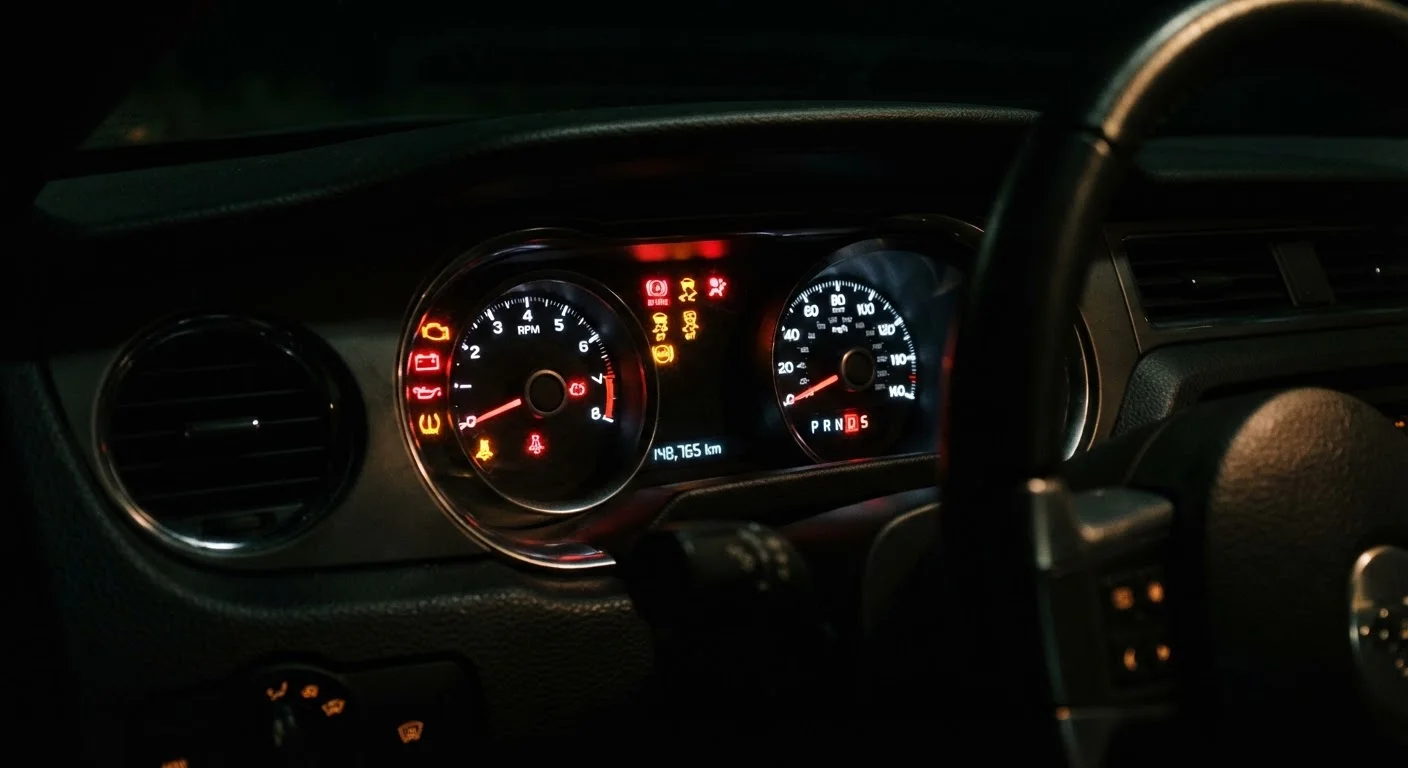
Dashboard warning lights follow a universal color-coding system designed to communicate urgency at a glance. Red means stop or act immediately - these lights indicate conditions that can cause serious vehicle damage or create a safety hazard. Amber or yellow signals caution: something needs attention soon, but you're not in imminent danger. Green and blue lights are simply informational, letting you know a system (like high beams or a turn signal) is active.
Understanding this framework alone helps you make faster, smarter decisions before you ever look up the symbol. When a red light appears, treat it seriously. When amber appears, investigate within a day or two. For a complete picture of what your specific vehicle's lights mean, your owner's manual is the authoritative source - as explained in our guide to reading your owner's manual.
| Red light urgency | Pull over safely and stop driving |
| Amber/yellow light urgency | Schedule service within 1-2 days |
| Flashing vs. steady check engine | Flashing = urgent; steady = schedule soon |
| Best diagnostic tool | OBD-II scanner reads stored fault codes |
| Authoritative reference | Your vehicle's owner's manual |
| Most ignored light | Tire pressure (TPMS) - often dismissed |
Common Warning Lights and What They Mean
Here's a reference breakdown of the lights drivers encounter most often:
- Check Engine (amber engine outline)
- One of the most misunderstood lights on any dashboard. It can be triggered by something as minor as a loose gas cap or as serious as a failing catalytic converter or misfiring engine. If it's steady, schedule a diagnostic scan soon. If it's flashing, reduce speed and see a mechanic the same day - a flashing light typically indicates active engine misfires that can damage the catalytic converter.
- Oil Pressure (red oil can)
- This is a pull-over-now light. Low oil pressure means your engine's moving parts may not be getting adequate lubrication. Continued driving can cause irreversible engine damage within minutes. Stop safely, shut off the engine, and check the oil level before proceeding. See how to check your engine oil and other fluids for a plain-language walkthrough.
- Battery (red battery outline)
- Indicates the charging system isn't maintaining the battery's charge while driving. The alternator, battery, or a related cable is likely the culprit. Drive directly to a shop if possible - your car may stall once the remaining charge is depleted.
- Coolant Temperature (red thermometer in waves)
- Your engine is overheating. Pull over safely as soon as possible, turn off the engine, and do not open the radiator cap while the engine is hot. Overheating can warp cylinder heads and cause expensive damage.
- Tire Pressure (amber horseshoe with exclamation)
- One or more tires are significantly underinflated. Check pressures when tires are cold. Driving on low tires affects handling, fuel economy, and tire lifespan. This light will also trigger if a tire is overinflated on some systems.
- Brake System (red circle with exclamation or BRAKE)
- Could indicate the parking brake is engaged, low brake fluid, or a fault in the braking system. If the parking brake is off and the light remains on, have it inspected immediately - brake failure is a serious safety risk.
- Traction Control / Stability Control (amber car with squiggly lines)
- If this flashes briefly during acceleration or cornering, the system is doing its job managing wheel spin. If it stays on, the system may be deactivated or malfunctioning.
- Service Required / Maintenance Due (amber wrench or spanner)
- A mileage-triggered reminder, not an emergency. It means your vehicle has reached an interval for an oil change or other scheduled service. Consult your car's maintenance schedule to understand what's due.
OBD-II Diagnostic Code
A standardized fault code stored by your car's onboard computer when it detects a problem. These codes are read with a scan tool and help mechanics (or drivers) identify exactly which system triggered a warning light.
Catalytic Converter
An emissions control device in the exhaust system that converts harmful combustion byproducts into less harmful gases. Engine misfires can overheat and destroy it quickly.
Alternator
A generator driven by the engine that recharges the battery and powers the car's electrical systems while the engine is running. A failing alternator triggers the battery warning light.
ABS (Anti-lock Braking System)
A safety system that prevents wheel lockup during hard braking, helping the driver maintain steering control. An ABS warning light means the system may be inactive, though standard braking still functions.
Traction Control System (TCS)
An active safety system that reduces engine power or applies braking to individual wheels when it detects wheel spin, helping maintain grip on slippery surfaces.
TPMS (Tire Pressure Monitoring System)
A sensor-based system that monitors air pressure in each tire and alerts the driver when one or more tires fall significantly below the recommended pressure.
Pull Over Now vs. Schedule a Visit
The single most important skill is knowing when a light demands immediate action versus when you can safely drive to a shop within the next few days.
Stop driving immediately (red lights or flashing amber): Oil pressure warning, coolant temperature warning, flashing check engine light, brake system warning (with parking brake released), or any red light you don't recognize.
Schedule a shop visit within 24-48 hours: Steady check engine light, battery light, ABS warning, transmission temperature warning.
Address within a week: Tire pressure light, service/maintenance reminder, traction control fault.
When in doubt - especially with red lights - err on the side of caution. Driving another few miles to avoid being stranded can turn a fixable problem into a major repair. For a broader view of which maintenance tasks you can handle yourself versus when to call in a professional, see DIY car maintenance vs. taking it to a shop.
This article is for general informational purposes only. Warning light behavior can vary by make, model, and year. Always consult your vehicle's owner's manual and a qualified mechanic for diagnosis and repair decisions specific to your car.