

Key Takeaways
Why the Owner's Manual Gets Ignored - and Why That's a Problem
Most drivers glance at the owner's manual once, tuck it in the glovebox, and never open it again. It's understandable - the average manual runs 300 to 500 pages and reads like a technical reference document. But buried inside that book are the specifications your vehicle was engineered around: the exact oil grade, the correct transmission fluid, the actual tire pressure, and the precise intervals at which each system needs attention.
Generic maintenance advice - like blanket oil change mileage figures or universal fluid recommendations - is designed to work across many vehicles, which means it's tailored to none of them. Your manufacturer's engineers tested your specific engine, transmission, and cooling system under controlled conditions to arrive at the numbers in that manual. Following them faithfully is one of the simplest ways to protect your investment and maintain warranty coverage.
If you're new to car ownership, our guide for first-time car owners provides a solid starting point before diving into your manual's details.
What you will need
How to Read What You Find - and What to Do With It
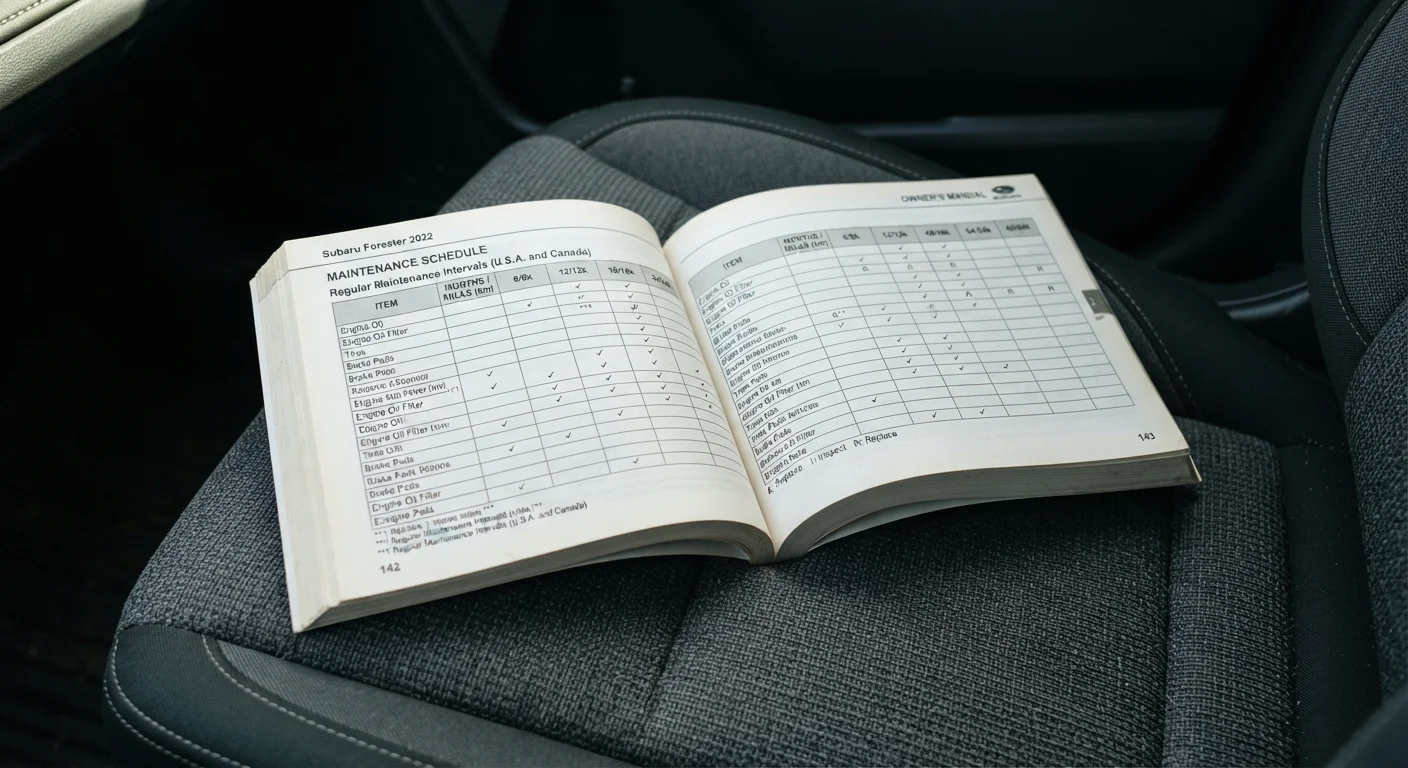
Once you've worked through the steps above and recorded your vehicle's key specifications, the goal is to make that information actionable. Keep a photo of the maintenance schedule on your phone, or create a simple note with your next three service milestones. When a shop recommends a service, cross-reference it against your manual - you'll be in a much stronger position to ask informed questions or push back if something doesn't align.
Make Your Manual Easy to Access
Download a PDF copy of your owner's manual and save it to your phone's cloud storage. This way, you can pull up fluid specs or service intervals anywhere - including at a parts store or repair shop. Most manufacturer websites offer free downloads by entering your vehicle's model year and trim level.
It's also worth noting that manufacturer recommendations reflect minimum standards under typical conditions. Driving habits that qualify as severe - towing, repeated short trips, dusty roads - may call for more frequent attention to certain systems. Our article on habits that wear out your car faster explains how everyday driving patterns affect wear rates beyond what any schedule can fully anticipate.
As your odometer climbs, maintenance priorities can shift as well. High-mileage vehicles have their own considerations that your original manual schedule may not fully address.
Don't Rely Solely on Shop Reminder Stickers
The oil change reminder sticker placed on your windshield by a service shop reflects that shop's recommendation - not necessarily your manufacturer's. Always verify the interval in your owner's manual. Using a shorter interval than necessary isn't harmful, but it does mean paying for service you may not need yet.