

Key Takeaways
Option A
Fat-Soluble Vitamins (A, D, E, K)
The long-term residents of your body's nutrient stores.
Best for: Sustained functions like vision, bone metabolism, immune defense, and blood clotting - released from storage as needed.
Option B
Water-Soluble Vitamins (B vitamins & C)
The daily commuters your body uses and flushes quickly.
Best for: Continuous metabolic processes - energy production, cell repair, and immune support - requiring regular replenishment from food.
If you're concerned about supplement safety and toxicity risk
Prioritize understanding Fat-Soluble Vitamins first
Because A, D, E, and K accumulate in tissue, excessive supplementation - especially without medical guidance - carries a real risk of toxicity over time.
If you're focused on daily energy, immunity, and consistent dietary habits
Focus on Water-Soluble Vitamins
B vitamins and vitamin C are not stored, so regular intake through whole foods directly supports day-to-day metabolic function.
If you follow a restrictive diet (vegan, low-fat, or limited sun exposure)
Discuss Fat-Soluble Vitamin status with a clinician
Low dietary fat intake or limited sun can impair absorption of vitamins D and K; a healthcare provider can assess whether dietary adjustments or supplementation are appropriate.
If you want to understand your multivitamin label
Learn both categories equally
Most multivitamins contain a mix of fat- and water-soluble vitamins, and knowing the difference helps you interpret doses and avoid inadvertent excess.
What Makes a Vitamin Fat-Soluble or Water-Soluble?
Every vitamin is classified by how it dissolves and moves through the body. Fat-soluble vitamins - A, D, E, and K - require dietary fat to be absorbed through the intestinal wall. Once absorbed, they travel via the lymphatic system and are stored in fatty tissue and the liver until the body calls on them. Water-soluble vitamins - the eight B vitamins (B1 through B12, including folate and biotin) and vitamin C - dissolve directly in water, enter the bloodstream quickly, and are filtered out by the kidneys when present in excess.
This solubility difference isn't just chemistry trivia. It shapes how often you need to consume each vitamin, how much your body can hold at any given time, and what happens when intake is either too low or too high.
| Criterion | Fat-Soluble (A, D, E, K) | Water-Soluble (B vitamins, C) |
|---|---|---|
| Dissolves in | Dietary fat | Water |
| Storage in body | Liver and fatty tissue | Minimal; excess excreted |
| Absorption pathway | Lymphatic system, needs fat | Direct into bloodstream |
| Frequency of replenishment | Less frequent (stored reserves) | Regular intake needed |
| Toxicity risk from excess | Higher - accumulates over time | Lower - kidneys clear surplus |
| Deficiency development speed | Slow (weeks to months) | Can occur faster without intake |
| Key dietary sources | Fatty fish, liver, dairy, eggs, oils | Whole grains, legumes, citrus, meat |
| Supplementation caution | High - upper limits matter | Moderate - generally lower risk |
Storage, Absorption, and Why It Shapes Your Risk
Because fat-soluble vitamins accumulate in the body, both deficiency and excess tend to develop gradually. Vitamin D deficiency, for example, can take months to manifest clinically - and similarly, overconsumption of preformed vitamin A (retinol) from supplements can build to harmful levels over weeks or months rather than days. This is why understanding tolerable upper intake limits is especially important for this group.
Water-soluble vitamins behave differently. Surpluses are typically excreted in urine within hours, which means the body has a built-in clearing mechanism. That said, it also means these vitamins need to be replenished consistently - often daily. Most people with varied diets get adequate water-soluble vitamins, though vitamin B12 can be a genuine concern for those who avoid animal products, since it's found almost exclusively in animal-derived foods.
~41%
U.S. adults with vitamin D insufficiency
According to data published in Nutrients (2018) using NHANES survey results, vitamin D insufficiency affects a substantial share of the U.S. population, illustrating how fat-soluble deficits can be widespread despite storage capacity.
~6%
U.S. adults deficient in vitamin C
The CDC's NHANES data has estimated that roughly 6% of American adults are vitamin C deficient - a water-soluble vitamin requiring consistent daily dietary intake.
B12
Most common water-soluble deficiency risk
Vitamin B12 deficiency is particularly prevalent among older adults and those following plant-based diets, according to the National Institutes of Health Office of Dietary Supplements.
For a practical food-by-food breakdown of where these vitamins appear in everyday eating, the Vitamins and Minerals practical reference is a useful companion resource.
Practical Implications for Supplements and Daily Eating
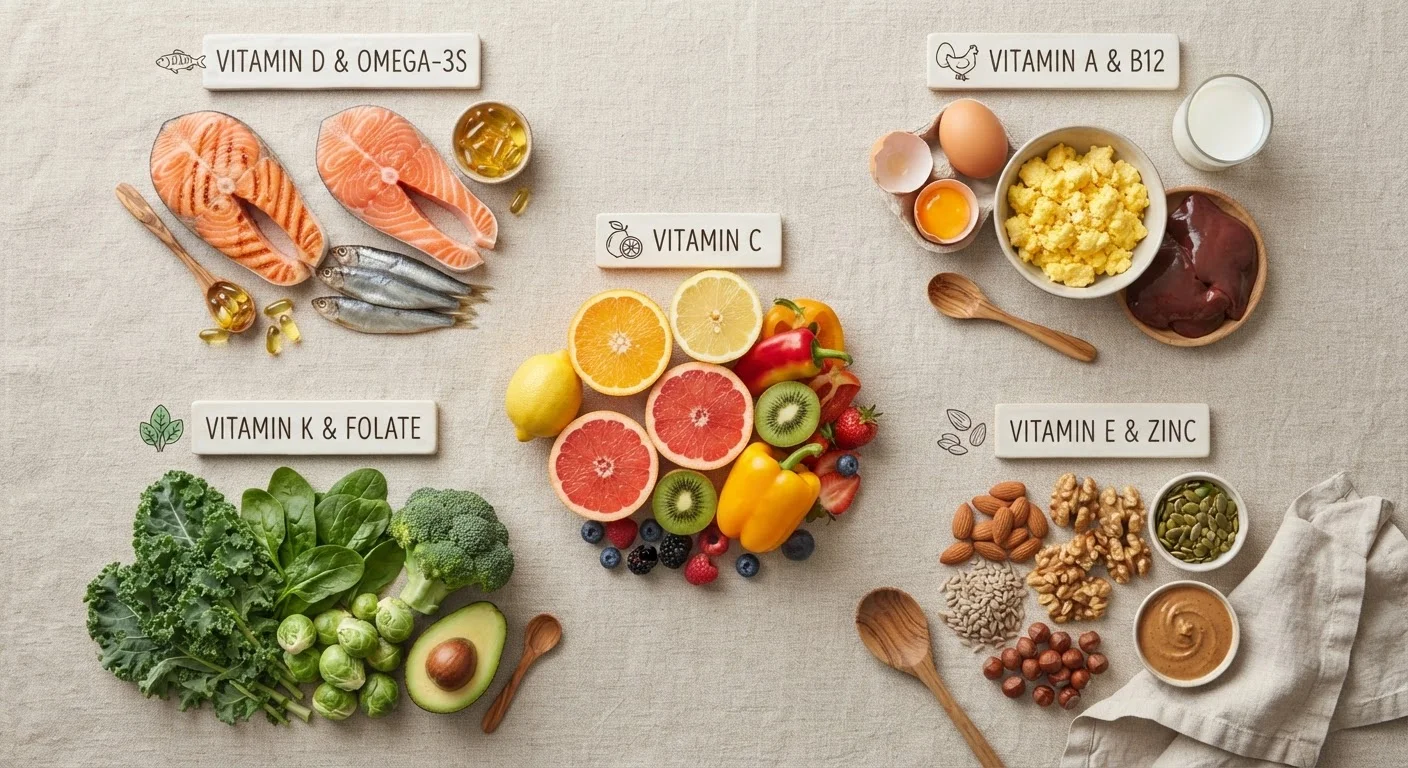
Understanding solubility helps decode supplement labels and everyday food choices. Fat-soluble vitamins are best absorbed when consumed with a meal containing some dietary fat - think vitamin D-rich salmon with olive oil, or leafy greens (a source of vitamin K) dressed with avocado. This is a key reason why extremely low-fat diets can sometimes impair absorption of these nutrients.
Water-soluble vitamins are more forgiving in terms of timing but demand regularity. Cooking and prolonged heat can degrade vitamin C and some B vitamins, so preparation method genuinely matters. If you're weighing whether food or supplements better serve your needs, the discussion in Whole Foods vs. Supplements offers balanced context on when a supplement might fill a genuine dietary gap versus when whole foods do the job more effectively.
Supplements Are Regulated Differently Than Drugs
Unlike prescription medications, dietary vitamin supplements in the U.S. do not require pre-market approval from the FDA to prove safety or efficacy. This means label claims and dosage accuracy can vary between products. For more context on how this regulatory distinction works, see how the FDA regulates supplements differently from drugs. Consulting a healthcare provider helps ensure any supplement you take is appropriate for your individual health profile.
If you take a multivitamin, note that it typically delivers both categories. What multivitamins cover and what they don't explains how the dose levels in combined products are generally formulated to stay within safe ranges for most adults - though individual needs can vary.
This article is for general informational and educational purposes only and is not a substitute for professional medical advice. Consult a qualified healthcare provider before making changes to your diet or supplement routine.