

| Number of core budget categories | 7-10 for most households |
| Housing cost guideline | No more than 30% of gross income (U.S. Department of Housing and Urban Development) |
| Recommended emergency fund size | 3-6 months of essential expenses (Consumer Financial Protection Bureau) |
| Americans living paycheck to paycheck | Approximately 60% (LendingClub/PYMNTS U.S. Consumer Survey, 2023) |
| Common budgeting framework | 50% needs / 30% wants / 20% savings & debt |
Why Categories Matter More Than Totals
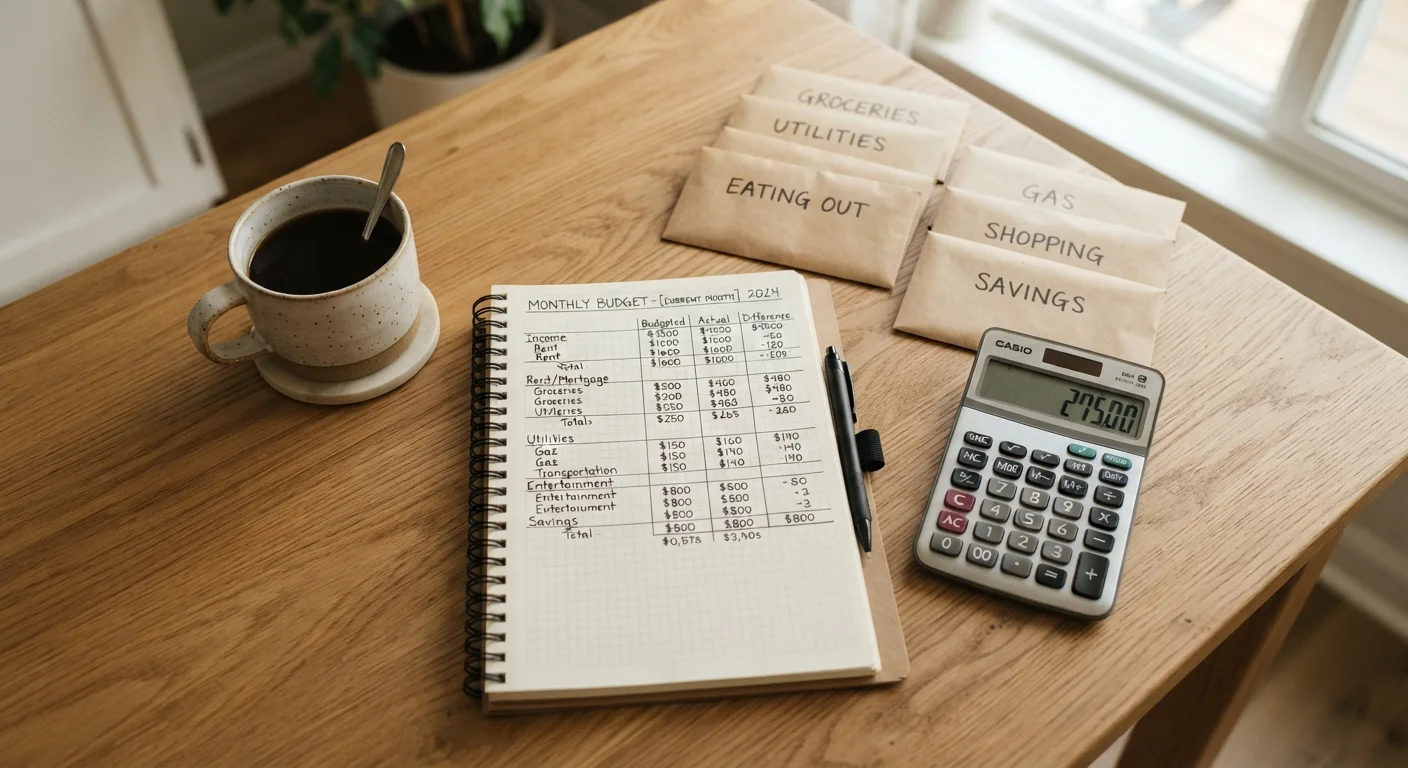
Most people know roughly how much they earn. Far fewer know where it actually goes. A budget that tracks only a total spending number misses the detail that makes change possible. Breaking spending into named categories forces clarity - you can see if housing is crowding out savings, or if dining out is larger than you assumed.
Categories also make your budget easier to adjust. When money gets tight, a labeled budget shows you immediately which areas have room to cut and which are essentially fixed obligations. For a structured approach to building this from scratch, see our monthly budgeting guide.
| Number of core budget categories | 7-10 for most households |
| Housing cost guideline | No more than 30% of gross income (U.S. Department of Housing and Urban Development) |
| Recommended emergency fund size | 3-6 months of essential expenses (Consumer Financial Protection Bureau) |
| Americans living paycheck to paycheck | Approximately 60% (LendingClub/PYMNTS U.S. Consumer Survey, 2023) |
| Common budgeting framework | 50% needs / 30% wants / 20% savings & debt |
The Core Categories Every Budget Needs
While every household is different, the following categories cover the expenses that appear in most American budgets. Use them as a starting checklist and adjust based on what applies to your life.
Fixed expense
A cost that stays the same amount each month, such as rent or a car loan payment. These are usually the easiest to budget for because they don't change.
Variable expense
A cost that fluctuates month to month, such as groceries, utilities, or gas. You can estimate these but should expect some variation.
Discretionary spending
Money spent on non-essential items like dining out, entertainment, or hobbies. This category is usually the most flexible when you need to cut back.
Sinking fund
A dedicated savings pool you build gradually to cover a known future expense - such as an annual insurance premium or holiday gifts - rather than paying it all at once.
Net income
Your take-home pay after taxes and other deductions. This is the actual amount available to allocate across your budget categories.
Emergency fund
A cash reserve set aside specifically for unexpected financial shocks, such as job loss or a major repair. Most guidance suggests three to six months of essential expenses.
Housing
Rent or mortgage payment, property taxes, homeowner's or renter's insurance, and HOA fees if applicable. Housing is typically the largest single category for most households.
Utilities and Home Services
Electricity, gas, water, trash pickup, internet, and phone service. These are largely fixed but can vary seasonally.
Food
Split this into groceries and dining out - they behave differently and the gap between them often reveals savings opportunities. For more on how spending choices add up, see where your money actually goes each month.
Transportation
Car payment, fuel, insurance, parking, tolls, and public transit passes. Maintenance and registration belong here too - though those are irregular costs worth planning for separately.
Healthcare
Health insurance premiums (if paid out of pocket), copays, prescriptions, dental, and vision. This category is easy to underestimate if you budget only for premiums and ignore out-of-pocket costs.
Debt Payments
Minimum payments on credit cards, student loans, personal loans, or any other debt beyond your mortgage. Tracking this category separately helps you see your total debt obligation at a glance. The Saving & Debt hub offers practical guidance on managing these balances over time.
Savings and Emergency Fund
Treat saving as a non-negotiable line item, not whatever's left over. This includes contributions to retirement accounts, an emergency fund, and any other savings goals. Even a small consistent amount builds meaningful progress.
Personal and Household
Clothing, cleaning supplies, toiletries, and other household goods. Easy to forget in a budget until a big purchase hits.
Entertainment and Discretionary
Streaming subscriptions, hobbies, recreation, and social spending. This is your most flexible category and a useful lever when you need to adjust. Understanding the line between wants and needs here matters - see wants vs. needs for a practical breakdown.
Childcare and Education
Daycare, school fees, tutoring, and extracurricular activities. For households with children, this can rival housing as a major cost driver.
This Is General Financial Information
The category breakdowns below are educational guidelines, not personalized financial advice. Every household's income, obligations, and goals differ. Consider consulting a licensed financial adviser or nonprofit credit counselor for guidance tailored to your situation.
Don't Forget Annual and Irregular Costs
Many budgets collapse not because of monthly overspending, but because irregular costs - car registration, annual subscriptions, home repairs - catch people off guard. Divide those annual totals by 12 and set that amount aside monthly. See our guide to irregular expenses for a full framework.
Putting Your Categories to Work
Once you have your categories, assign each one an amount based on your actual net income - not your gross salary. Add up all category totals and compare to your take-home pay. If spending exceeds income, you'll need to reduce something; if income exceeds spending, direct the surplus intentionally rather than letting it disappear.
Popular frameworks like the 50/30/20 rule offer a starting point for how to proportion these categories, but no formula fits every household. What matters most is that every dollar has a named destination before the month begins.
Over time, review your actual spending against your budget. Patterns that seem small monthly - a category that runs $40 over each month - add up to nearly $500 a year. Building the habit of regular reviews is what turns a budget from a one-time exercise into a durable financial tool. Our article on budgeting habits that hold up covers exactly that.
This article is for general informational purposes only and does not constitute personalized financial advice. Consult a qualified financial professional for guidance specific to your situation.