

Key Takeaways
Monthly Cash Flow
Monthly cash flow is the difference between the money coming into your household and the money going out over the course of a single month. When more comes in than goes out, you have a surplus. When more goes out than comes in, you have a deficit. Understanding this flow - not just your paycheck - is the starting point for any realistic budget.
Cash flow differs from net worth: it measures movement of money within a period, not the total value of your assets minus liabilities.
Why Most People Can't Answer This Question
Ask someone what they spend each month, and most will give you a rough number - often the figure they wish were true rather than what the data actually shows. Research consistently finds that people underestimate discretionary spending, particularly on food, entertainment, and small daily purchases. This isn't carelessness; it's how memory works. We remember the big bills and forget the $14 subscription or the four coffee runs.
The consequence is real: when income and spending feel roughly equal but savings never grow, something is being overlooked. Before you can build a workable plan, you need accurate numbers. That starts with understanding the structure of where money goes - not just the total.
~$300
Average monthly spending underestimated per household
Behavioral finance research consistently shows that self-reported spending estimates fall significantly short of what transaction data reveals, particularly in discretionary categories.
4 in 10
Americans who couldn't cover a $400 emergency
According to the Federal Reserve's Report on the Economic Well-Being of U.S. Households, a substantial share of adults would struggle to cover an unexpected $400 expense without borrowing or selling something.
$219
Average monthly subscription spend per U.S. consumer
Consumer research surveys have found that most people significantly underestimate their total monthly subscription costs when asked without reviewing statements.
The Three Types of Monthly Expenses
Every dollar you spend fits into one of three buckets, and each one requires a slightly different approach to track and manage.
Fixed Expenses
These are the same amount every month: rent or mortgage, car loan payment, insurance premiums. They're the easiest to track because they don't change. List them once and they become your reliable baseline.
Variable Expenses
These fluctuate month to month within a predictable category - groceries, gas, utilities, and dining out. You know they'll exist, but the amount shifts. Variable expenses are where most overspending hides, because a "normal" month feels fine until you look at the actual total.
Irregular Expenses
These are the budget killers most people miss: annual subscriptions billed once a year, car registration, medical copays, back-to-school supplies, holiday spending. They don't show up every month, so they feel like surprises - even when they're predictable. Dividing annual irregular costs by 12 and treating that amount as a monthly line item is one of the most practical things you can do for your cash flow. See our full list of budget categories for a comprehensive breakdown.
Turn Annual Costs Into Monthly Line Items
Add up every expense you pay annually - subscriptions, registration fees, insurance deductibles, holiday gifts - then divide that total by 12. Set that monthly amount aside in a dedicated savings bucket. When the bills arrive, you'll have the money ready instead of scrambling to cover it.
How to See Your Real Numbers
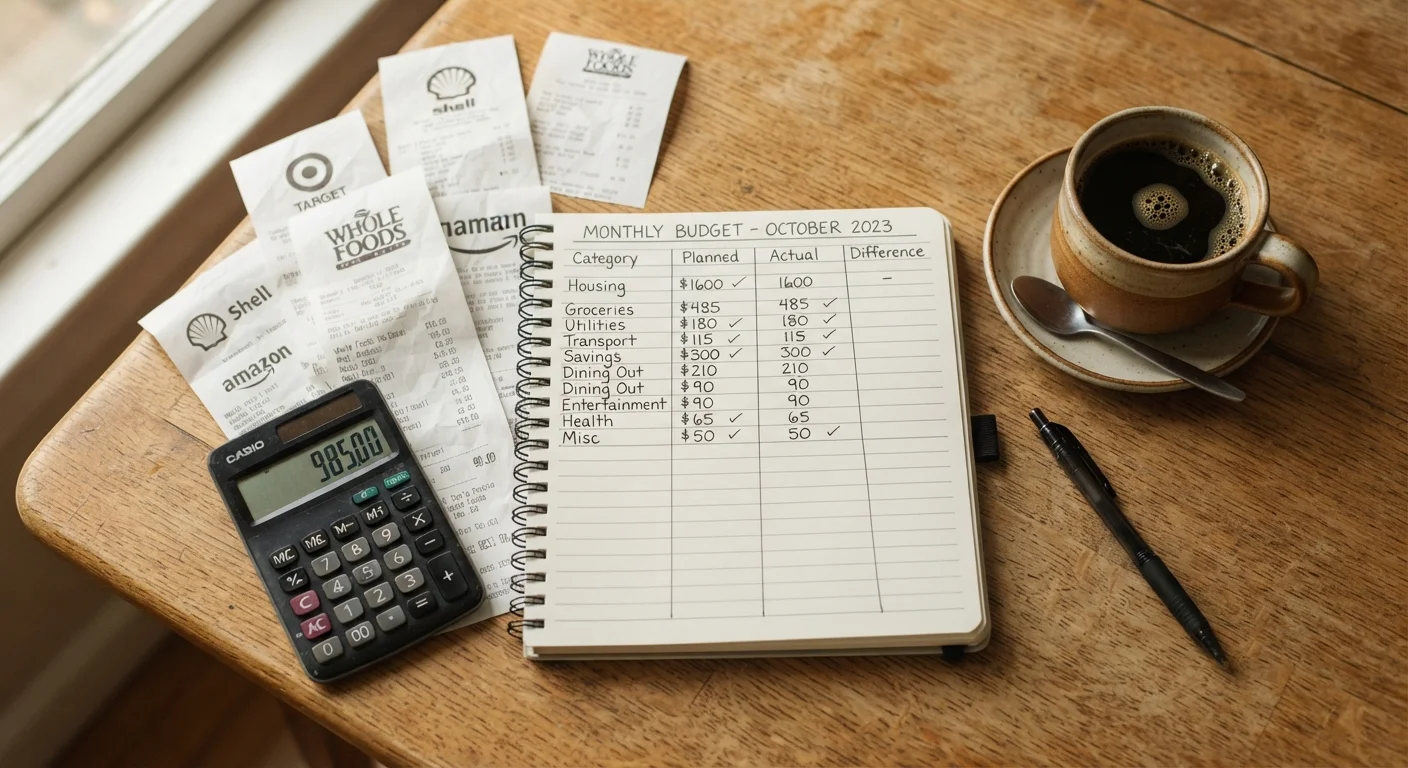
Estimates from memory are almost always wrong. The only reliable method is reviewing actual transaction data. Pull the last 30 days of statements from every account you use - checking, savings, and all credit cards. If you want guidance on what each section of those documents means, our guide to reading a bank statement walks through what to look for.
As you go through each transaction, assign it to a category. Don't judge the spending yet - just sort it. Once everything is categorized, total each category. That final picture is your actual monthly cash flow, and it's the only honest starting point for any budget you build. For a structured process, our step-by-step spending audit can help you work through it methodically.
What to Do With What You Find
Once you have real numbers, a few patterns almost always emerge: one or two categories are higher than expected, and at least a few small recurring charges exist that you'd forgotten about. That's normal - it's the point of the exercise.
From here, you have the raw material to build a realistic budget. The goal isn't to cut everything enjoyable - it's to make intentional choices rather than accidental ones. If dining out is genuinely important to you, keep it and trim somewhere else. If a subscription hasn't been used in three months, canceling it is a straightforward win.
Understanding your spending also reveals how much capacity you have for saving or paying down debt. Carrying a credit card balance from month to month has a real compounding cost - our article on the real cost of credit card debt explains how interest adds up faster than most people expect.
Once you've done this initial review, building a forward-looking plan becomes much more straightforward. Our monthly budgeting guide takes you through that next step. And to keep your finances from drifting again, a short monthly money check-in can catch problems before they grow.
This article is for general informational purposes only and does not constitute personalized financial advice. For guidance specific to your situation, consider consulting a qualified financial professional.