

| Statement Period | Usually 28-31 days, tied to a calendar month or account open date |
| Retention Recommended | Keep statements at least 1 year; up to 7 years for tax-related accounts (IRS general recordkeeping guidance) |
| Dispute Window (Electronic) | 60 days from statement date under federal Regulation E (Consumer Financial Protection Bureau) |
| Format Available | Paper or electronic (e-statement); both are legally equivalent |
| Fee Disclosure | Banks must itemize fees charged each period on the statement (Truth in Savings Act (TISA)) |
What's Actually on a Bank Statement
A bank statement is a monthly record of every dollar that moved through your account. Most people check their ending balance and stop there. That habit can cost you - in missed errors, unnoticed fees, and spending patterns you never see coming.
| Statement Period | Usually 28-31 days, tied to a calendar month or account open date |
| Retention Recommended | Keep statements at least 1 year; up to 7 years for tax-related accounts (IRS general recordkeeping guidance) |
| Dispute Window (Electronic) | 60 days from statement date under federal Regulation E (Consumer Financial Protection Bureau) |
| Format Available | Paper or electronic (e-statement); both are legally equivalent |
| Fee Disclosure | Banks must itemize fees charged each period on the statement (Truth in Savings Act (TISA)) |
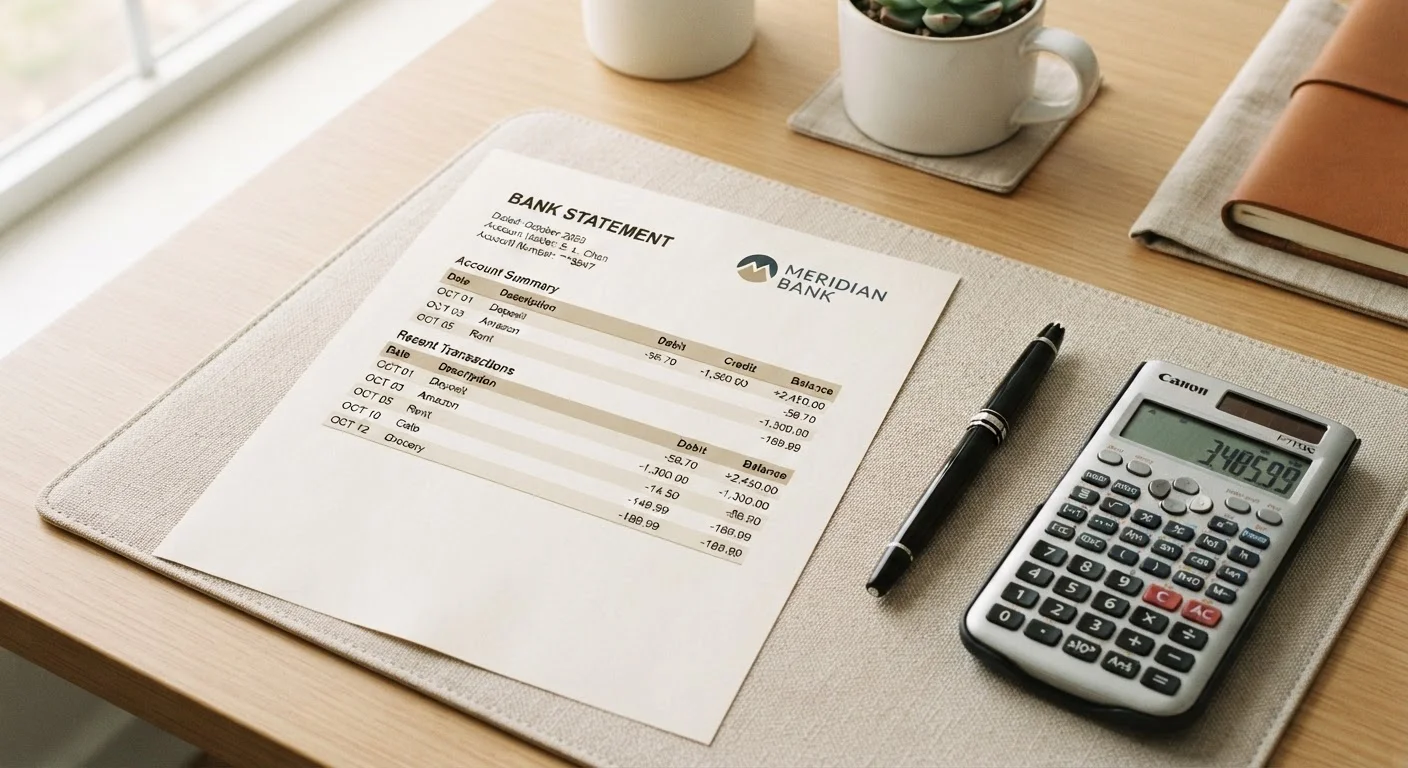
Statements typically break down into five parts: account summary, transaction history, fees charged, interest earned (if any), and account messages or disclosures. Each section holds specific information worth a few seconds of your attention.
The account summary at the top shows your opening balance, total deposits, total withdrawals, and closing balance. It's a quick ledger of the month. If the closing balance surprises you, the transaction history is where you find out why.
The Transaction History: Where the Details Live
This is the longest section and the one most people skim. Every entry includes a date, a description, and an amount. The description is worth reading carefully - it usually includes a merchant name, a payment processor code, or a recurring charge label.
What to watch for:
- Duplicate charges: The same merchant appearing twice in the same amount within a few days.
- Unfamiliar descriptions: Vague labels like "SVC FEE" or coded processor names (e.g., "SQ *" for Square) can mask merchants you don't recognize.
- Small recurring amounts: Subscriptions at $5-$15 per month are easy to miss. See our guide to recurring charges for a full audit approach.
- Timing mismatches: A payment that posted three days after you made it could indicate a float issue or an error worth flagging.
If something looks off, contact your bank promptly. Federal Regulation E generally gives consumers a limited window to dispute unauthorized electronic transactions.
Fees, Interest, and the Lines Nobody Reads
Banks are required to itemize the fees they charge each statement period. This section often appears near the bottom and may be labeled "Fee Summary" or folded into the transaction list. Common line items include:
Opening Balance
The amount in your account at the start of the statement period - typically the first day of the month. It should match the closing balance from your previous statement.
Closing Balance
The amount remaining in your account at the end of the statement period after all deposits and withdrawals are applied.
Overdraft Fee
A fee your bank charges when a transaction causes your account balance to drop below zero. Some banks offer overdraft protection that links to another account to cover the shortfall.
ACH Transfer
An Automated Clearing House transfer - an electronic movement of funds between bank accounts, commonly used for direct deposits, bill payments, and recurring subscriptions.
Pending Transaction
A charge that has been authorized but not yet fully settled. It affects your available balance but may not appear in the posted transaction list yet.
Maintenance Fee
A recurring fee some banks charge simply for holding an account open. It is often waivable by meeting conditions like a minimum balance or regular direct deposit.
- Monthly maintenance fee: A flat charge for holding the account, sometimes waived by meeting a minimum balance or direct deposit requirement.
- Overdraft fee: Charged when your balance goes negative. Even one per month adds up to hundreds per year.
- Out-of-network ATM fee: Your bank's surcharge, separate from what the ATM owner may also charge.
- Excess transaction fee: Some savings accounts limit monthly withdrawals; going over triggers a per-transaction charge.
If your account earns interest - most checking accounts don't, but high-yield savings accounts do - the interest credit also appears here. Reviewing it confirms the rate you're actually earning, not just what was advertised.
Electronic Statements Have the Same Legal Standing
If you've switched to e-statements, they carry the same information and legal protections as paper versions. Most banks allow you to download PDFs going back several years. Saving copies periodically - especially before switching banks - is a practical precaution.
Understanding where your money flows each month connects directly to building a working budget. Tracing your monthly cash flow is a natural next step once you're comfortable reading your statement.
Making Statement Review a Monthly Habit
Reading a statement doesn't have to take long. A focused ten-minute review each month - checking the summary, scanning transactions for anything unfamiliar, and confirming no unexpected fees - is enough for most accounts.
$150-$300
Typical annual overdraft fee cost per affected account
Based on CFPB research examining overdraft fee patterns at large U.S. banks.
1 in 3
Adults who don't review their full bank statement monthly
Industry surveys consistently show a significant share of account holders only check their balance, not itemized transactions.
If you want to build on this habit, consider pairing statement review with a broader monthly money check-in that looks at savings progress and upcoming bills. And if your statement shows you're consistently spending more than you intend, automating a savings transfer before those discretionary dollars hit your checking account is one practical way to close that gap.
Your bank statement is one of the few financial documents that's free, arrives regularly, and covers your actual behavior - not projections or estimates. Using it takes less effort than most people assume.
This article is for general informational purposes only and does not constitute personalized financial or legal advice. For guidance specific to your situation, consult a qualified financial professional.