

Key Takeaways
How Your Brake System Actually Works
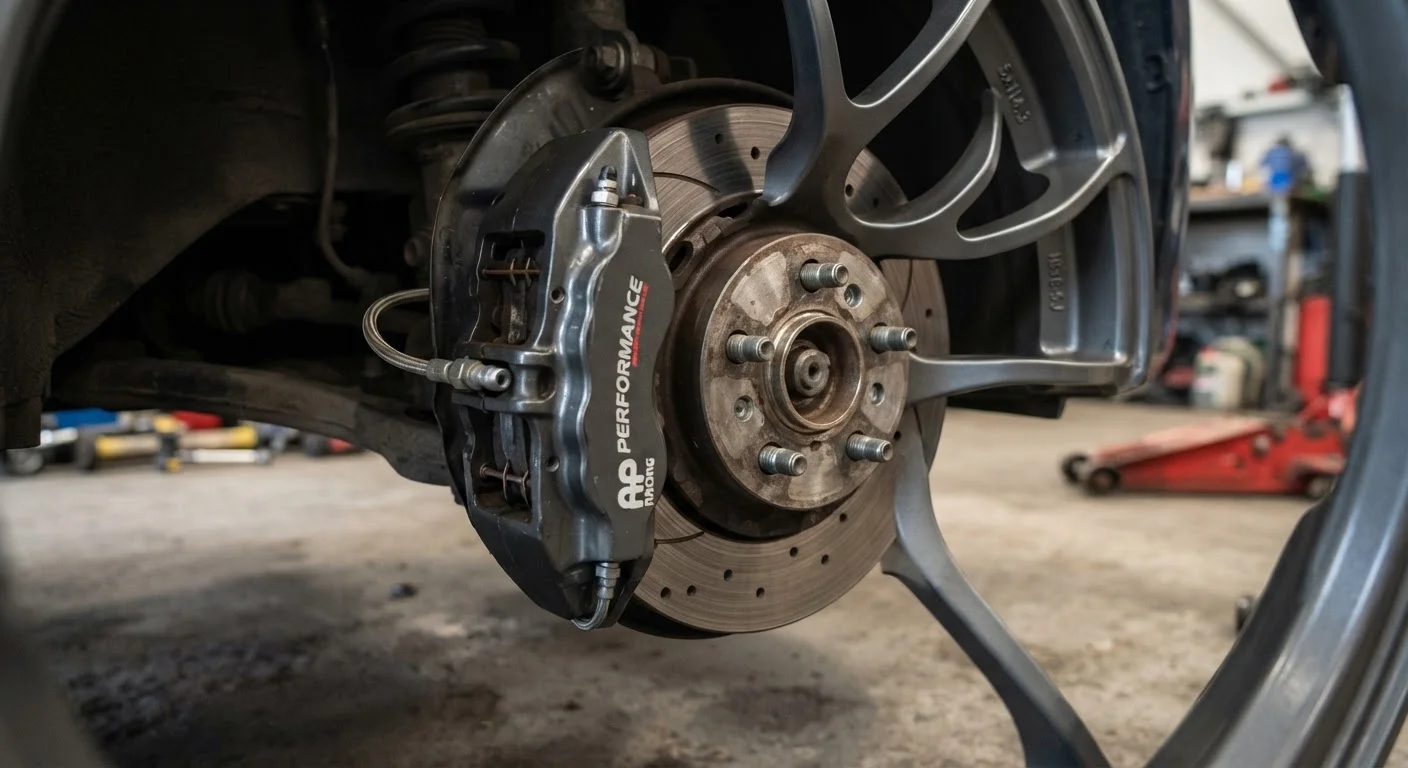
Most drivers think of brakes as a simple on/off switch, but the system is more layered than that. When you press the brake pedal, hydraulic pressure travels through brake fluid to the calipers, which squeeze brake pads against the rotors - the large metal discs behind each wheel. That friction converts your vehicle's kinetic energy into heat, slowing the car.
Each of those three elements - fluid, pads, and rotors - degrades at its own rate and in its own way. Pads wear down gradually with every stop. Rotors can warp from repeated heat cycles or develop grooves as worn pads score their surface. Brake fluid (technically a hygroscopic fluid, meaning it attracts and absorbs moisture from the air) loses its boiling point over time, which matters most during hard braking or mountain descents when heat builds fastest.
Understanding this interdependence is what separates proactive brake care from reactive, expensive repair. See our complete car maintenance guide for a broader look at how brake service fits into your vehicle's overall upkeep schedule.
Drum Brakes Are Still Common on Rear Axles
Many vehicles - particularly older models and some current economy cars - use drum brakes on the rear axle rather than disc brakes. Drum brakes use brake shoes pressing outward against a drum rather than pads clamping a rotor. The same maintenance principles apply: inspect regularly, watch for noise or soft pedal feel, and replace shoes before metal-to-metal contact occurs. Your owner's manual will specify which type your vehicle uses.
Warning Signs You Should Never Ignore
Your car will usually tell you when something is wrong with the brakes - if you know what to listen and feel for.
- Squealing or squeaking: Most brake pads have a small metal wear indicator that produces a high-pitched squeal when the pad material gets thin. This is a design feature, not a random noise - treat it as a scheduled appointment reminder.
- Grinding: If squealing has progressed to a harsh grinding sound, the pad material is likely gone and metal is contacting metal. This damages rotors and should be addressed immediately.
- Soft or spongy pedal: A pedal that travels farther than usual before the brakes engage often signals air in the brake lines or degraded fluid - both hydraulic system issues.
- Pulling to one side: Uneven braking can indicate a stuck caliper or unevenly worn pads, and it also affects your steering and tire wear.
- Vibration through the pedal: Pulsing during braking usually points to warped rotors.
Any one of these symptoms justifies a prompt inspection by a qualified mechanic. Brakes are not a wait-and-see system. As we detail in why small car problems become big repair bills, a pad replacement left too long routinely becomes a rotor replacement - at two to three times the cost.
Best Practices for Proactive Brake Maintenance
Staying ahead of brake wear is less about mileage milestones and more about building consistent inspection habits and driving patterns that reduce unnecessary stress on the system.
Have brakes visually inspected at every oil change or tire rotation
Brake pads wear gradually and unevenly, and the only way to catch low pad thickness before it becomes a rotor-damage problem is regular visual checks. Many shops include a quick inspection at no extra charge during routine service visits.
Replace brake fluid according to your manufacturer's interval, not just when problems appear
Brake fluid absorbs moisture over time, lowering its boiling point and reducing hydraulic performance under heat load. Most manufacturers recommend a change every two to three years regardless of mileage, but your owner's manual has the authoritative interval for your vehicle.
Avoid heavy braking by increasing your following distance
The majority of brake wear happens in the final stages of deceleration - hard stops from highway speeds are particularly damaging. Maintaining more space ahead gives you time to slow gradually, reducing both pad wear and rotor heat stress.
Replace pads in axle pairs, not individually
Brake pads on the same axle wear at similar rates and exert balanced pressure on the rotor. Replacing only one side creates uneven braking force, which can cause pulling and accelerate wear on the newer pad.
Check rotor condition whenever pads are replaced
Worn pads accelerate rotor wear - grooves and heat-induced warping are common. Rotors below manufacturer minimum thickness must be replaced, not resurfaced, and catching this at pad-change time avoids a return visit.
Your driving habits play a significant role too. Aggressive braking, tailgating, and carrying heavy loads all accelerate pad wear. Habits that quietly wear out your car faster covers several of these patterns in detail - braking behavior is one of the most impactful levers everyday drivers have.
Also worth noting: your owner's manual contains manufacturer-specific intervals for brake fluid changes and inspection schedules. Generic advice can get these wrong. Reading your owner's manual explains what to look for and why those specs matter.
Pair Brake and Tire Service Visits
Tire rotations are an ideal time to have your brakes inspected because the wheels are already off the vehicle. Bundling these two services means your mechanic gets a clear view of pad thickness, rotor condition, and caliper hardware at no extra labor cost. See our guide to tire rotation and alignment for more on coordinating these services.
When to Have a Professional Take Over
Visual brake inspection - looking through the wheel spokes to check pad thickness - is something informed drivers can do themselves. But most brake work, including pad and rotor replacement, caliper service, and brake line bleeding, should be performed by a qualified mechanic. These jobs require proper lifting equipment, torque specifications, and in some cases specialty tools to compress caliper pistons correctly.
Incorrectly installed brake components can cause brake fade, uneven wear, or - in serious cases - brake failure. This is not the place to cut corners. If a shop recommends rotor resurfacing or replacement alongside new pads, ask for an explanation of the measurements: rotors have a minimum thickness specification, and once they're below it, resurfacing isn't safe. A reputable shop will show you the numbers.
For context on how brake costs compare to other deferred maintenance scenarios, this overview of escalating repair costs puts the numbers in perspective.
This article provides general educational information about vehicle brake systems and is not a substitute for professional mechanical advice. Always consult a qualified mechanic for diagnosis, repair decisions, and safety-critical vehicle work.