

Key Takeaways
Why Such a Simple Task Goes Wrong So Often
Replacing an HVAC filter ranks among the easiest home maintenance jobs on paper - pull out the old one, slide in a new one. Yet HVAC technicians consistently report that dirty or incorrectly installed filters are among the most common issues they encounter on service calls. The consequences range from poor indoor air quality to full system failures that can cost thousands of dollars to repair.
If you're new to owning a home, filter maintenance is one of the first routines worth locking in. Our guide on building a home maintenance routine from the ground up covers how to approach these recurring tasks with confidence. For now, let's focus on the specific mistakes that trip up even experienced homeowners.
Choosing a filter with the wrong MERV rating for the system.
Why it happens: Homeowners often assume a higher MERV (Minimum Efficiency Reporting Value) rating is always better, equating denser filtration with superior performance across the board.
Changing the filter far too infrequently - or waiting until it looks visibly clogged.
Why it happens: Many homeowners operate on an informal "change it when it looks dirty" rule, not realizing that a filter can be functionally clogged long before it appears gray or packed with debris.
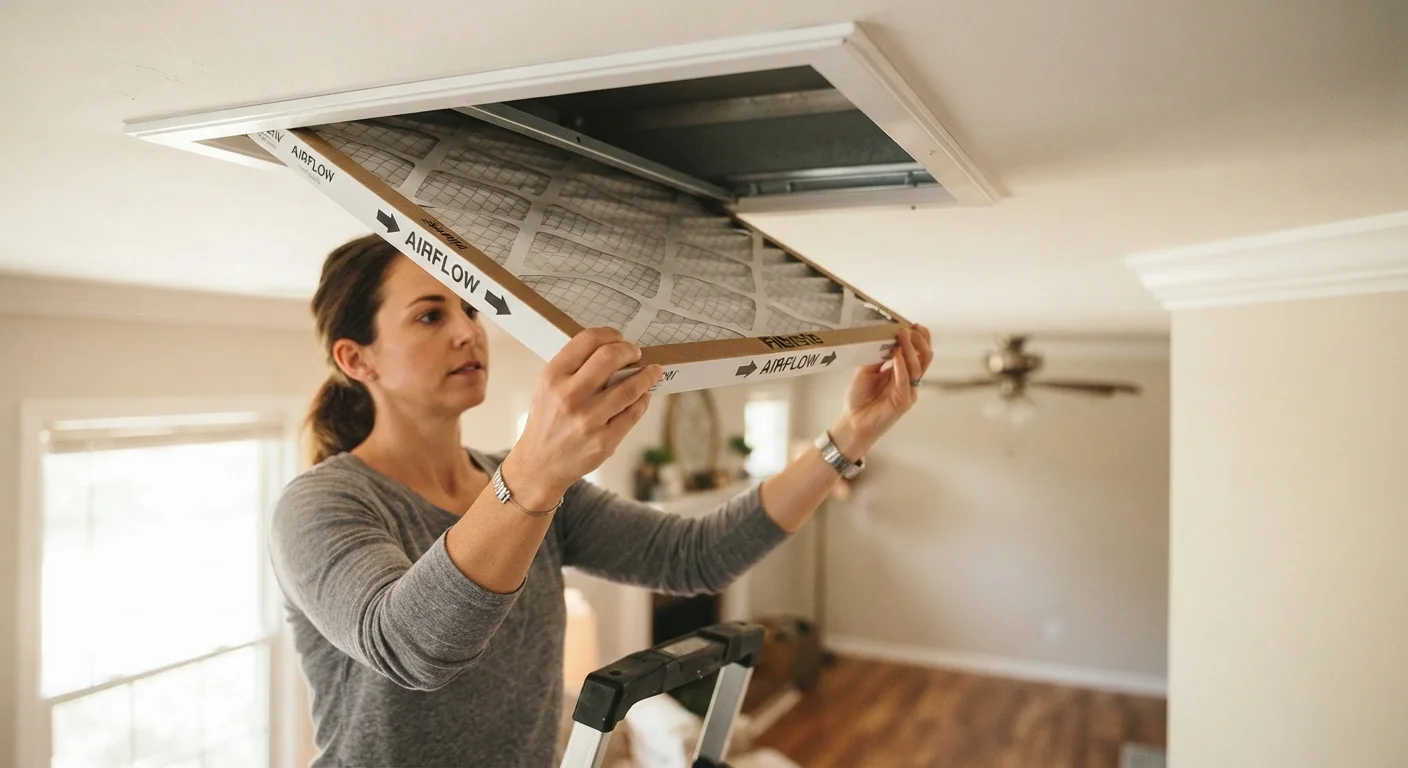
Installing the filter backward, reversing the intended airflow direction.
Why it happens: Filters are designed with a specific airflow direction, but the arrow printed on the frame is easy to overlook - or the filter may be inserted in a hurry without checking.
Using a filter that doesn't properly fit the slot, leaving gaps around the edges.
Why it happens: Filter sizing can be confusing - nominal dimensions (what's printed on the package) and actual dimensions often differ by a fraction of an inch, and homeowners sometimes purchase the wrong size by habit or guesswork.
Neglecting the filter entirely during low-use seasons.
Why it happens: When an HVAC system is running less frequently - such as during mild spring or fall weather - homeowners often assume the filter isn't accumulating debris and skip scheduled changes.
How to Build a Filter Change Habit That Sticks
The biggest obstacle to consistent filter maintenance isn't cost or difficulty - it's remembering to do it. A few practical systems can close that gap entirely.
Set a recurring calendar reminder tied to a date you already remember, such as the first day of each month or when you pay a specific bill. Write the installation date directly on the filter's cardboard frame with a marker so you always know when it went in. Buying filters in multi-packs and storing them near the air handler removes the friction of a separate shopping trip each time.
Don't Ignore Gaps Around the Filter Frame
Even a small gap between the filter and its housing allows unfiltered air - carrying dust, pollen, and other particles - to flow directly into your HVAC equipment. Over time, this debris coats the blower wheel and evaporator coil, reducing efficiency and potentially requiring professional cleaning. Always confirm a flush, gap-free fit before closing the access panel.
If your household includes pets, allergy sufferers, or anyone with respiratory sensitivities, check the filter at least once a month - visible grayness or debris is a reliable cue to swap it out ahead of schedule. The cost of a replacement filter is trivial compared to the cost of a service call or an early equipment replacement, so erring on the side of more frequent changes is rarely a mistake.
This article provides general home maintenance guidance. For system-specific recommendations, consult a licensed HVAC technician or refer to your equipment's documentation.