

Key Takeaways
When Confidence Outpaces Skill
Online tutorials make almost any repair look achievable in under ten minutes. A confident narrator, a clean workspace, and a perfectly cooperative fixture - and suddenly tiling a shower or rewiring an outlet seems well within reach. The reality in most American homes is messier, older, and far less cooperative than any video suggests.
This isn't an argument against DIY. Plenty of repairs genuinely belong in your hands, and building practical skills over time is one of the most rewarding parts of homeownership. But there's a specific category of projects - ones that look simple, feel intuitive, and still go sideways at an alarming rate - that deserves an honest conversation. For a broader framework on evaluating any project before you start, see our guide to deciding what to tackle yourself.
Below are the repairs homeowners most commonly overestimate their ability to handle, and why each one carries more complexity than it first appears.
Electrical panel work and circuit additions
Adding a new circuit or moving breakers looks straightforward on paper - it's just wires going into labeled slots. In practice, working inside a live panel puts you in contact with components that remain energized even when the main breaker is off. Mistakes here cause fires, electrocution, or failed inspections that surface during a home sale.
In most states, panel work requires a licensed electrician and a permit. Unpermitted electrical work can complicate homeowner's insurance claims and is a material defect that must be disclosed to buyers. This is one area where the liability risk alone makes professional work the right default.
Unpermitted electrical work can complicate insurance claims and must be disclosed to buyers.
Main water line and supply shut-off repairs
Replacing a fixture or a simple valve under the sink is manageable for many homeowners. The work gets more complicated fast once it moves to the main supply line or involves soldering copper pipe. An incomplete joint or a fitting installed without proper support can fail hours - or weeks - after the repair, causing water damage that runs well into the thousands of dollars.
Our article on common plumbing myths covers how well-intentioned fixes sometimes accelerate damage. If you do have a manageable drip, understanding what a leaky faucet is telling you is a good place to start.
An improperly fitted joint can fail weeks later, causing water damage costing thousands of dollars.
Large drywall repair and texture matching
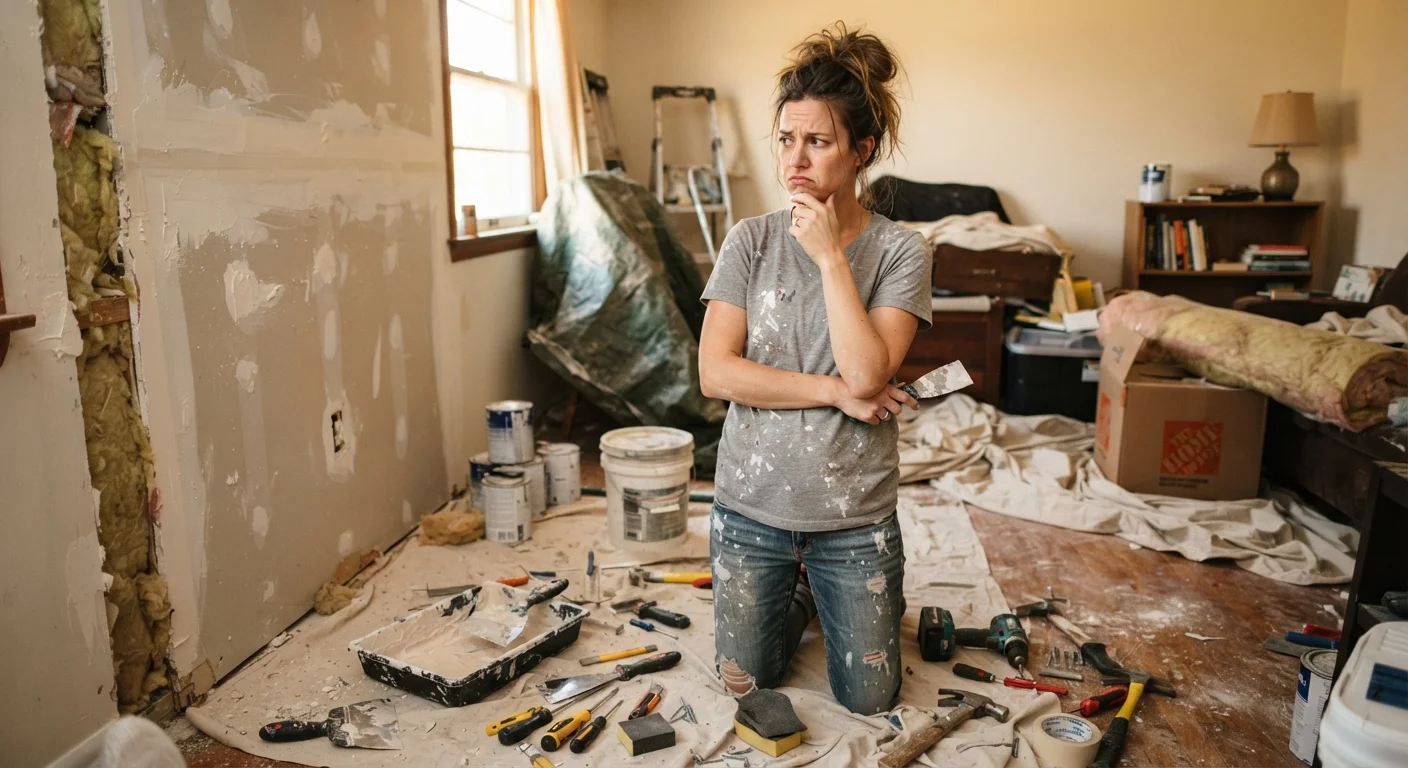
Patching a nail hole is a legitimate beginner task. Repairing a section larger than about six inches introduces challenges that most homeowners underestimate: cutting a clean patch, securing backing, feathering compound across multiple coats, and matching the existing wall texture. Texture matching in particular - whether it's orange peel, knockdown, or skip trowel - requires practice and the right tools to achieve a finish that disappears under paint.
A patch that's visible after painting typically requires sanding back and starting over. For technique-specific guidance on patches of varying sizes, see our drywall repair walkthrough.
Texture matching is a skilled technique - a visible patch usually means starting over from scratch.
HVAC system repairs and refrigerant handling
Homeowners frequently feel comfortable cleaning HVAC components or swapping filters - and that comfort is well-placed for those tasks. But when a system stops cooling or heating effectively, the diagnosis and repair almost always require specialized tools and training. Handling refrigerant, for instance, is federally regulated and legally requires EPA Section 608 certification.
Misdiagnosed HVAC problems are expensive: a homeowner who replaces a capacitor when the real issue is a failing compressor has spent money without solving anything. Filter maintenance and airflow checks are reasonable DIY territory - our piece on what homeowners get wrong about HVAC filter changes covers those well. Anything beyond that generally warrants a certified technician.
Handling refrigerant is federally regulated - it legally requires EPA certification to perform.
Roof repairs and flashing replacement
A missing shingle or a small patch of damaged flashing looks like a quick afternoon fix. The hidden risks are significant: working at elevation without fall protection is one of the leading causes of serious injury among DIYers, and an improperly sealed repair can allow water infiltration that only becomes visible months later - after insulation and sheathing have already been damaged.
Roofing work also frequently requires permits, especially for full replacement. Even for small repairs, an incorrect material match or improper overlap can void manufacturer warranties on the surrounding roof system. The guide to knowing where to draw the DIY line addresses roofing specifically as a category that consistently warrants professional evaluation.
Roofing is among the leading causes of serious DIY injury - fall risk is real and often underestimated.
Load-bearing wall removal
Open-concept renovations are appealing, and knocking out a wall appears straightforward once the drywall is off. Identifying whether a wall is load-bearing, however, requires understanding your home's framing structure - and getting it wrong means removing a wall that supports your floor, ceiling, or roof system above. The consequences range from cracked finishes to structural failure.
Even when a wall is confirmed non-load-bearing, removal typically triggers permit requirements in most jurisdictions, and the work often intersects with electrical circuits, plumbing, or HVAC runs hidden inside the wall cavity. This is a project where a structural engineer's assessment - a relatively modest cost - can prevent a catastrophic and expensive mistake.
Misidentifying a load-bearing wall can lead to structural failure - get an engineer's assessment first.
Know Before You Start
None of the repairs above are listed to discourage you - they're listed because the cost of a failed attempt almost always exceeds the cost of hiring a professional from the start. Before picking up tools on any unfamiliar project, spend time on our renovation basics hub and understand what permits may apply in your area. Our article on which DIY projects typically require a permit is a practical starting point.
Start Small, Build Competence Over Time
If you want to expand your DIY capabilities, start with lower-stakes repairs that build transferable skills - caulking, basic painting, simple fixture swaps, and filter changes. Each successful project sharpens your judgment about what the next step up actually involves. Reviewing the real pros and cons of DIY repairs can help you set realistic expectations before committing to a project.
For the repairs that are genuinely within reach - leaky faucets, small drywall patches, filter changes - build your skills there first. Our homeowner's toolkit guide covers exactly what you need to handle everyday fixes confidently. And when you do hire out, our contractor estimate walkthrough helps you understand what you're paying for.
This article is for general informational purposes only. Always consult a licensed contractor or relevant professional before undertaking repairs involving electrical systems, gas lines, structural elements, or other regulated work. Verify permit requirements with your local building authority.