

Key Takeaways
Our Verdict
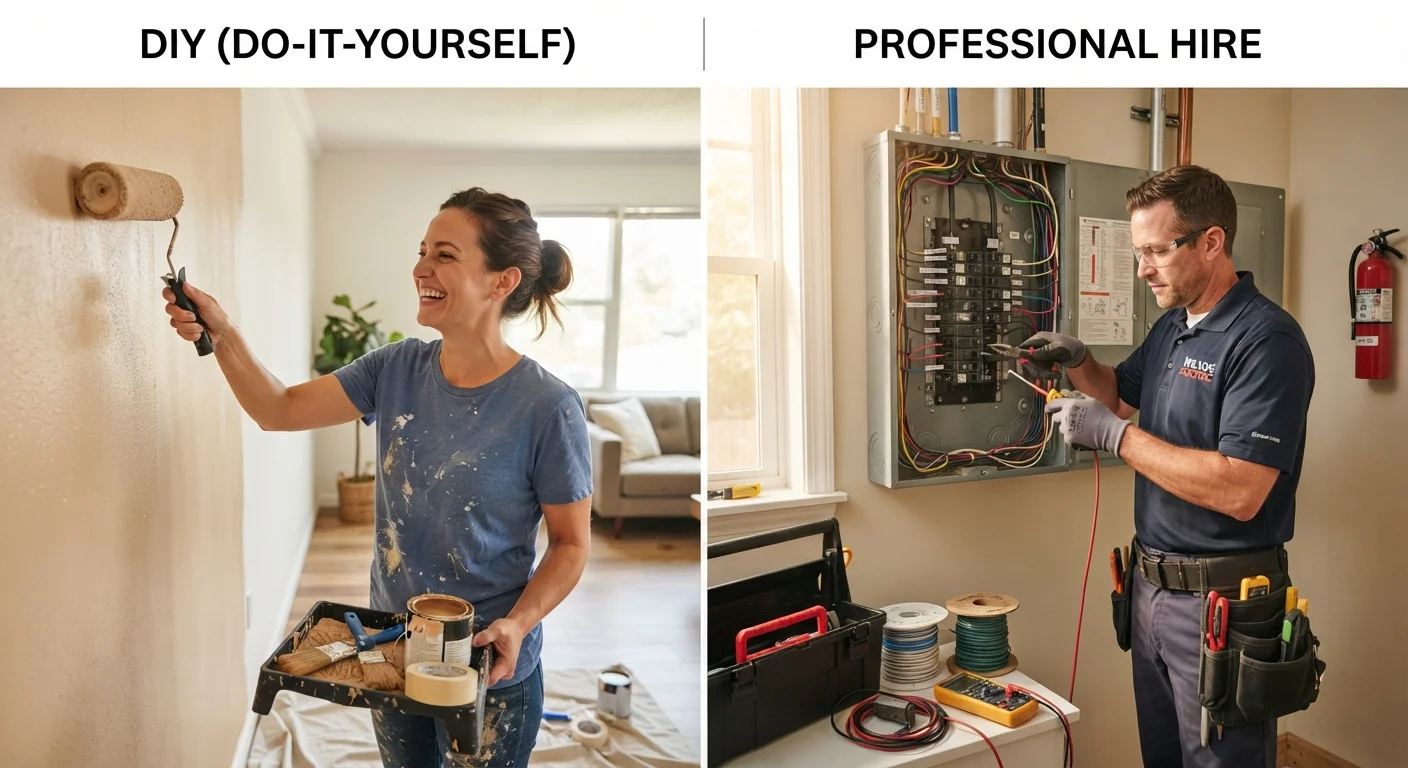
DIY makes the most sense for cosmetic, low-skill, low-risk tasks where a mistake is recoverable and the learning curve is manageable. Hiring a professional is the wiser call whenever safety, permits, structural integrity, or specialized licensing are in play. Most homeowners benefit from a mixed approach - doing what they genuinely can while protecting themselves from the hidden costs of overreach.
| Best for | Recommended |
|---|---|
| Homeowners comfortable with basic tools and cosmetic work | DIY |
| Projects involving electrical, gas, plumbing mains, or structural systems | Hire a Professional |
| Work that requires permits or inspections in most jurisdictions | Hire a Professional |
| Time-sensitive or large-scale renovations with tight completion deadlines | Hire a Professional |
The Framework: Four Questions to Ask Before You Start
Before reaching for a tool or picking up the phone to call a contractor, run every project through four honest questions: Do I have the skill? What's the safety risk? Does this require a permit? What does it actually cost either way? Answering these in order gives you a defensible decision - not just a gut feeling.
Skill is more than watching a tutorial. It includes familiarity with the tools involved, the ability to troubleshoot when something goes wrong mid-project, and experience reading a finished result accurately. A first-time tile setter may produce a bathroom floor that looks fine until grout lines crack six months later because the substrate wasn't properly prepared. For a candid look at which repairs tend to trip up well-intentioned homeowners, see DIY repairs homeowners commonly overestimate their ability to handle.
Safety risk is non-negotiable. Cosmetic errors are recoverable. Electrical faults, gas leaks, and structural failures are not - they can injure occupants, void homeowner's insurance, or trigger mandatory remediation orders. When the risk category is high, professional licensing exists precisely because the consequences of error are severe.
Start With a Honest Skills Inventory
Before committing to a project, list every step it involves - not just the main task. If any individual step is outside your experience, research whether it's genuinely learnable in a reasonable time frame or whether it's a professional skill built over years. Projects almost always have at least one step that's harder than it looks. Identifying that step early is the difference between a successful DIY job and a half-finished one that costs more to fix than it would have to hire out from the start.
DIY vs. Hiring Out: A Side-by-Side Look
The table below maps common project categories against the factors that most affect your decision. Use it as a starting reference, not a final verdict - local codes, your specific home's construction, and your own experience level all influence the outcome.
| Project Type | DIY Feasibility | Permit Typically Required? | Safety Risk | Cost Advantage of DIY | |
|---|---|---|---|---|---|
| Interior painting | High | No | Low | Significant | |
| Drywall patching (small holes) | High | No | Low | Significant | |
| Tile installation | Moderate (with prep experience) | Rarely | Low | Moderate | |
| Electrical panel or wiring work | Not recommended for DIY | Yes, in most jurisdictions | Very High | None - hire licensed electrician | |
| Gas line repair or extension | Not recommended for DIY | Yes | Extreme | None - hire licensed plumber/gasfitter | |
| Roof replacement | Low (complex, dangerous) | Often yes | High | Minimal after materials and safety gear | |
| Basic fixture replacement (faucets, outlets) | Moderate | Rarely for like-for-like swaps | Low to Moderate | Moderate to High | |
| Load-bearing wall removal | Not recommended for DIY | Yes | Very High | None - structural engineer required |
Notice that the cost column isn't simply "cheaper" for DIY. Tool acquisition, material overages from inexperience, and the potential cost of fixing mistakes can close that gap quickly. Always price out both paths before committing.
When DIY Makes Clear Sense
Cosmetic and maintenance tasks with a low consequence of error are the natural home of DIY work. Painting interior walls, replacing light switch covers, caulking around a tub, patching small drywall holes, installing shelving on existing studs, and basic landscaping all fall here. The materials are inexpensive, the skills are learnable, and the penalty for an imperfect result is usually just more time and a little more paint.
Our DIY & Repairs hub covers many of these projects in detail. For example, a quality interior paint job is highly achievable for most homeowners - though as surface prep is half the battle explains, skipping preparation steps is where most amateur paint jobs fall apart.
DIY also makes sense when you're maintaining rather than modifying - replacing an air filter, cleaning gutters, sealing a driveway, or touching up weatherstripping. These tasks appear in any solid home maintenance routine and are designed to be owner-serviceable.
When You Should Hire a Professional
Three categories almost always warrant a licensed professional: hazardous systems (electrical panels, gas lines, load-bearing structures, roofing), permitted work, and tasks where an error creates a latent, invisible hazard - like improperly vented plumbing or a foundation repair that looks fine but shifts over time.
Permit requirements matter beyond paperwork. Unpermitted work can complicate home sales, invalidate insurance claims, and expose you to fines. What DIY work actually requires a permit in most states is worth reading before you start anything that touches wiring, plumbing, HVAC, or structural elements.
Unpermitted Work Has Real Consequences
Completing regulated work without the required permits isn't just a technical violation - it can prevent you from selling your home, result in mandatory demolition and redo of completed work, and invalidate your homeowner's insurance for related claims. Before starting any project that touches electrical systems, plumbing, HVAC, structural elements, or additions, verify permit requirements directly with your local building department. Requirements vary significantly by municipality.
If you do hire out, the quality of that decision depends on vetting your contractor carefully. Our guide on questions worth asking before you sign anything walks through licensing, insurance, payment terms, and how to compare written estimates - including how to read and evaluate a contractor's written estimate so you know what you're actually agreeing to.
The True Cost of Each Path
DIY savings are real but often overstated. Labor typically represents 40-60% of a professional's quote, so the savings opportunity is genuine - but only when the task is within your competence. Factor in tool rental or purchase, material waste from learning curves, and the cost of your own time at a realistic hourly value. Some projects, like hanging a ceiling fan, genuinely pencil out well for a capable homeowner. Others, like re-roofing a garage, almost never do once materials, safety equipment, and disposal are priced in.
For projects where you're genuinely uncertain, get a professional estimate first. That number gives you a real benchmark against which to price your DIY version - including your time. The same logic applies to autos: DIY car maintenance vs. taking it to a shop illustrates how the same cost-benefit framework plays out in a different domain.
40-60%
Labor's share of a typical contractor quote
Industry estimates consistently place labor at 40-60% of total project cost, which represents the theoretical ceiling on DIY savings when materials and skills are equivalent.
~1 in 3
DIY projects that require professional correction
Home improvement surveys and contractor reports suggest a meaningful share of DIY attempts - particularly in plumbing and electrical - require professional remediation, often at higher cost than an original hire.
Understanding who does what on a job site also helps when evaluating professional quotes - knowing whether you're paying a GC markup on subcontracted work versus hiring a specialist directly can meaningfully affect your final cost.