

Key Takeaways
Why the Read-Through Matters
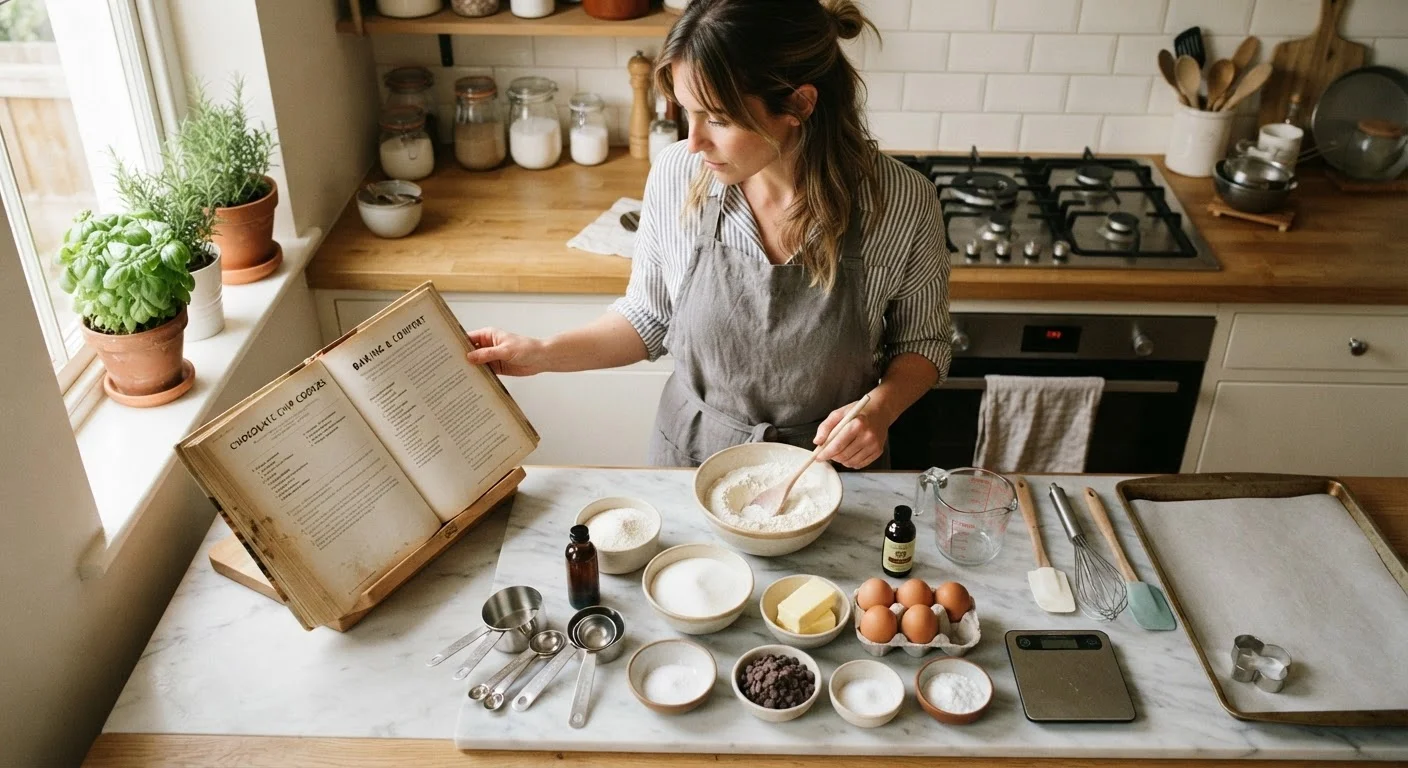
Most kitchen failures don't start at the stove - they start when a cook dives into a recipe without fully understanding what's ahead. A sauce that needs 30 minutes of simmering, a dough that must rest overnight, a term like "fold" or "deglaze" that's unfamiliar: these surprises derail momentum and create stress. Reading a recipe from top to bottom before you touch a single ingredient is the single most effective habit a beginning cook can build.
Think of it as a rehearsal. You're walking through the whole performance in your mind before the curtain goes up. By the time you turn on the burner, nothing should be a mystery.
This habit also connects directly to the practice of mise en place - having everything measured, chopped, and organized before cooking begins. See our full guide to mise en place for how to apply this principle in a home kitchen.
What you will need
How to Read a Recipe Effectively
There's a difference between skimming a recipe and actually reading it. Here's how to get the most out of your pre-cook read-through.
Read the entire recipe once without doing anything
Start at the very top - including the headnote or introduction if one is present - and read straight through to the end. Don't pause to gather ingredients yet. The goal is a complete picture: how many steps are there, how long does each take, and what does the finished dish look like?
Identify time-sensitive or passive steps
Look for anything that requires time but not active attention: marinating, chilling, resting, proofing dough, or bringing meat to room temperature. These steps are easy to miss on a first skim but can add an hour or more to your total time. Mark them clearly before you begin.
Check your ingredients against what you have
Go through the ingredient list line by line and confirm you have everything on hand in the right quantity. Note any substitutions you might need and decide now whether they're workable - not in the middle of cooking. Also pay attention to the form of each ingredient: "2 cups shredded chicken" is very different from "2 chicken breasts."
Gather and check your equipment
Note every piece of equipment the recipe calls for - pans, baking dishes, a stand mixer, a thermometer - and confirm you have it. Check that pans are the right size; a 9-inch cake pan and a 10-inch pan behave differently in the oven. If you're cooking meat, our guide to internal cooking temperatures explains why a meat thermometer is worth having on hand.
Map out the sequence and multitask opportunities
On a second read-through, look for steps that can happen simultaneously. Can the onions caramelize while you prep the remaining vegetables? Can the pasta water come to a boil while you make the sauce? Understanding the full arc of the recipe helps you work efficiently rather than finishing one task and then standing idle. For more on this, see our guide to building a flavor base, which covers how early steps in a recipe often set up everything that follows.
Read With a Purpose, Not Just a Glance
A quick scan isn't the same as a real read-through. Look for signal words like "meanwhile," "set aside," "until reduced by half," or "let rest" - these indicate timing, sequencing, or technique that can easily be missed. If you hit a term you don't recognize, look it up before you start rather than guessing mid-cook.
Common Recipe Terms Worth Knowing
Recipes assume a shared vocabulary that isn't always obvious to newer cooks. Before you start cooking, flag any terms you don't recognize and look them up. A few that come up frequently:
- Fold: Gently combine a delicate mixture (like whipped egg whites) into a denser one using a slow, sweeping motion - not stirring.
- Deglaze: Add liquid to a hot pan to loosen the browned bits stuck to the bottom, which carry a lot of flavor.
- Reduce: Simmer a liquid until some of it evaporates, concentrating the flavor and thickening the texture.
- Al dente: Pasta or vegetables cooked until just tender but still with a slight bite - not soft all the way through.
- Season to taste: Add salt, pepper, or other seasonings gradually, tasting as you go. For a deeper look at this, our guide on seasoning throughout the cooking process explains when and how to build flavor at each stage.
Don't Assume You Know the Steps
Even experienced cooks can run into trouble when they assume a familiar recipe works exactly as they remember it. Recipes vary between sources, and details like pan size, oven temperature, or quantity can differ significantly. Always read the version in front of you rather than cooking from memory.
Good knife prep also makes recipe execution faster and safer. If chopping or slicing techniques feel uncertain, our knife skills guide for home cooks covers the fundamentals.