

Key Takeaways
Why Timing Changes Everything
Most home cooks treat seasoning as a final step - a quick pinch of salt at the plate before serving. That habit is one of the most common reasons homemade food tastes flat compared to restaurant cooking. Seasoning isn't a single action; it's a continuous process that should happen at every meaningful stage of cooking.
Salt added early, for example, doesn't just sit on the surface. Given time and heat, it draws moisture out of ingredients, then gets reabsorbed - carrying flavor deep into the food rather than coating the outside. A piece of chicken seasoned an hour before cooking will taste more evenly seasoned throughout than one salted right before it hits the pan. Understanding when to season is just as important as knowing how much to use. For a broader look at how seasoning fits into the larger picture of cooking, see our article on the four elements of balanced cooking.
Best Practices for Seasoning at Each Stage
Building flavor through a dish means being intentional at each phase - from prep through plating. The following practices apply across almost any savory recipe.
Season proteins before cooking, not just after
Salt applied to meat, poultry, or fish at least 20-30 minutes before cooking (or longer, if refrigerated) has time to penetrate the surface and season the interior. Salting right before cooking only flavors the exterior and can draw out surface moisture that hinders browning.
Add salt to your cooking water for pasta, grains, and vegetables
Boiling water is the only opportunity to season these ingredients from the inside out. Under-salted water produces bland pasta or rice that no amount of sauce or seasoning at the table can fully correct.
Season aromatics as they cook, not after
Adding a pinch of salt to onions, garlic, or celery as they soften draws out their moisture and accelerates the development of their natural sweetness. Seasoning only at the end means the aromatics themselves remain bland, weakening the flavor base of the entire dish.
Taste and adjust seasoning before a dish finishes cooking
Flavors concentrate as liquid evaporates, meaning a dish that tasted well-seasoned halfway through cooking may be over-seasoned by the end. Tasting before the final reduction gives you the chance to correct course.
Use acid as a seasoning tool, not just salt
A dish that tastes flat or heavy often needs brightness rather than more salt. A small amount of lemon juice, lime juice, or vinegar can sharpen flavors, making them more distinct and lively without adding noticeable sourness.
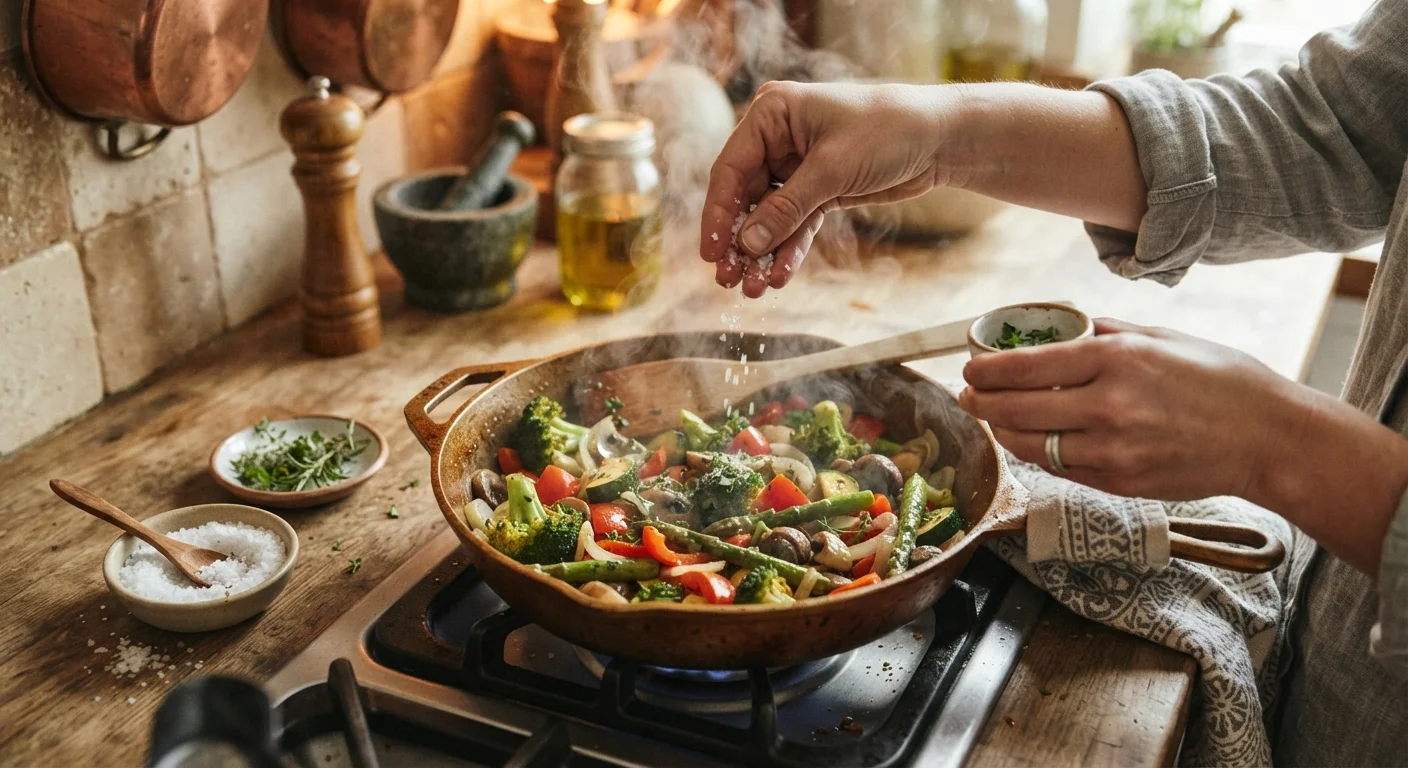
Reserve finishing salts and fresh herbs for the final moment
Flaky salts add a textural pop and concentrated burst of salinity that gets lost if added during cooking. Fresh herbs lose their bright, volatile aromatics quickly under heat and should be added just before serving.
Tasting, Adjusting, and Finishing
No recipe can perfectly predict your exact ingredients, cookware, or heat source. Tasting throughout cooking - and making small adjustments - is what closes that gap. If a dish tastes dull, the instinct is often to add more salt. But flat flavor is sometimes a sign that the dish needs acid (a squeeze of lemon, a splash of vinegar) rather than more sodium.
When a Dish Tastes Flat, Try Acid First
Reaching for more salt is the reflex when food tastes dull, but sometimes a squeeze of lemon or a splash of vinegar is the more effective fix. Acid brightens and separates flavors, making a dish taste more vivid without increasing sodium. Try a small amount, stir, taste, and then decide if additional salt is still needed.
Finishing a dish is its own seasoning stage. Fresh herbs stirred in at the end contribute brightness that would be lost if they were added early. Flaky sea salt added just before serving provides a burst of salinity and texture that ground salt cannot replicate. These finishing touches don't replace earlier seasoning - they complement it.
If you want to understand why building a flavor base at the start of cooking matters so much, our guide on aromatics and why they come first explains how onion, garlic, and similar ingredients create the foundation that all subsequent seasoning builds on.