

Key Takeaways
Aromatics
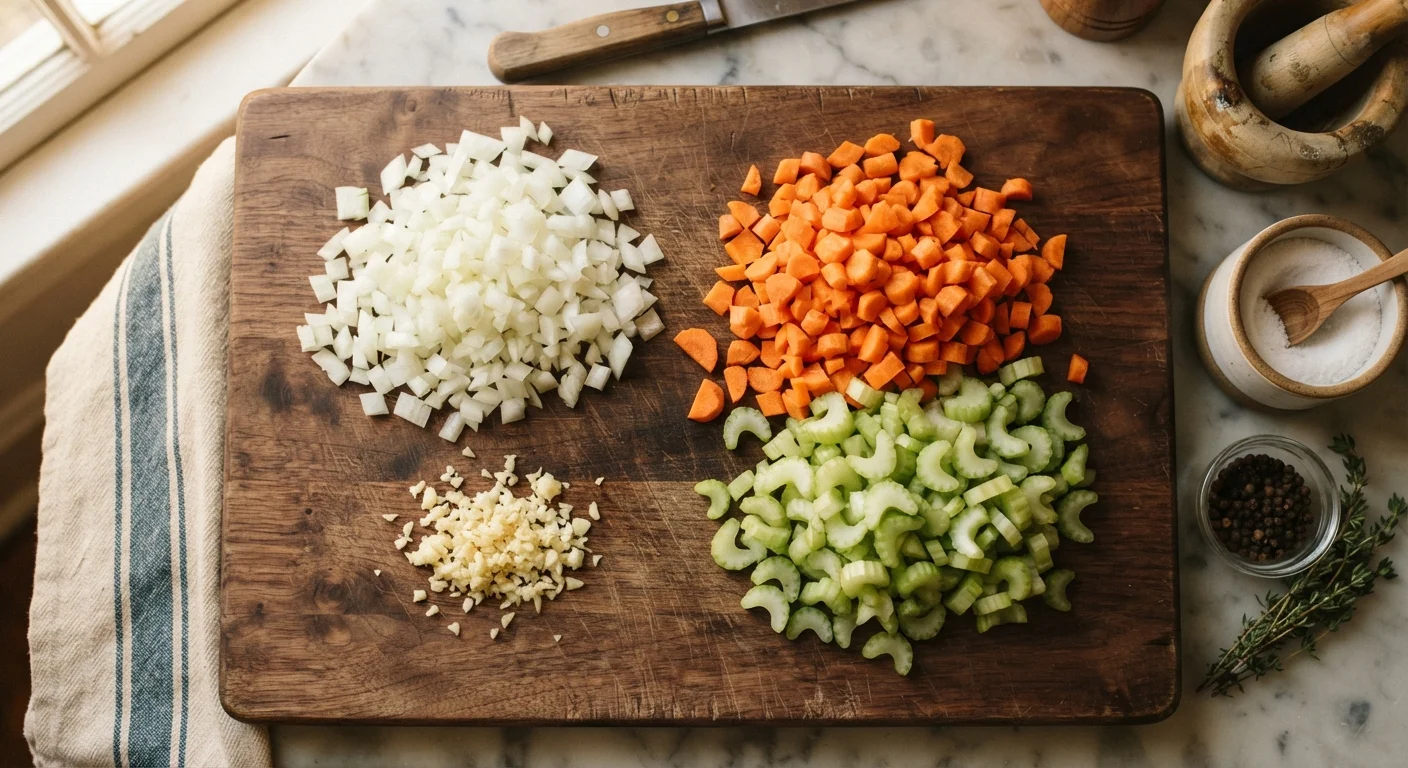
Aromatics are vegetables, herbs, or other ingredients that release strong, pleasant smells and flavors when heated. In everyday cooking, the term most often refers to onions, garlic, celery, and carrots - the vegetables cooked at the very start of a recipe to build a deep, layered flavor base. They're rarely the star of a dish, but they quietly shape everything else that follows.
The flavor compounds in aromatics - including sulfur-containing molecules in alliums and volatile oils in herbs - break down and transform through heat, becoming sweeter and more complex through the Maillard reaction and caramelization.
What Aromatics Actually Do
Before a single protein hits the pan or a drop of liquid goes in, most great dishes start the same way: a little fat in a warm pan, followed by aromatic vegetables that sizzle, soften, and smell incredible. This isn't just tradition - it's food science with a practical payoff.
When you heat aromatics in fat, two things happen simultaneously. First, water inside the vegetables steams away, concentrating their flavor. Second, heat triggers chemical reactions that transform sharp, sometimes harsh raw compounds into something sweeter, rounder, and more complex. The fat acts as a carrier, dissolving these flavor molecules and spreading them throughout every ingredient added later. That's why dishes built on a proper aromatic base taste cohesive rather than scattered.
Understanding this step connects directly to the bigger picture of how flavor works. As we cover in our article on the four elements of balanced cooking, fat is one of the foundational forces in cooking - and aromatics are where fat starts doing its most important work.
5-8 min
Time to properly soften onions over medium heat
Culinary educators consistently note that home cooks underestimate the time needed to cook aromatics, often moving on too quickly.
30-60 sec
Time garlic needs before it can burn
Garlic's small size and high sugar content make it far more prone to burning than onions - it should always be added later in the aromatics process.
3+
Major world cuisines with a named aromatic base
French mirepoix, Italian soffritto, and Cajun Holy Trinity all follow the same underlying logic of building flavor through fat-cooked vegetables.
The World's Aromatic Combinations
Every major cooking tradition has its own aromatic backbone, reflecting the vegetables and flavors native to that culture. Knowing these combinations helps you read recipes more confidently and understand why a dish tastes the way it does.
- Mirepoix (French): Onion, celery, and carrot in a 2:1:1 ratio, cooked slowly in butter. The base of countless soups, stocks, and braises. Stocks built on mirepoix benefit from the same principles covered in understanding stocks and broths.
- Soffritto (Italian): Similar vegetables - often onion, celery, and carrot - cooked down in olive oil until deeply soft and fragrant. The spelling varies by region, as does the exact mix.
- Sofrito (Spanish/Latin American): Typically onion, garlic, tomato, and peppers, cooked together into a thick, intensely flavored paste that anchors rice dishes, stews, and bean recipes.
- Holy Trinity (Cajun/Creole): Onion, celery, and green bell pepper - a regional American variation that swaps carrot for bell pepper, giving dishes their distinctive Louisiana character.
- Aromatics in Asian cooking: Garlic, ginger, and scallions form the aromatic base for many Chinese dishes; lemongrass, galangal, and shallots do similar work in Thai and Southeast Asian cooking.
Once you recognize this pattern - a handful of vegetables, some fat, early heat - you start seeing the same logic across cuisines, even when the ingredients differ.
How to Cook Aromatics Properly
The most common mistake home cooks make is rushing this step. Aromatics need time and the right heat to soften and sweeten - hurry them with high heat and you'll scorch the garlic or leave the onions with a raw edge that lingers in the finished dish.
Here's a reliable sequence for most recipes:
- Start with fat in a cold or moderately warm pan. Add your oil or butter over medium to medium-low heat.
- Add onions first. They need the longest time - typically 5 to 8 minutes - to soften and turn translucent. Stir occasionally rather than constantly.
- Add celery and carrot if your recipe calls for them, letting them soften alongside the onions for a few more minutes.
- Add garlic last. Garlic burns quickly and turns bitter. Add it only when the other aromatics are nearly done, and cook it for 30 to 60 seconds until fragrant.
- Season as you go. A pinch of salt on your aromatics early helps draw out moisture and speed up softening. For more on this technique, see our guide on seasoning throughout the cooking process.
Don't Walk Away from the Pan
Aromatics, especially garlic, need your attention. Keep the heat at medium or medium-low and stir every minute or so. If the pan looks dry or the edges are darkening too fast, add a small splash of water or reduce the heat - both will slow things down without losing the progress you've made.
One thing worth knowing: if your recipe calls for caramelized onions specifically, that's a much longer process than simply softening. What most recipes label as "caramelized" in 10 minutes is really just softened and lightly browned - true caramelization takes patience. Our piece on why onions never caramelize the way recipes promise explains what's really happening.
Putting It Into Practice
You don't need to memorize every cultural aromatic combination to cook better starting tonight. What matters is internalizing the principle: begin with fat, add your aromatics, give them time to soften and bloom, and then build the rest of the dish on top of that foundation.
Even simple weeknight cooking benefits from this approach. A can of tomatoes dumped into a pan tastes like canned tomatoes. Those same tomatoes added to a pan where onion and garlic have been cooking in olive oil for six minutes tastes like the start of something worth eating. The ingredients are nearly identical - the method is everything.
“Cooking is about building layers. You rarely taste the onion in a finished soup, but you always taste when it's missing.”
— Food Editorial Team, Culinary writing and education collective
As your confidence grows, you'll start noticing aromatics everywhere: in the base of a curry, underneath a roast, stirred into scrambled eggs, or simmered into the beginning of a good soup. Once you see it, you can't unsee it - and your cooking will be better for it.