

Key Takeaways
Stock vs. Broth vs. Bouillon
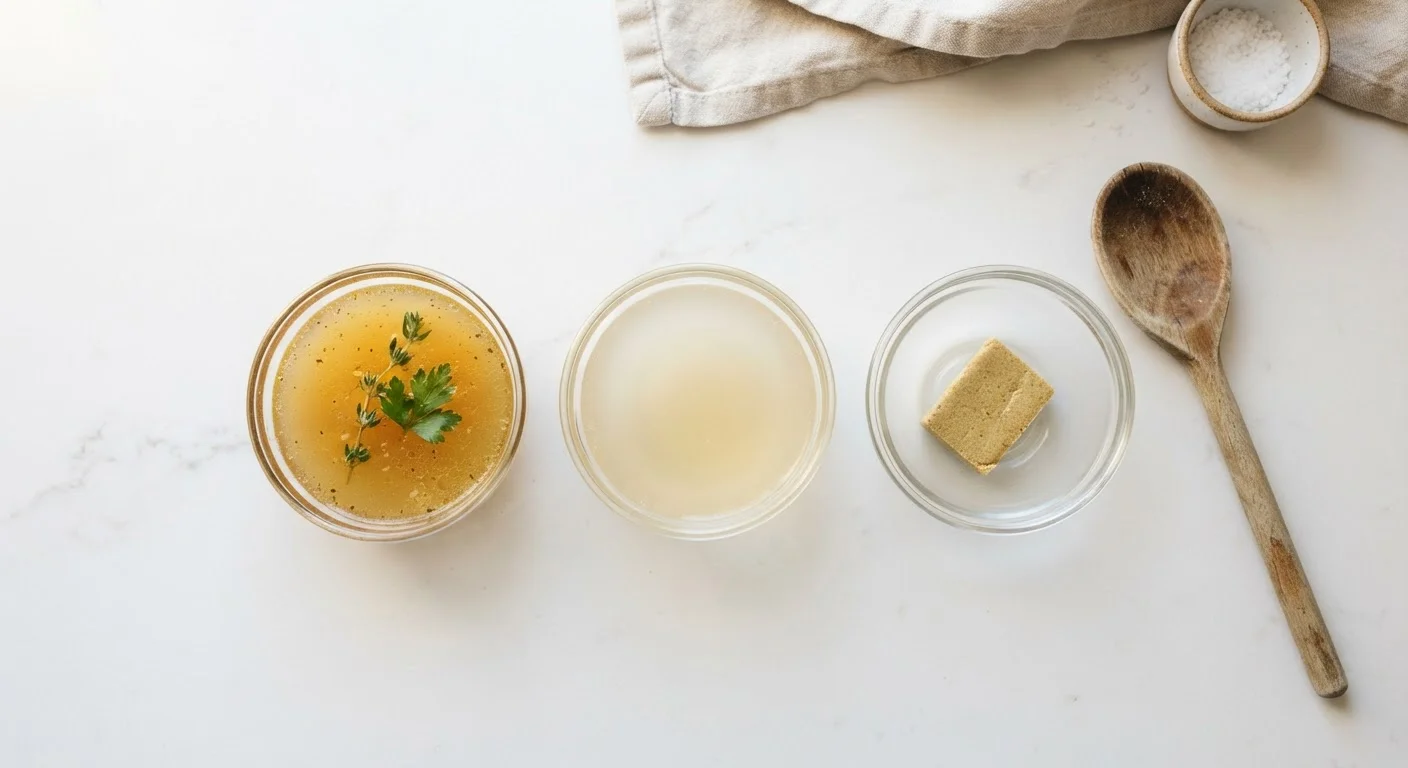
Stock, broth, and bouillon are all savory cooking liquids used to add depth to soups, sauces, and grains - but they are made differently and behave differently in the kitchen. Stock is made primarily from bones and has a rich, gelatin-like body. Broth is made mainly from meat and vegetables and tastes more seasoned and drinkable. Bouillon is a dehydrated, concentrated form of either, sold as cubes, granules, or powder.
The gelatin in stock comes from collagen in bones, which breaks down during long simmering and gives stock a silky body that broth typically lacks.
Why the Labels Don't Always Match What's Inside
Walk down any grocery aisle and you'll find cartons labeled stock, broth, and even "stock/broth" sitting side by side. Food manufacturers don't always use these terms consistently, which means what's on the label doesn't always reflect how the product was made. Understanding the underlying differences helps you choose more deliberately - and adjust when you're working with what you have.
The core distinction comes down to what each liquid is built from and how much it has been seasoned. These two factors determine texture, flavor, and how each performs when you cook with it. For a broader look at how ingredients compare on the shelf, our Food & Drinks Guide covers many similar comparisons.
What Makes Stock Different
Stock is made by simmering bones - usually with some aromatics like onion, celery, and carrots - in water for an extended period. The long cooking time draws collagen out of the bones, which converts into gelatin. That gelatin gives stock a slightly thick, silky quality. When you refrigerate homemade stock, it often solidifies into a loose gel. That's a sign of a well-made stock, not a flaw.
Because bones are the focus (not seasoned meat), traditional stock is typically unsalted or very lightly salted. This makes it a flexible base for sauces, braises, and reductions, where a cook controls seasoning at every step. See our article on dry heat vs. moist heat cooking to understand the braising methods where stock really shines.
Save Bones for Homemade Stock
Roasted chicken carcasses, leftover beef bones, or even shrimp shells can be frozen and saved until you have enough to make a batch of homemade stock. Store them in a zip-top freezer bag and you'll have the foundation for rich, zero-waste stock ready whenever you need it.
What Makes Broth Different
Broth starts with meat and vegetables rather than bones, though bones may be included in smaller amounts. Because it simmers for a shorter time and focuses on flesh rather than connective tissue, broth is lighter in body - it won't gel when chilled the way stock does.
Broth is also typically seasoned during cooking, which means it tastes more complete on its own. That's why broth is the base for many soups and why it's perfectly drinkable straight from a mug. The lighter, more savory character also makes it useful for cooking grains like rice or quinoa, where you want flavor but not heaviness.
~900mg
Sodium per cup in many standard bouillon cubes
Nutrition label data from widely available commercial bouillon products shows sodium content often approaching or exceeding 900mg per reconstituted cup.
~4-6 hrs
Typical simmer time for homemade chicken stock
Most culinary references and cooking guides recommend simmering chicken bones for at least four hours to fully extract collagen and flavor.
Bouillon: The Concentrated Shortcut
Bouillon - sold as cubes, granules, or powder - is dehydrated and concentrated stock or broth. One cube dissolved in a cup of hot water produces a liquid that approximates broth. It's shelf-stable, compact, and inexpensive, which makes it a practical pantry staple for quick weeknight cooking.
The trade-off is composition. Many bouillon products are high in sodium and may contain flavor enhancers like monosodium glutamate (MSG), vegetable oils, or starch. Low-sodium and cleaner-ingredient versions exist and are increasingly common. If you're watching sodium intake, reading the nutrition label is worthwhile. For context on how product labels work more broadly, our Nutrition & Eating hub offers useful guidance.
"Stock" and "Broth" Labels Aren't Regulated
In the U.S., there are no strict federal standards requiring manufacturers to use "stock" and "broth" in a technically precise way on packaging. Some commercial products labeled "stock" may be made more like broth, and vice versa. When in doubt, check the ingredient list: bones listed early suggest stock; meat listed first suggests broth.
When to Use Each One
The right choice depends on what you're cooking and what you have available:
- Stock is ideal for pan sauces, gravies, braises, and risotto - situations where body and a neutral salt level matter.
- Broth works well in soups, stews, and grain cooking where you want seasoned flavor without heaviness.
- Bouillon is convenient for dishes where liquid volume matters more than body - think quick soups, pasta water, or a small amount needed to deglaze a pan. Learn more about deglazing and other foundational techniques in our common cooking terms reference.
In most home cooking scenarios, stock and broth are interchangeable with minor adjustments. If using broth in place of stock, consider reducing the additional salt you add elsewhere in the dish. If using stock in place of broth, the result will simply be a bit richer.