

| Fold | Gently combine without deflating |
| Deglaze | Add liquid to a hot pan to lift browned bits |
| Blanch | Boil briefly, then stop with ice water |
| Reduce | Boil liquid to thicken and concentrate flavor |
| Simmer | Just below boiling - small, gentle bubbles |
| Al dente | Cooked through but still slightly firm |
| Render | Melt fat slowly out of meat over low heat |
| Emulsify | Blend oil and water-based liquids into one |
Why Culinary Language Matters
Recipes assume a shared vocabulary. When a recipe tells you to "fold" egg whites or "deglaze" a pan, it's not being fancy - it's describing a specific action that affects the outcome of the dish. Misread that instruction, and your soufflé deflates or your sauce misses depth. This reference covers the cooking terms that appear most often in everyday recipes, explained in plain language so you can cook with confidence.
If you've ever stalled mid-recipe because a term wasn't clear, you're not alone. Reading a recipe from start to finish before you begin is one of the simplest habits that prevents kitchen confusion. This glossary gives you the vocabulary to do that well.
Fold
A gentle mixing technique that combines a light ingredient into a heavier one by sweeping a spatula down, across, and up. It preserves air in the mixture and prevents over-mixing.
Deglaze
Adding liquid to a hot pan after browning food to loosen the browned bits (fond) stuck to the bottom. Those bits dissolve into the liquid and create a flavorful base for sauces.
Blanch
Briefly boiling food (usually vegetables) and immediately transferring it to ice water to halt cooking. This preserves bright color and crisp texture.
Reduce
Boiling a liquid over medium-high heat so water evaporates and the liquid thickens and intensifies in flavor. The result is called a reduction.
Simmer
Cooking a liquid at a temperature just below boiling, where small bubbles rise slowly and the surface barely moves. Used for soups, braises, and sauces that need gentle, sustained heat.
Sauté
Cooking food quickly in a small amount of fat over high heat, moving it frequently. The goal is light browning and cooked-through food without stewing or steaming.
Braise
A two-step moist-heat method: first brown the food in fat, then cook it slowly in a small amount of liquid in a covered pot. Best for tough cuts that benefit from long, low cooking.
Fond
The browned, caramelized bits of food left stuck to the bottom of a pan after browning. Rich in flavor, fond dissolves into liquid during deglazing to form the base of sauces and gravies.
Al dente
An Italian term meaning "to the tooth." Used to describe pasta or vegetables cooked just until tender but still slightly firm when bitten. It signals the ideal doneness, not undercooking.
Emulsify
Combining two liquids that normally don't mix - such as oil and vinegar - into a stable, uniform mixture. Whisking vigorously or using an emulsifier like mustard or egg yolk holds them together.
Render
Cooking fatty meat (like bacon or duck skin) over low to medium heat to slowly melt out its fat. The fat liquefies and pools in the pan while the meat becomes crisp.
Macerate
Soaking fruit in sugar, alcohol, or juice to soften it and draw out its natural juices. Similar to marinating but used specifically with soft or delicate fruits.
Key Terms at a Glance
The quick-reference card below covers the most commonly misunderstood terms, grouped by what they tell you to do - whether that's a mixing technique, a heat method, or a prep step.
| Fold | Gently combine without deflating |
| Deglaze | Add liquid to a hot pan to lift browned bits |
| Blanch | Boil briefly, then stop with ice water |
| Reduce | Boil liquid to thicken and concentrate flavor |
| Simmer | Just below boiling - small, gentle bubbles |
| Al dente | Cooked through but still slightly firm |
| Render | Melt fat slowly out of meat over low heat |
| Emulsify | Blend oil and water-based liquids into one |
Many of these techniques connect directly to the type of heat you apply. Understanding dry heat versus moist heat explains why braising produces tender meat while roasting creates a crisp crust - two very different outcomes driven by the same underlying principle.
When Recipes Say "Season to Taste"
This instruction means add salt (and sometimes acid like lemon juice) gradually, tasting after each addition. It's not imprecise - it's an invitation to develop your palate. Start with less than you think you need, taste, and adjust. Most under-seasoned dishes simply need more salt added earlier in the cooking process, not just at the end.
Stovetop Terms You'll Encounter Often
Several culinary terms describe stovetop actions that look similar but produce very different results. Sautéing means cooking food quickly in a small amount of fat over high heat, keeping it moving. Simmering means maintaining a liquid just below boiling - small bubbles rise gently but the surface doesn't churn. Reducing means boiling a liquid until some water evaporates, concentrating flavors and thickening the texture.
Deglazing is the step where you add liquid (wine, broth, or water) to a hot pan after browning meat or vegetables, scraping up the browned bits stuck to the bottom. Those bits - called fond - carry enormous flavor. For more on how these stovetop methods differ in practice, see the difference between sautéing, pan-frying, and stir-frying.
~140°F
Temperature range for a gentle simmer
A full boil reaches 212°F at sea level; a simmer typically falls between 185°F and 205°F, depending on altitude and recipe needs.
30-60 sec
Typical blanching time for most vegetables
The ice bath step is just as important - food continues cooking from residual heat for several seconds after leaving the boiling water.
Prep Terms and Finishing Techniques
Blanching means briefly boiling a vegetable and then plunging it into ice water to stop the cooking. It preserves color and texture - useful for green beans or broccoli you plan to finish later. Folding is a gentle mixing technique used to combine a light, airy ingredient (like beaten egg whites) into a heavier base without deflating it. You move a spatula down through the center, across the bottom, and up the side in a deliberate arc.
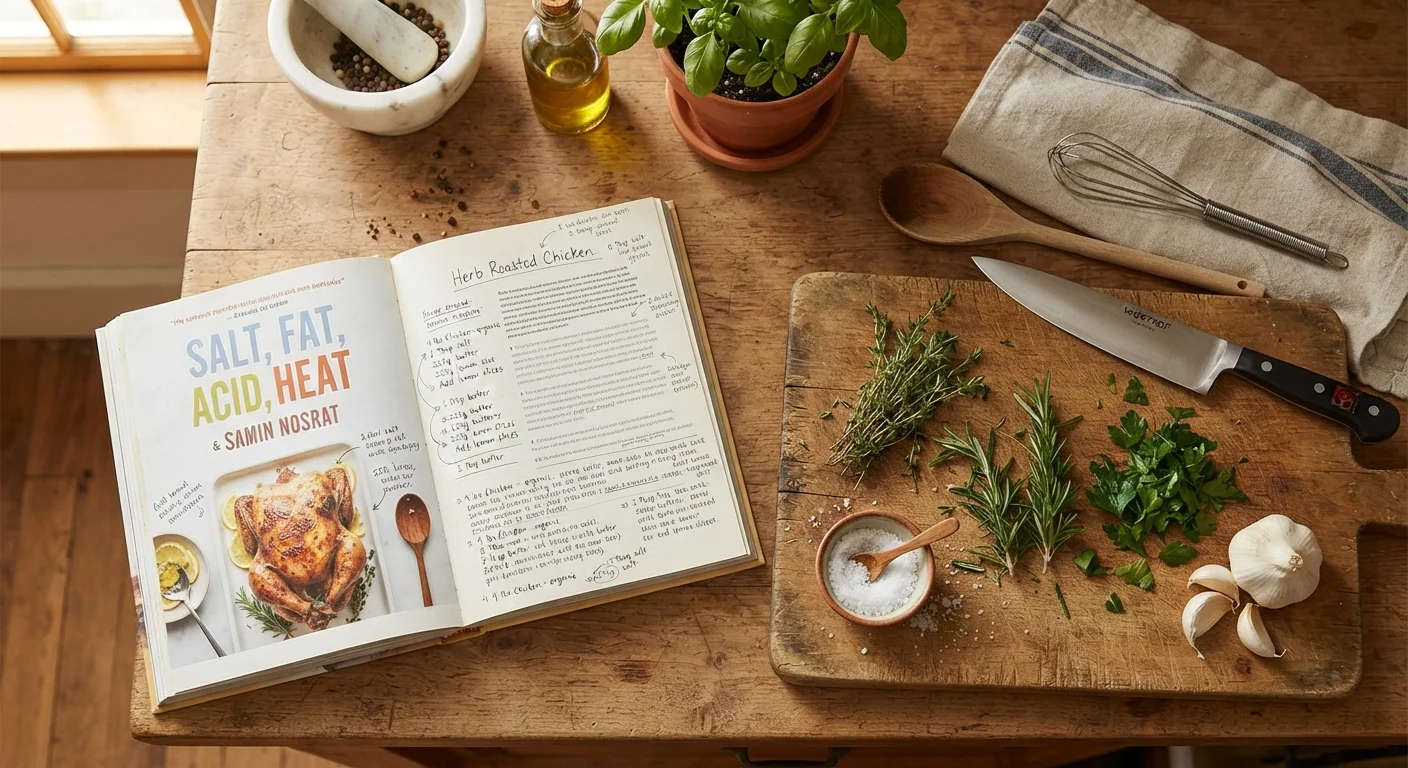
Seasoning to taste doesn't mean guess - it means adding salt, acid, or other flavors incrementally and tasting as you go. Understanding how salt, fat, acid, and heat work together gives you the framework for making that judgment call confidently. For reference on the liquids many of these techniques call for, stock, broth, and bouillon each play different roles worth knowing.
Once you've internalized these terms, recipes become clearer instructions rather than cryptic shorthand - and that's when cooking starts to feel genuinely manageable.