

Key Takeaways
Our Verdict
Neither dry heat nor moist heat is universally superior - each serves a distinct purpose in the kitchen. Dry heat excels at building crust, color, and concentrated flavor, while moist heat is the reliable choice for tender, fall-apart results. Understanding both gives you the flexibility to handle almost any recipe with confidence.
| Best for | Recommended |
|---|---|
| Cooks who want crispy, browned, and deeply flavored results | Dry Heat |
| Cooks working with tough cuts, legumes, or delicate proteins | Moist Heat |
| Cooks who want the most flavor complexity and texture variety | Combination (sear then braise) |
What Dry Heat and Moist Heat Actually Mean
Every cooking method transfers heat to food in one of two fundamental ways: through dry heat or moist heat. Understanding the difference isn't just culinary trivia - it directly predicts what your finished dish will taste and feel like.
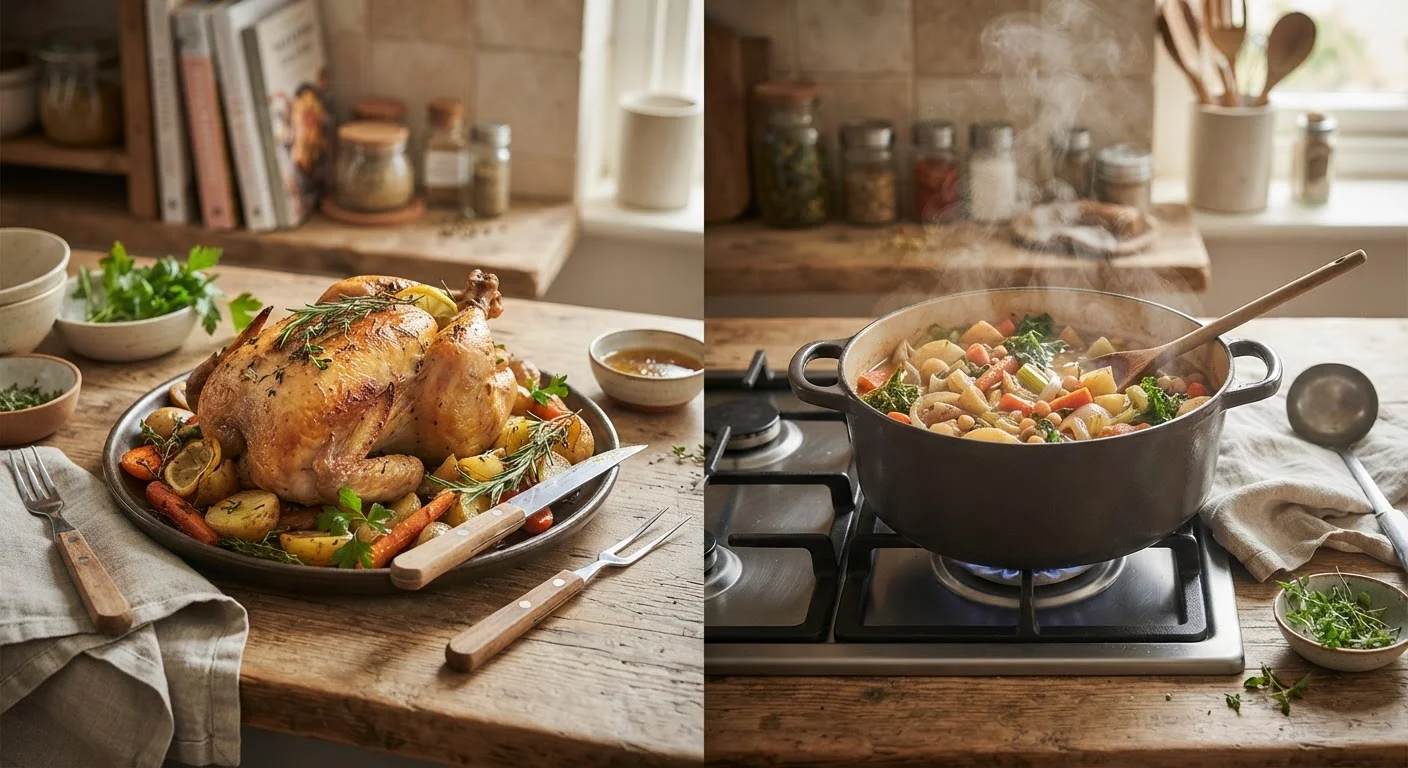
Dry heat cooks food using hot air, direct flame, or a hot metal surface - without the presence of water. Common dry-heat methods include roasting, baking, grilling, broiling, and sautéing. Because there's no moisture buffer, surface temperatures can climb well above 212°F, which triggers browning reactions (the Maillard reaction and caramelization) that produce complex, savory, or toasty flavors and firm or crispy textures.
Moist heat cooks food using water, steam, or a water-based liquid. Methods include steaming, poaching, braising, stewing, and boiling. Water caps out at 212°F at sea level, so moist-heat cooking is inherently gentler - ideal for softening tough connective tissue, keeping proteins from drying out, and cooking foods evenly through. For a deeper look at one important moist-heat distinction, see how boiling and simmering differ and why that gap matters for your food.
| Dry Heat | Moist Heat | |
|---|---|---|
| Heat source | Hot air, flame, or direct surface contact | Water, steam, or liquid-based environment |
| Max surface temperature | Can exceed 400-500°F | Capped at 212°F (boiling point of water) |
| Typical result | Browned, crispy, concentrated flavor | Tender, moist, evenly cooked |
| Best for | Tender cuts, vegetables, baked goods | Tough cuts, legumes, delicate proteins |
| Common methods | Roasting, grilling, baking, broiling, sautéing | Steaming, braising, poaching, stewing, boiling |
| Risk if misapplied | Dryness, burning, uneven doneness | Sogginess, washed-out flavor, overcooking |
When to Use Dry Heat
Reach for dry heat when you want color, crust, and concentrated flavor. The absence of moisture allows the food's surface to dry out quickly, setting the stage for browning. This is why a roasted chicken thigh tastes dramatically richer than a poached one - the skin crisps, the sugars and proteins at the surface transform, and fat renders away, deepening flavor.
Dry heat works best with:
- Tender cuts of meat (steaks, chops, chicken breasts) that don't need prolonged cooking to become palatable
- Vegetables that benefit from caramelization - think roasted carrots, Brussels sprouts, or asparagus
- Baked goods, where precise dry heat drives moisture out of batters and doughs to set structure
- Fish fillets cooked quickly at high heat on a hot pan or under the broiler
One important note: dry heat can dry food out if applied too long or at too high a temperature. Lean proteins especially need attention - remove them from heat promptly and let them rest. Sautéing, pan-frying, and stir-frying are all dry-heat stovetop techniques worth mastering once you understand this foundation.
Pat Food Dry Before Using Dry Heat
Surface moisture is the enemy of browning. Before roasting or pan-searing, pat your ingredients dry with paper towels. Even a thin layer of water on the surface will cause steaming rather than searing, delaying browning and leaving you with a pale, softer exterior instead of a crisp crust.
When to Use Moist Heat
Moist heat is your tool for tenderness and gentle, even cooking. When food cooks surrounded by liquid or steam, it stays hydrated and the temperature stays regulated. This makes moist heat ideal for turning tough, collagen-rich ingredients into something silky and fork-tender.
Moist heat works best with:
- Tough cuts of meat (chuck roast, pork shoulder, short ribs) that need long, slow cooking to break down connective tissue
- Dried beans and lentils, which require sustained liquid heat to fully hydrate and soften
- Delicate proteins like eggs and fish that need careful temperature control to avoid overcooking
- Grains such as rice, farro, and oats, which absorb liquid to cook through
Braising - one of the most effective moist-heat techniques - uses a small amount of liquid in a covered pot at low heat over a long period. It's the reason short ribs and pot roast are so satisfying. The liquid also becomes a built-in sauce, carrying flavors from the meat and aromatics. When braising, using a quality stock or broth instead of water adds meaningful depth.
Don't Confuse Low Heat With Safe Heat
Moist-heat methods like poaching or braising feel gentle, but food still needs to reach safe internal temperatures to be safe to eat. A long, slow braise at low heat will tenderize meat, but always verify doneness with a food thermometer - especially for poultry and pork. Slow doesn't automatically mean done.
Combining Both Methods for Better Results
Some of the most effective cooking techniques deliberately combine dry and moist heat. A classic example: sear, then braise. You start a tough cut like beef chuck in a hot, dry pan to develop a browned crust (dry heat), then add liquid and finish it covered in the oven at low heat (moist heat). The result has both the complexity of browning and the tenderness of slow, moist cooking.
Similarly, steaming vegetables and then finishing them with a quick sauté in a hot pan adds color and a touch of caramelization to an otherwise soft result. Even baking bread involves both: the crust forms through dry heat in a hot oven, while steam from the dough's own moisture keeps the interior soft.
Understanding both methods also helps you troubleshoot. Meat that's tough? It likely needed moist heat, not more time under dry heat. Vegetables that are soggy? A dry-heat finish would have helped. For a broader view of how these principles fit into cooking as a whole, heat as one of the four cooking fundamentals puts it in useful context. And as you get more comfortable navigating heat methods, building your seasoning habits throughout the cooking process will make the difference between a good result and a great one.
212°F
Maximum temperature of water-based cooking
Water's boiling point physically limits how hot moist-heat methods can get at standard altitude, making them inherently gentler than dry-heat techniques.
300-500°F
Typical oven roasting temperature range
Dry-heat methods operate well above water's boiling point, enabling the surface browning reactions that produce signature roasted flavor and texture.