

Key Takeaways
Stovetop Dry-Heat Cooking Methods
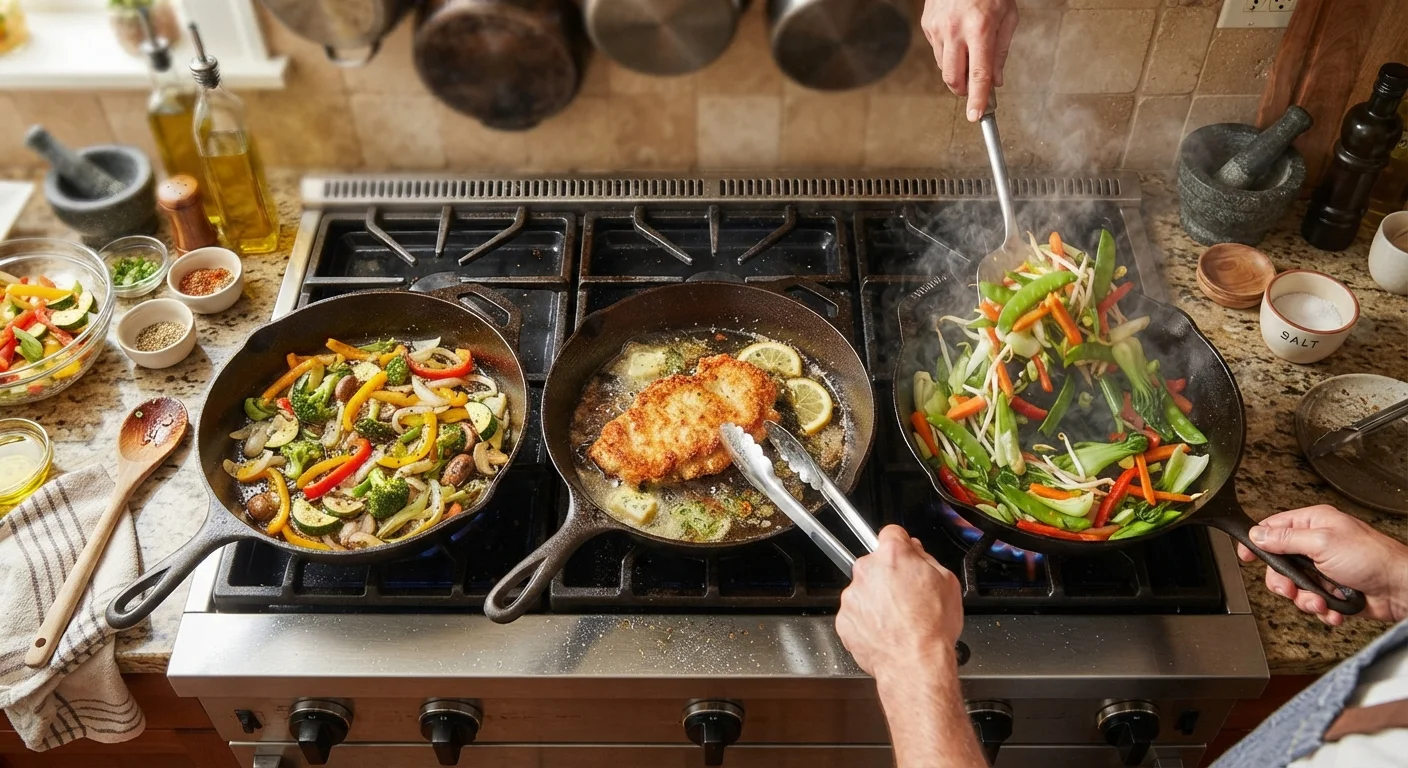
Sautéing, pan-frying, and stir-frying are all stovetop techniques that use fat in a pan to cook food with dry heat. Though they look similar at a glance, they differ in how much fat is used, how high the heat runs, and how actively you move the food. Each method produces a distinct texture and flavor result.
All three are classified as dry-heat cooking methods, meaning no water or liquid is used as the primary cooking medium - unlike braising or steaming.
Why These Three Methods Get Confused
All three techniques share two things: a hot pan and some fat. That surface-level similarity leads many cooks to treat them as interchangeable - and that's where dinner can go sideways. The differences between sautéing, pan-frying, and stir-frying come down to three variables: heat level, fat quantity, and how much you move the food. Getting those three factors right for the method you're using is the foundation of good stovetop cooking.
For a broader look at how different heat sources affect your food, see our guide on cooking with dry heat vs. moist heat.
375-450°F
Typical pan-frying oil temperature range
Food science references consistently place effective pan-frying in this range - hot enough to crisp the exterior while cooking the interior through.
1-3 min
Total cook time for most stir-fried dishes
The high heat of stir-frying means most proteins and vegetables are fully cooked in under three minutes once they hit the pan.
Sautéing: Quick, Light, and Flavorful
The word sauté comes from the French word for jump - and that tells you a lot about the method. Sautéing uses a small amount of fat over medium-high heat to cook food that's been cut into small or thin pieces. The goal is to brown the surface quickly while keeping the interior tender.
Vegetables like zucchini, mushrooms, and spinach are classic candidates. Thin cuts of meat - chicken strips, shrimp, scallops - work well too. The key rules: preheat the pan before adding fat, don't overcrowd (this causes steaming instead of browning), and keep the food moving, whether by tossing the pan or using a spatula.
The Dry Pan Test for Sautéing
Before adding oil, let your pan heat over medium-high for 60 to 90 seconds. Then add the fat and wait for it to shimmer - that's the signal that the pan is ready. Adding food before the pan is hot enough is the most common reason sautéed food ends up pale and watery instead of golden and flavorful.
Sautéing is also how aromatics like garlic and onion are typically softened before becoming the flavor base for a sauce or soup. For more on foundational cooking vocabulary, our common cooking terms decoded covers terms like this in plain language.
Pan-Frying: Steady Heat, Bigger Results
Pan-frying is the method to reach for when you're cooking something larger and thicker - a bone-in chicken thigh, a breaded pork cutlet, a fish fillet. More fat is used than in sautéing (enough to come partway up the side of the food), and the heat is kept at a steady medium to medium-high rather than cranked up high.
The slower, more controlled heat allows thick cuts to cook through to the center without burning the outside. You'll typically flip the food once or twice rather than stirring constantly. The result: a deeply golden, crisp crust with a fully cooked interior.
One common mistake is using heat that's too high. If the fat is smoking before the food even hits the pan, the exterior will char before the inside has a chance to cook. A properly preheated pan with shimmering - not smoking - oil is your target.
Stir-Frying: High Heat and Constant Motion
Stir-frying is the fastest and most demanding of the three. It relies on very high heat - higher than most home burners can fully replicate - and constant, rapid movement of food in the pan. Ingredients need to be cut small and uniformly so they cook in roughly the same amount of time, often just one to three minutes total.
The technique is rooted in Chinese cooking traditions and is designed to cook food so quickly that vegetables retain their color, crunch, and nutrients. Protein is often cooked separately and added back at the end. Sauce, if used, goes in last and reduces almost immediately.
Prep is everything with stir-frying. Because cooking happens so fast, all your ingredients - cut, measured, and arranged - must be ready before the heat goes on. There's no time to chop mid-cook. This concept connects directly to the idea of mise en place (everything in its place), a principle explored in our guide to the four elements of balanced cooking.
“Stir-frying is not just a technique - it's a discipline of preparation. The cooking itself is almost an afterthought if your mise en place is right.”
— Grace Young, Cookbook author and authority on wok cooking
Choosing the Right Method for What You're Cooking
Here's a simple framework to guide your decision:
- Small, thin, or tender ingredients (spinach, shrimp, sliced mushrooms) → sauté
- Larger, thicker cuts that need to cook through (chicken thighs, pork cutlets, fish fillets) → pan-fry
- Uniform small pieces that should stay crisp and colorful (bell peppers, broccoli, thinly sliced beef) → stir-fry
Understanding these distinctions makes following a recipe much more intuitive. When a recipe says "sauté the onions until translucent," you now know that means moderate heat, a small amount of fat, and gentle movement - not a ripping-hot pan. These distinctions also pair well with understanding other common cooking terms you'll encounter in everyday recipes.
Mastering even one of these methods well builds real confidence in the kitchen - and the others follow naturally.