

Key Takeaways
What Caramelization Actually Is
Caramelization is a chemical process in which heat causes the natural sugars in onions to break down and reorganize into new, more complex compounds. The result is a dramatically sweeter, deeper, and more savory flavor than the raw onion had - a transformation that food scientists describe as involving hundreds of distinct flavor molecules.
This is separate from the Maillard reaction, which browns proteins and also contributes color and flavor. With onions, both processes overlap during long, slow cooking. But neither can begin in earnest until most of the onion's substantial water content - roughly 89% of its weight - has evaporated off. That evaporation takes time, and no amount of high heat shortcuts it cleanly.
Understanding this science is the foundation for everything else. Onions that look slightly tan after 10 minutes have simply softened. The real transformation hasn't started yet. For a broader look at why aromatics like onions are so foundational to good cooking, see our piece on building a flavor base with aromatics.
The Most Common Mistakes - and How to Fix Them
Most failed attempts at caramelized onions come down to a handful of predictable errors. Understanding why each one happens makes it easier to course-correct in the moment rather than starting over.
Trusting the recipe's time estimate and pulling onions off heat too early.
Why it happens: Recipe writers frequently underestimate caramelization time, either to keep ingredient lists approachable or because they conflate softened onions with caramelized ones.
Using high heat to try to speed up the process.
Why it happens: High heat feels efficient, and onions do begin to brown quickly - but that browning is scorching, not caramelization. The outside chars while the inside remains harsh and under-cooked.
Using too small a pan or piling in too many onions at once.
Why it happens: Cooks often underestimate how much volume is needed and grab whatever pan is closest. Overcrowding traps steam, which keeps onions wet and prevents browning.
Not stirring frequently enough, letting onions scorch on the bottom.
Why it happens: Because the process is long, it is easy to get distracted and leave onions unattended for stretches at a time.
Skipping salt at the beginning of cooking.
Why it happens: Many home cooks default to salting at the end of a dish rather than layering it throughout - a habit that slows the caramelization process from the start.
One additional habit worth building: read the full recipe before you start. If a recipe calls for caramelized onions mid-step as though they take minutes, that is a signal to plan ahead and start them first. Our guide to reading a recipe before you start cooking explains how to spot these kinds of timing issues in advance.
The 10-Minute Claim Is a Recipe Lie
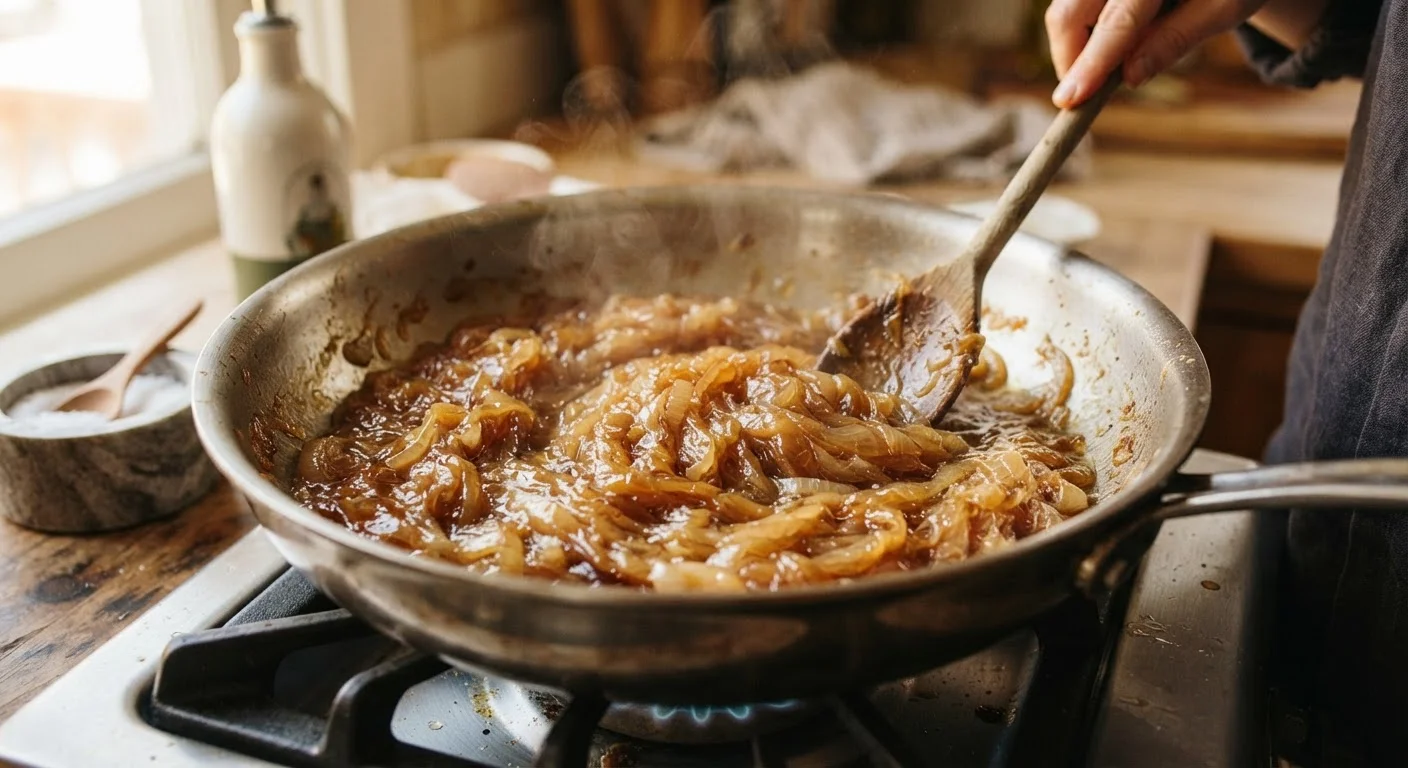
When a recipe says "caramelize onions, 10 minutes," it is almost always wrong. True caramelization - the deep golden-brown, jammy, sweet result - requires a minimum of 40 to 60 minutes over low to medium-low heat. Starting with this expectation reset is the single most important correction you can make.
Practical Tips for Getting It Right Every Time
A few straightforward habits make the difference between frustration and success:
- Choose the right fat. Butter adds flavor but can burn; a mix of butter and neutral oil raises the smoke point while keeping richness. Either works, but monitor closely.
- Cut onions consistently. Uneven slices cook at different rates. Aim for uniform half-rings about ¼ inch thick.
- Be patient with the steam phase. The first 15 minutes look uneventful - onions soften and release water. This is normal and necessary. Don't rush it.
- Use a heavy pan. Cast iron or stainless steel holds heat evenly. Thin pans create hot spots that burn onions unevenly.
- Deglaze strategically. When dark fond builds up, add 1-2 tablespoons of water and scrape it up. This adds depth and prevents bitterness.
Don't Confuse Translucent With Caramelized
Onions turn translucent and soft within 5-8 minutes. This is not caramelization - it is simply the cell walls breaking down and moisture releasing. Genuine caramelization involves a series of chemical reactions that convert the onion's natural sugars into hundreds of new flavor compounds. That process cannot be rushed without ruining the result.
The payoff for patience is significant. Properly caramelized onions transform soups, tarts, pasta, and sandwiches in a way that sautéed onions simply cannot replicate. Once you understand the process, the long timeline stops feeling like a problem and starts feeling like a worthwhile investment.
40-60 min
Time needed for true caramelization
Food scientists and professional cooks consistently cite this range as the realistic minimum for fully caramelized onions over medium-low heat.
~89%
Water content of a raw onion
Raw onions are mostly water - that moisture must fully evaporate before browning reactions can begin, which is why the process takes so long.