

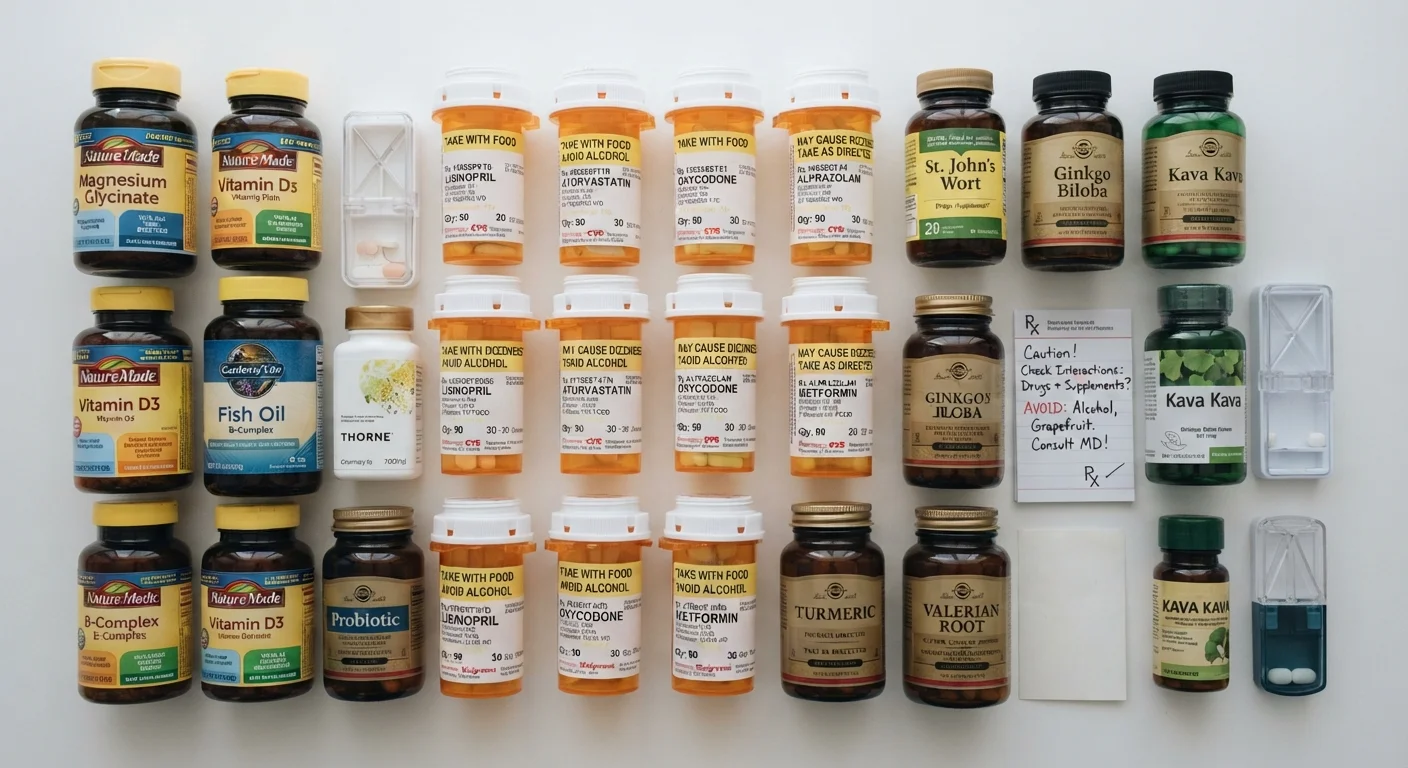
Why Supplement-Drug Interactions Are a Real Safety Concern
Many Americans take at least one dietary supplement alongside a prescription medication. Because supplements are sold over the counter and often feel like a natural, low-risk choice, it's easy to assume they won't interfere with drugs a doctor has prescribed. That assumption can be dangerous.
Supplements can alter how the body absorbs, processes, or eliminates medications - sometimes making a drug less effective, and sometimes amplifying its effects to harmful levels. These interactions are not rare edge cases; some of the most widely used supplements are also the most clinically significant offenders.
Understanding how supplements are regulated differently from drugs is a useful starting point. Unlike prescription medications, supplements are not required to demonstrate safety or efficacy before reaching store shelves, which means interaction risks are not always flagged on packaging.
High-Risk Combinations to Know
The following interactions are among the most documented and clinically significant. This is not an exhaustive list - always consult a pharmacist or physician for guidance specific to your medications.
St. John's Wort and Many Prescription Drugs
St. John's Wort (Hypericum perforatum) is one of the most extensively studied herb-drug interaction risks. It activates a liver enzyme pathway (CYP3A4) that accelerates the breakdown of many drugs, reducing their concentration in the blood. Affected medications include certain antidepressants, HIV antiretrovirals, oral contraceptives, transplant rejection drugs, and blood thinners like warfarin. The consequences can range from treatment failure to serious medical emergencies.
Vitamin K and Warfarin (Blood Thinners)
Warfarin works by blocking vitamin K-dependent clotting factors. A significant change in vitamin K intake - whether from supplements or large amounts of leafy greens - can destabilize anticoagulation control. People on warfarin typically receive specific dietary guidance from their care team for this reason.
Fish Oil and Anticoagulants or Antiplatelet Drugs
High-dose omega-3 fish oil has blood-thinning properties. When combined with anticoagulants (warfarin, apixaban) or antiplatelet medications (aspirin, clopidogrel), it may increase bleeding risk. Routine dietary fish consumption is generally not a concern at this level, but concentrated supplements at high doses warrant discussion with a provider.
Calcium and Certain Antibiotics or Thyroid Medications
Calcium can bind to some antibiotics (particularly tetracyclines and fluoroquinolones) and to levothyroxine (a common thyroid hormone replacement), reducing how much of the drug is absorbed into the bloodstream. Spacing doses appropriately can sometimes mitigate this risk - but only with guidance from a healthcare provider. See our article on timing and absorption for supplements for a related example with iron.
High-Dose Vitamin E and Blood Thinners
Like fish oil, high-dose vitamin E has antiplatelet activity. Used alongside anticoagulants or before surgery, it may elevate bleeding risk. This is one reason more is not always better with vitamins.
Special Populations Face Greater Risk
Older adults, people managing chronic conditions, and anyone taking multiple prescription medications face a higher likelihood of clinically significant supplement interactions. If you or someone in your care falls into these categories, it is especially important to consult a physician or clinical pharmacist before adding any supplement. Pregnant individuals should also receive explicit professional guidance before taking any supplement.
What to Tell Your Doctor and Pharmacist
The most actionable step you can take is full disclosure. Tell every prescriber and pharmacist about every supplement you take - including vitamins, minerals, herbs, and protein powders. Bring bottles to appointments if needed. Pharmacists are specifically trained in drug interactions and can flag concerns quickly.
If you're starting a supplement for the first time while on any prescription drug, get a professional opinion before you begin rather than after. And before making major changes to your supplement routine, review key safety questions worth asking to approach the decision with appropriate caution.
Finally, it's worth asking whether a supplement is genuinely necessary. Whole foods often deliver nutrients more safely than concentrated supplements, and without interaction risk.
Drug-supplement interaction
A change in a drug's absorption, metabolism, or effect caused by a dietary supplement taken alongside it. Interactions can reduce a drug's effectiveness or increase the risk of side effects.
CYP3A4
A liver enzyme responsible for metabolizing many common medications. Supplements like St. John's Wort can activate this enzyme, causing drugs to be broken down too quickly and lose effectiveness.
Anticoagulant
A medication that reduces the blood's ability to clot, used to prevent or treat conditions like stroke or deep vein thrombosis. Warfarin is a common example.
Antiplatelet
A drug that prevents blood platelets from clumping together. Aspirin and clopidogrel are examples; some supplements may amplify this effect and increase bleeding risk.
This article is for general informational and educational purposes only and is not a substitute for professional medical advice. Always consult a qualified healthcare provider before starting, stopping, or changing any supplement or medication regimen.