

Health

Supplement Safety Questions Worth Asking Before You Buy

Share
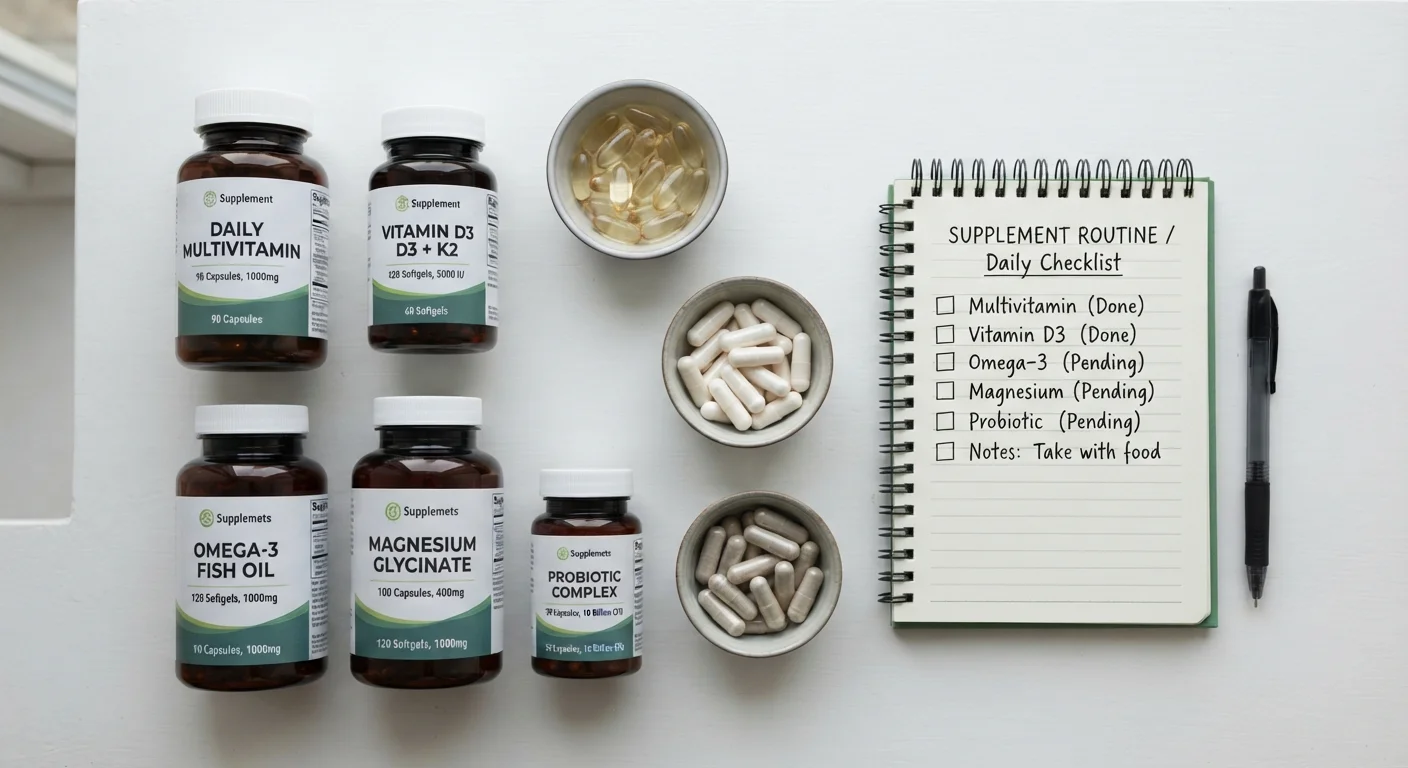
Supplement bottles and capsules arranged on a white surface next to a checklist notepad

Key Takeaways

Dietary supplements in the U.S. are not FDA-approved before they reach store shelves.
Third-party testing seals from organizations like USP or NSF signal independent quality verification.
Ingredient labels can be misleading; proprietary blends may hide individual dosages.
Supplement-drug interactions are real and can be serious — always consult your doctor or pharmacist.
A genuine need, confirmed by a healthcare provider, is the strongest reason to start any supplement.
20–40 min

Summary

18 items · 20–40 minutes

Why Asking Questions Before You Buy Matters

In the United States, dietary supplements — vitamins, minerals, herbs, and more — are regulated as a category of food, not as drugs. That means manufacturers do not need to prove safety or effectiveness to the FDA before a product reaches store shelves. The burden falls on the consumer to do a bit of homework.

That doesn't mean supplements are inherently unsafe. Many people benefit from targeted supplementation when they have a documented nutritional gap. But the marketplace is large, the marketing is loud, and the quality varies widely. This checklist is designed to help you slow down and ask the right questions before adding anything new to your routine.

If you're new to supplements altogether, our guide to starting supplements for the first time covers the foundational steps, including how to assess your needs and what to discuss with a clinician.

Establish a Real Need

Speak with a healthcare provider to confirm you have a deficiency or condition that warrants supplementation before purchasing. Must
Review your current diet to see whether food sources could reliably meet the same nutritional gap. Should
Ask your doctor or pharmacist whether the supplement you're considering interacts with any medications you take. Must

Evaluate Quality and Testing

Look for a third-party testing seal — such as USP Verified, NSF Certified for Sport, or Informed Sport — on the product label. Must
Verify the certification by searching the issuing organization's website directly, rather than relying solely on the label claim. Should
Check whether the manufacturer follows Current Good Manufacturing Practices (CGMPs) as outlined by the FDA. Should
Search the FDA's database of dietary supplement adverse event reports (CFSAN Adverse Event Reporting System) for the product or key ingredients. Nice to have

Read the Ingredient Label Carefully

Identify every active ingredient and its listed amount per serving; avoid products using proprietary blends that obscure individual ingredient dosages. Must
Review inactive ingredients (fillers, binders, colorings) for any substances you are sensitive or allergic to. Must
Cross-reference each ingredient against reputable databases such as the NIH Office of Dietary Supplements fact sheets. Should
Note the form of each key nutrient — for example, magnesium glycinate versus magnesium oxide — since bioavailability can differ significantly. Should

Assess the Marketing Claims

Treat any claim that a supplement can 'cure,' 'treat,' or 'prevent' a disease as a red flag; these claims are not permitted for dietary supplements under U.S. law. Must
Look for structure/function claims that are accompanied by the required FDA disclaimer: 'This statement has not been evaluated by the Food and Drug Administration.' Should
Evaluate any cited research critically — check whether studies were conducted on humans, were peer-reviewed, and are relevant to the dosage in the product. Should
Be skeptical of testimonials or celebrity endorsements used as evidence of effectiveness. Nice to have

Confirm Safe Use for Your Situation

If you are pregnant, nursing, elderly, or managing a chronic condition, get explicit professional guidance before starting any supplement. Must
Check whether the serving size and dosage align with ranges cited in established sources, such as the NIH Dietary Reference Intakes. Must
Plan to re-evaluate the supplement periodically with your healthcare provider rather than continuing indefinitely without reassessment. Should

Tools and Resources to Support Your Evaluation

You don't need special expertise to evaluate a supplement — but a few reliable resources make the process faster and more thorough.

Required

NIH Office of Dietary Supplements (ODS) Fact Sheets

Provides evidence-based summaries of individual vitamins, minerals, and botanicals, including established intake ranges and safety notes.

Required

USP Verified Products Database

Lets you search for supplements that have earned USP's independent verification seal, confirming label accuracy and purity.

Required

NSF Certified Products Database

Lists products certified by NSF International for label accuracy, contaminant testing, and facility audits.

Optional

FDA CFSAN Adverse Event Reporting System (CAERS)

Allows you to search reported adverse events associated with specific dietary supplement products or ingredients.

Required

Your pharmacist

An accessible, no-appointment resource for checking supplement-drug interactions and reviewing your full medication list.

Keep in mind that no label-reading or database search replaces a conversation with your healthcare provider, especially if you take prescription medications. Some common supplements can interact with drugs in clinically significant ways. For a detailed look at known combinations to watch for, see our article on supplements and medications that don't mix.

Special Populations Require Extra Caution

Guidance on supplement safety for pregnant or breastfeeding individuals, children, older adults, and people with chronic conditions is not one-size-fits-all. What is considered safe for a healthy adult may not be appropriate in these circumstances. If you fall into any of these groups, consult a qualified healthcare professional before using any supplement — do not rely on general label guidance alone.

Finally, it's worth asking whether food might do the job first. Our comparison of whole foods versus supplements can help you decide when a pill actually fills a gap — and when it doesn't.

This article is for general informational and educational purposes only and does not constitute medical advice. Always consult a qualified healthcare professional before starting, stopping, or changing any supplement or medication regimen.

Health Editorial Team is the collective byline for our editorial team and contributor network. Articles published under this byline or an editorial pen name are researched, written, and reviewed according to our editorial standards for clarity, consistency, and independence before publication.

View all articles by Health Editorial Team →
Disclaimer: The content on this site is for informational purposes only and is not a substitute for professional advice. Always consult a qualified professional for guidance specific to your situation.