

Key Takeaways
Why Iron Matters - and Why More Isn't Always Better
Iron is an essential mineral your body uses to produce hemoglobin, the protein in red blood cells that carries oxygen from your lungs to every tissue. Without adequate iron, oxygen delivery falters, leading to fatigue, difficulty concentrating, and in more significant deficiency, iron-deficiency anemia.
Yet iron supplementation is not a straightforward fix for tiredness. Unlike water-soluble vitamins that the body readily excretes, iron accumulates in the body. Taking more than you need - especially without confirmed deficiency - can cause gastrointestinal distress, and in rare cases of genetic conditions like hemochromatosis, dangerous organ overload. Understanding how supplements interact with your body's systems is essential context before adding any iron product to your routine.
This is why a blood test - specifically measuring serum ferritin and hemoglobin - is the appropriate starting point, not self-diagnosis based on symptoms alone.
Who Commonly Has Increased Iron Needs
Certain physiological circumstances genuinely raise the body's demand for iron or reduce the amount retained from food alone:
- Menstruating individuals: Monthly blood loss means regular iron loss. Women of reproductive age are among the groups most commonly diagnosed with iron-deficiency anemia.
- Pregnant individuals: Blood volume expands significantly during pregnancy, increasing iron requirements substantially. Prenatal care almost always includes iron status monitoring. Those who are pregnant or planning to become pregnant should work closely with their healthcare provider - general advice is not a substitute for personalized care.
- Infants and toddlers: Rapid growth creates high iron demands. Pediatric guidance from a healthcare provider is essential for this age group.
- People with certain gastrointestinal conditions: Conditions such as celiac disease or inflammatory bowel disease can impair iron absorption even when dietary intake seems adequate.
- Frequent blood donors: Regular donation can deplete iron stores over time.
- Athletes, particularly endurance runners: Intense physical training can increase iron losses through mechanisms including foot-strike hemolysis.
If you fall into one of these categories, that's a reason to discuss testing with your doctor - not to start supplementing without guidance. See our guide to starting supplements for the first time for a framework on having that conversation.
~10 million
Americans estimated to be iron-deficient
The Centers for Disease Control and Prevention (CDC) identifies iron deficiency as the most common nutritional deficiency in the United States.
~50%
Lower iron absorption when taken with food vs. fasting
Research published in nutritional science literature indicates food can reduce non-heme iron absorption by roughly half compared to fasting conditions, though individual variation is significant.
Timing and Absorption: Getting the Most From Iron
How and when you take iron matters almost as much as whether you take it. Absorption is highly variable and influenced by several factors.
Take iron supplements on an empty stomach when tolerated
Iron is absorbed most efficiently in the absence of food, particularly in an acidic environment. Taking it on an empty stomach maximizes the amount that reaches the bloodstream. However, some people experience nausea this way.
Pair iron with a source of vitamin C
Ascorbic acid (vitamin C) converts iron into a form the body absorbs more readily. Research consistently shows this pairing meaningfully increases non-heme iron uptake.
Separate iron from calcium, coffee, and tea by at least two hours
Calcium competes with iron for the same absorption pathways. Tannins and polyphenols in coffee and tea bind to iron and reduce how much your intestinal cells can take in.
Follow the dose and schedule your provider recommends - do not self-escalate
Higher doses do not proportionally increase absorption but do increase the risk of constipation, nausea, and gastrointestinal irritation. Excess iron that accumulates in tissues can be harmful.
Retest iron levels after a consistent supplementation period
Supplementing without follow-up testing provides no way to confirm whether stores are recovering or whether the dose needs adjustment. Continuing unnecessary supplementation carries risk.
It's also worth knowing that certain supplements and medications can interact in significant ways. Iron is no exception - it can reduce the absorption of thyroid medications and some antibiotics when taken simultaneously. Always inform your prescribing physician about any supplements you use.
Food First: When Diet May Be Enough
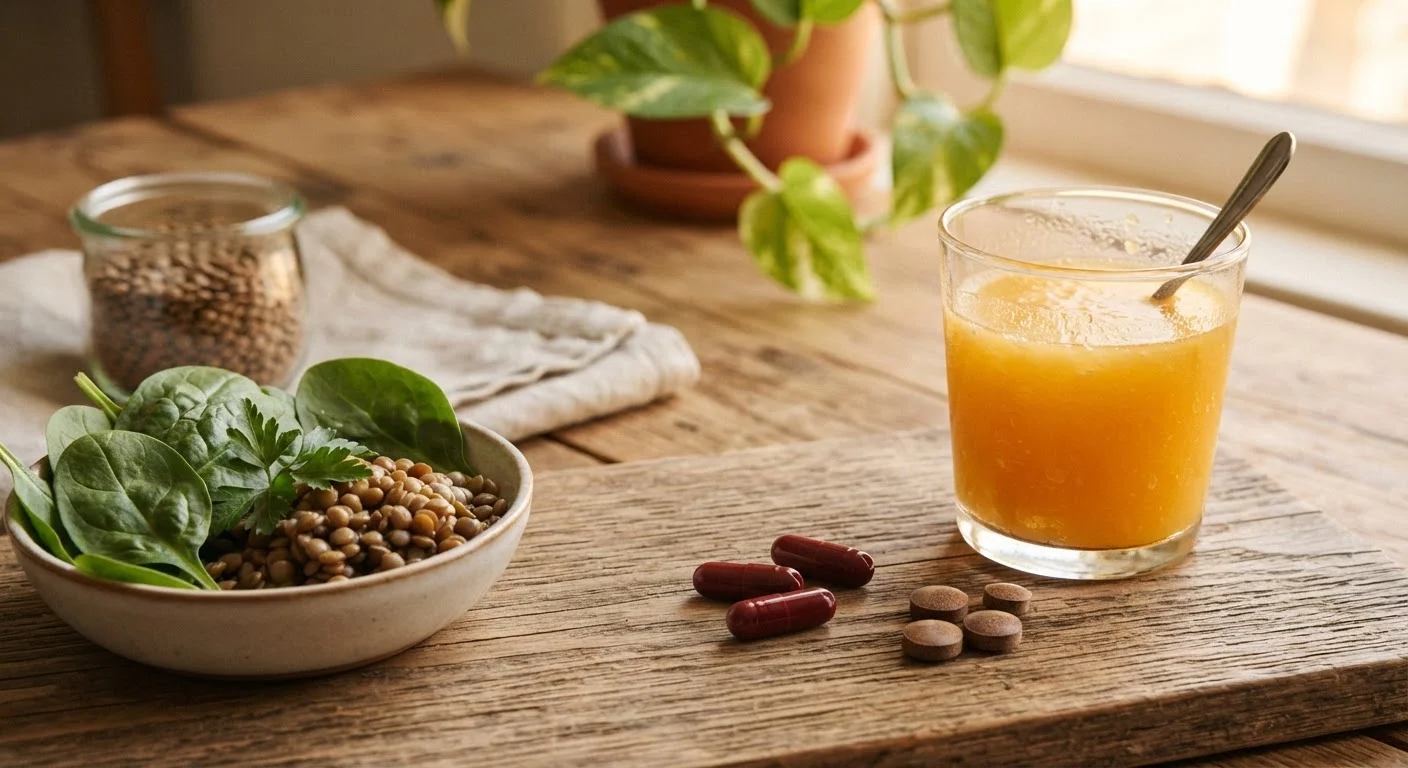
For many adults without confirmed deficiency, dietary adjustments can meaningfully support iron status. Heme iron - found in red meat, poultry, and fish - is absorbed more efficiently than non-heme iron from plant sources like lentils, spinach, and fortified cereals. That said, pairing non-heme sources with vitamin C-rich foods (citrus, bell peppers, strawberries) significantly improves uptake.
Our broader look at whole foods versus supplements explores when food genuinely meets the gap and when it doesn't - a useful read before committing to a supplement regimen.
This article is for general informational and educational purposes only and does not constitute medical advice. Do not start, stop, or change any supplement or medication without consulting a qualified healthcare provider who can evaluate your individual health status.