

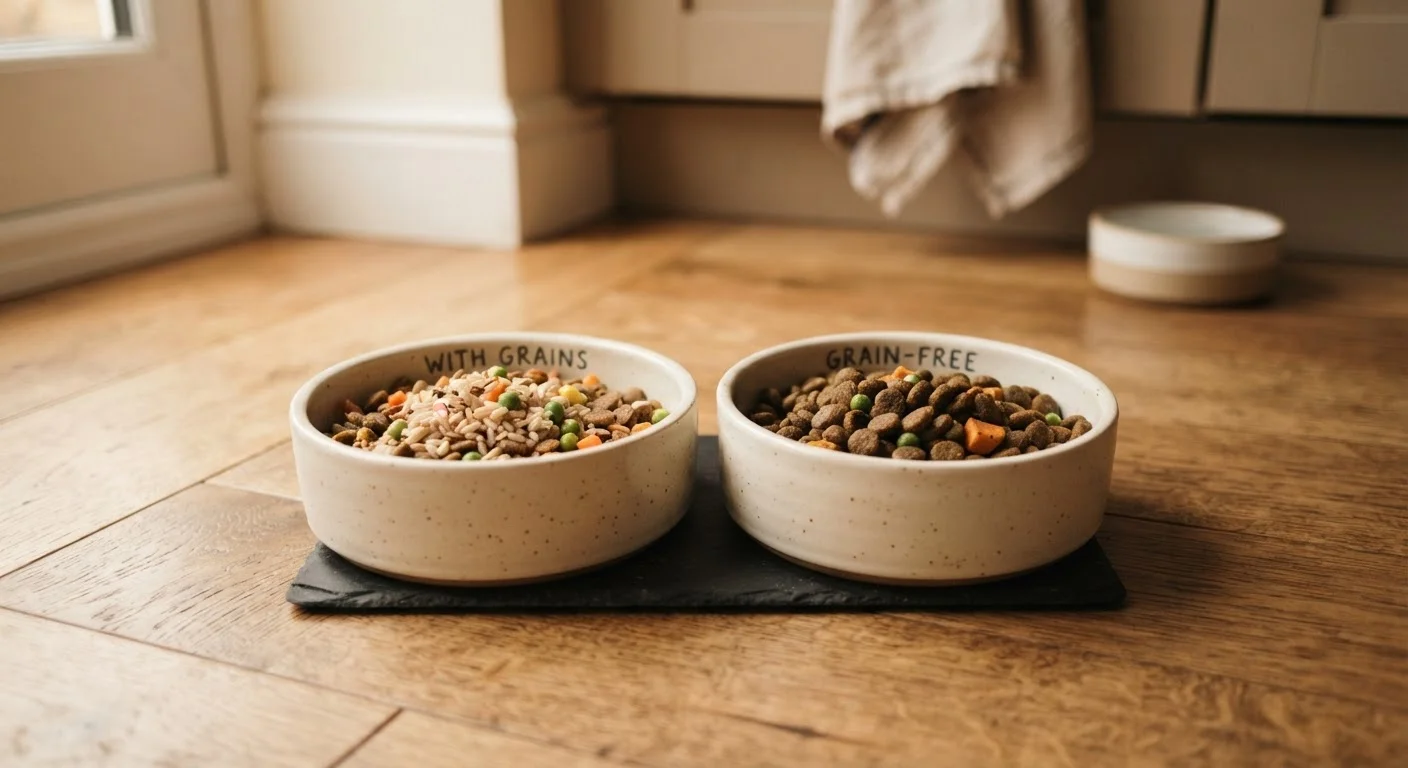
Key Takeaways
Option A
Grain-Free Diets
The popular, protein-forward alternative.
Best for: Pets with confirmed grain sensitivities or allergies, as directed by a veterinarian.
Option B
Grain-Inclusive Diets
The established, research-backed standard.
Best for: Most healthy dogs and cats seeking a nutritionally complete, well-studied diet.
If your pet has been diagnosed with a grain allergy by a vet
Grain-Free Diets
A confirmed grain allergy is one of the few evidence-based reasons to choose a grain-free formula. Work with your vet to select an appropriate option.
If you have a healthy dog with no diagnosed sensitivities
Grain-Inclusive Diets
Grain-inclusive formulas have a longer safety record and avoid the cardiac concerns flagged in ongoing FDA research on grain-free diets.
If you have a cat with no specific dietary restrictions
Grain-Inclusive Diets
Cats are obligate carnivores but can digest grains well; grain-inclusive foods often provide a reliable, complete nutritional profile.
If your pet has recurring digestive or skin issues
Grain-Free Diets
After ruling out other causes with your vet, a supervised trial on a grain-free or novel-ingredient diet may help identify the trigger.
What Each Diet Actually Contains
The terms sound straightforward, but the differences between grain-free and grain-inclusive pet foods run deeper than simply removing wheat or corn from a bag. Understanding what replaces grains - and why it matters - is where the real conversation begins.
Grain-inclusive diets contain cereal grains such as rice, oats, barley, or corn as a carbohydrate and energy source. These ingredients provide fiber, B vitamins, and readily available energy. Most dogs and cats digest common grains efficiently, and these formulas have decades of feeding trials behind them.
Grain-free diets swap those grains for alternative carbohydrate sources - typically legumes (peas, lentils, chickpeas), potatoes, or tapioca. They are not lower in carbohydrates overall; they simply derive those carbohydrates from different plants. This distinction is frequently misunderstood by pet owners who assume "grain-free" means "low-carb" or "more natural."
For a closer look at how to decode the actual ingredient lists on packaging, see what your pet's food label actually tells you.
| Criterion | Grain-Free | Grain-Inclusive |
|---|---|---|
| Primary carb source | Legumes, potatoes, tapioca | Rice, oats, barley, corn |
| Carbohydrate content | Similar overall levels | Similar overall levels |
| Long-term safety record | Limited; FDA investigation ongoing | Decades of feeding trials |
| Best for grain allergies | Yes, if vet-confirmed | No |
| DCM cardiac concern | Under active investigation | Not flagged in research |
| AAFCO-compliant options | Available | Widely available |
The FDA Investigation and the DCM Question
In 2018, the U.S. Food and Drug Administration (FDA) opened an investigation into a possible connection between grain-free diets and dilated cardiomyopathy (DCM) - a serious heart condition - in dogs. DCM causes the heart muscle to weaken and the heart chambers to enlarge, reducing the organ's ability to pump blood effectively.
The investigation was prompted by a rise in DCM cases in breeds not traditionally predisposed to the condition, with a notable pattern: many affected dogs were eating grain-free diets high in legumes. As of the time of writing, the FDA has not confirmed a definitive causal link, nor has it concluded the investigation. The mechanism - whether it involves taurine deficiency, anti-nutritional factors in legumes, or another variable - remains under active study.
524+
DCM cases reported to FDA
The FDA received over 524 reports of diet-associated DCM in dogs between January 2014 and April 2019, the majority linked to grain-free diets.
~10%
Pets with true food allergies
Veterinary dermatology literature estimates that food allergies affect roughly 10% or fewer of pets presenting with skin or digestive complaints, with grain rarely the primary culprit.
This does not mean grain-free food will harm every dog, but it does mean the question is not settled. Veterinary cardiologists and nutritionists generally recommend discussing diet history with a vet, especially for large and giant breeds. Pet owners should not wait for a definitive ruling before having that conversation.
This article is for general informational purposes only and is not veterinary medical advice. Always consult a licensed veterinarian before making changes to your pet's diet, particularly if your pet has existing health conditions.
When Grain-Free Makes Sense - and When It Doesn't
Grain-free diets are sometimes chosen based on the assumption that grains are inflammatory, hard to digest, or simply "wrong" for carnivores. The evidence supporting those assumptions is limited. True grain allergies exist in pets, but they are far less common than allergies to animal proteins like chicken or beef. A pet showing digestive upset or skin issues is statistically more likely to be reacting to a protein source than to rice or oats.
That said, grain-free diets do have a legitimate place for pets with a confirmed grain intolerance or allergy - diagnosed through a proper veterinary elimination trial, not a process of self-guided guesswork. For those pets, removing the specific offending grain (or all grains, if identification isn't possible) may genuinely help.
The concern arises when grain-free is chosen as a lifestyle preference with no medical basis - particularly for dogs in breeds with cardiac risk. For more context on widespread nutrition misconceptions, persistent myths about pet nutrition that vets frequently correct is worth reading alongside this article.
Cats Are a Special Case
Cats are obligate carnivores, meaning they have specific requirements for nutrients like taurine and arachidonic acid that must come from animal sources. While cats can digest grains, their protein requirements are higher than dogs'. Both grain-free and grain-inclusive formulas can be nutritionally complete for cats - what matters most is that the diet meets AAFCO standards for feline life stages and that protein quality is adequate. Consult your vet if you are unsure whether your cat's current food fits their needs.
Whatever format your pet eats - dry, wet, or raw - the grain versus grain-free decision intersects with many other dietary variables. See how dry food, wet food, and raw diets differ for a broader view of diet formats.
Questions Worth Asking Your Veterinarian
Because no single diet is universally correct, the most productive step any pet owner can take is to come prepared to a vet visit with specific questions. Some starting points:
- Does my pet's breed, age, or health history put them at higher risk for DCM or other diet-related conditions?
- Has my pet shown any signs - skin issues, digestive changes, low energy - that might warrant an elimination diet trial?
- Is the food I'm feeding AAFCO-approved for my pet's life stage? (See reading a pet food label for help decoding those terms.)
- Would a board-certified veterinary nutritionist be helpful for my pet's specific situation?
Feeding decisions are not one-time choices. As your pet ages, their nutritional needs shift - and the research around diet and health continues to evolve. Staying in dialogue with your vet is the most reliable way to keep up. For additional guidance on daily feeding routines, feeding schedules and meal portioning covers how timing and structure also shape your pet's health.