

Key Takeaways
Our Verdict
Dry food suits most households well - it's convenient, shelf-stable, and widely available in complete, balanced formulas. Wet food adds valuable hydration and palatability, making it a strong option or complement for cats and dogs with certain health needs. Raw diets may appeal to owners seeking minimally processed options, but they demand rigorous food safety practices and veterinary guidance. The most informed choice comes from understanding your individual pet's needs rather than following trends.
| Best for | Recommended |
|---|---|
| Busy households seeking convenience and affordability | Dry food |
| Cats prone to urinary issues or pets with low thirst drive | Wet food |
| Owners wanting minimally processed feeding with time and commitment to spare | Raw diet (with veterinary oversight) |
| Picky eaters or pets recovering from illness needing appetite encouragement | Wet food |
Understanding the Three Main Diet Formats
Walk down any pet store aisle and you'll face a wall of options: bags of kibble, cans of pâté, frozen raw medallions, and freeze-dried everything in between. The sheer variety can feel overwhelming, especially when you genuinely want to do right by your dog or cat. Breaking down each format's core characteristics is the clearest place to start.
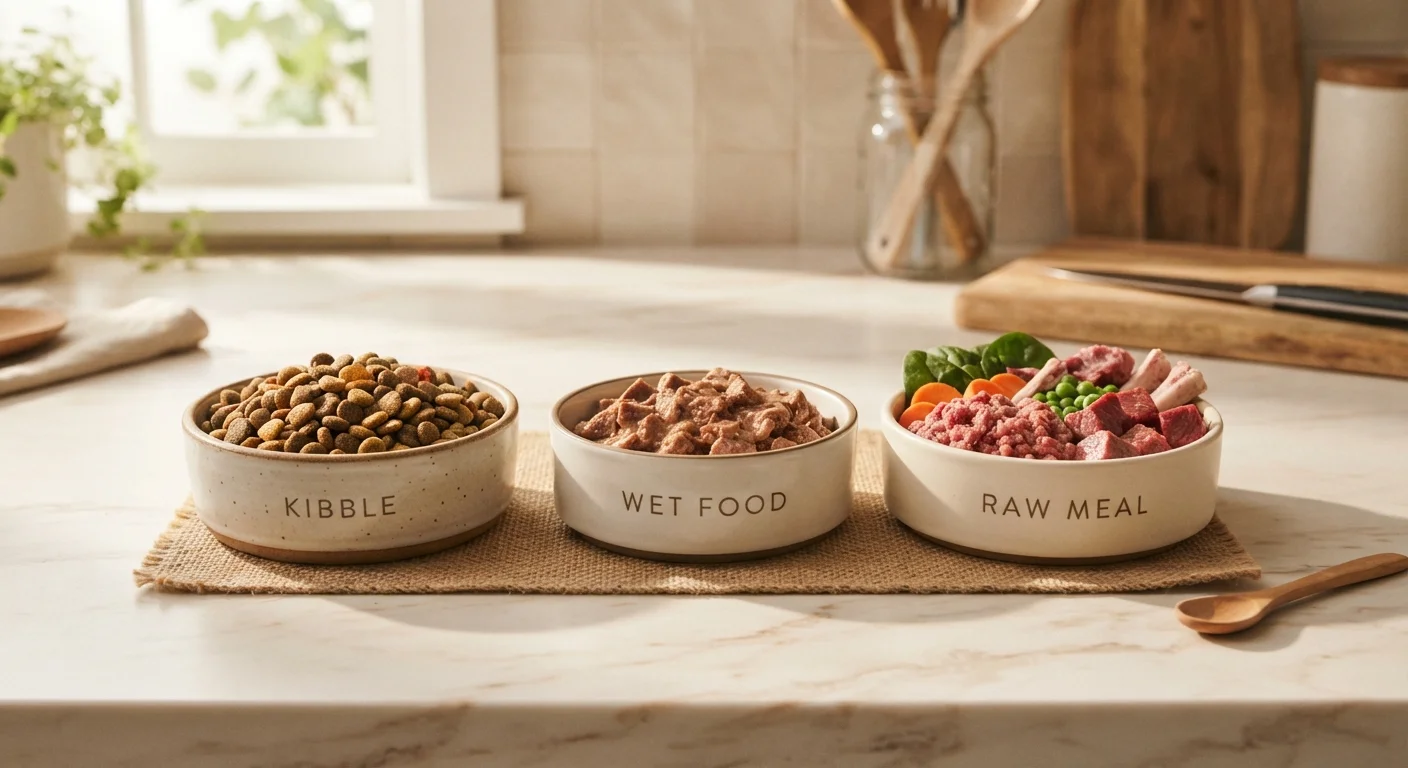
Dry food (kibble) is extruded, heat-processed, and typically contains around 8-12% moisture. Its low water content is what makes it shelf-stable and easy to measure. Wet food - sold in cans, pouches, or trays - contains roughly 70-80% moisture, much closer to what whole prey naturally provides. Raw diets are either commercially prepared (frozen or freeze-dried) or home-prepared, and consist of uncooked meat, organs, bones, and sometimes fruits and vegetables. Understanding these structural differences helps you read between the lines of any pet food claim you encounter - and for deeper label literacy, see what your pet's food label actually tells you.
| Dry Food | Wet Food | Raw Diet | |
|---|---|---|---|
| Moisture content | 8-12% | 70-80% | 60-75% (varies) |
| Shelf stability | Excellent - room temperature storage | Good sealed; refrigerate once opened | Frozen or freeze-dried only |
| Cost per serving | Generally lowest | Moderate | Typically highest |
| Nutritional completeness | AAFCO-compliant options widely available | AAFCO-compliant options widely available | Variable; home-prep risks deficiencies |
| Food safety risk | Low | Low to moderate (after opening) | Higher - pathogen risk |
| Palatability | Moderate - some picky eaters resist | High - aroma and texture appeal | High for many carnivores |
| Hydration benefit | Minimal | Significant | Moderate |
| Convenience | Very high | Moderate | Low - prep and handling intensive |
Nutritional Profiles and What They Mean in Practice
All three formats can, in principle, supply the nutrients dogs and cats need - but they do so differently. Dry and wet foods sold in the U.S. that carry an AAFCO (Association of American Feed Control Officials) nutritional adequacy statement have been formulated or tested to meet established nutrient profiles for a given life stage. That's a meaningful baseline.
Cats are obligate carnivores, meaning they require nutrients - such as taurine and arachidonic acid - found only in animal tissue. Both quality wet and dry foods account for this. Dogs are omnivores with more dietary flexibility, though high animal protein remains important. Wet food's high moisture content is particularly relevant for cats, who evolved to obtain most of their hydration from food rather than from a water bowl. For cats prone to urinary tract issues, the added hydration from wet food is often highlighted by veterinarians as a practical benefit.
Raw diets present a more complex picture. Proponents argue that minimal heat processing preserves enzymes and nutrients. However, the scientific literature does not currently support a clear health advantage of raw over high-quality cooked diets for most pets. Nutritional completeness also varies widely in home-prepared raw meals, which can be deficient in calcium, vitamins, or trace minerals without careful formulation by a veterinary nutritionist.
Mixing Formats Can Work Well
Many veterinarians and pet owners use a combination approach - dry food as the daily base supplemented with wet food for hydration and variety. This can be an effective middle ground, particularly for cats who need more moisture. Just account for the total caloric intake across both formats to avoid inadvertent overfeeding.
Food Safety, Handling, and Practical Trade-Offs
Convenience and safety are two areas where the formats diverge sharply. Dry food wins on both counts for most households - it stores at room temperature, portions easily, and works well with timed feeders. If you're weighing how to structure your pet's daily feeding routine, our guide on feeding schedules and measured meals covers the free-feeding versus portioned-meal debate in detail.
Wet food requires refrigeration after opening and should generally be discarded within a few hours if left at room temperature. It costs more per calorie than dry food but can be used as a full diet or as a topper to increase palatability.
Raw diets carry the most significant food-safety considerations. Uncooked meat - including commercially prepared raw pet food - can harbor pathogens such as Salmonella, Listeria, and E. coli. These pose risks not just to pets but to people in the household, particularly young children, elderly individuals, and immunocompromised family members. The U.S. Food and Drug Administration and major veterinary organizations advise particular caution. Rigorous handwashing, dedicated utensils, and careful surface sanitation are non-negotiable if you feed raw.
Raw Diets Require Extra Precautions
Households with infants, elderly family members, or immunocompromised individuals should weigh raw feeding risks carefully. Pathogens present in raw meat can contaminate surfaces, hands, and shared spaces. Even pets that appear healthy can shed bacteria from raw diets in their feces. Discuss these factors with both your veterinarian and your family before committing to a raw feeding approach.
For a broader view of how nutrition fits into everyday pet ownership, the principles covered in responsible daily pet care provide helpful context across species.
Making the Right Call for Your Pet
There's no universally correct answer here - which is genuinely good news, because it means you have real flexibility. The most useful questions to ask are: Does this diet meet my pet's life-stage needs? Is it complete and balanced as formulated? Can I handle it safely and consistently? And does my pet actually thrive on it?
Puppies and kittens, pregnant or nursing animals, seniors, and pets managing chronic illness all have elevated or specialized nutritional needs. In those cases, a conversation with your veterinarian - or a board-certified veterinary nutritionist - is not just recommended, it's essential. Switching diets abruptly can also cause digestive upset; a gradual transition over seven to ten days tends to go more smoothly.
If you're curious about other dimensions of ingredient quality, our comparison of grain-free versus grain-inclusive diets walks through what current research does and doesn't tell us. And for hands-on label reading, reading a pet food label breaks down the regulatory language so the packaging makes more sense.
This article is for general informational purposes only and is not a substitute for professional veterinary advice. Always consult a licensed veterinarian before making significant changes to your pet's diet.