

| Recommended annual maintenance budget | 1%-2% of home's purchase value (General industry guideline; actual costs vary by home age, size, and region) |
| HVAC filter replacement frequency | Every 1-3 months (Varies by filter type and household conditions (pets, allergies, etc.)) |
| Water heater flush frequency | Once per year (Standard recommendation for tank-style heaters) |
| Smoke detector battery replacement | At least once per year (U.S. Fire Administration guidance) |
| Chimney inspection frequency | Annually before heating season (Recommended by the Chimney Safety Institute of America) |
| Gutter cleaning frequency | At least twice per year (spring and fall) (More often if near heavy tree cover) |
Why a Monthly Maintenance Calendar Works
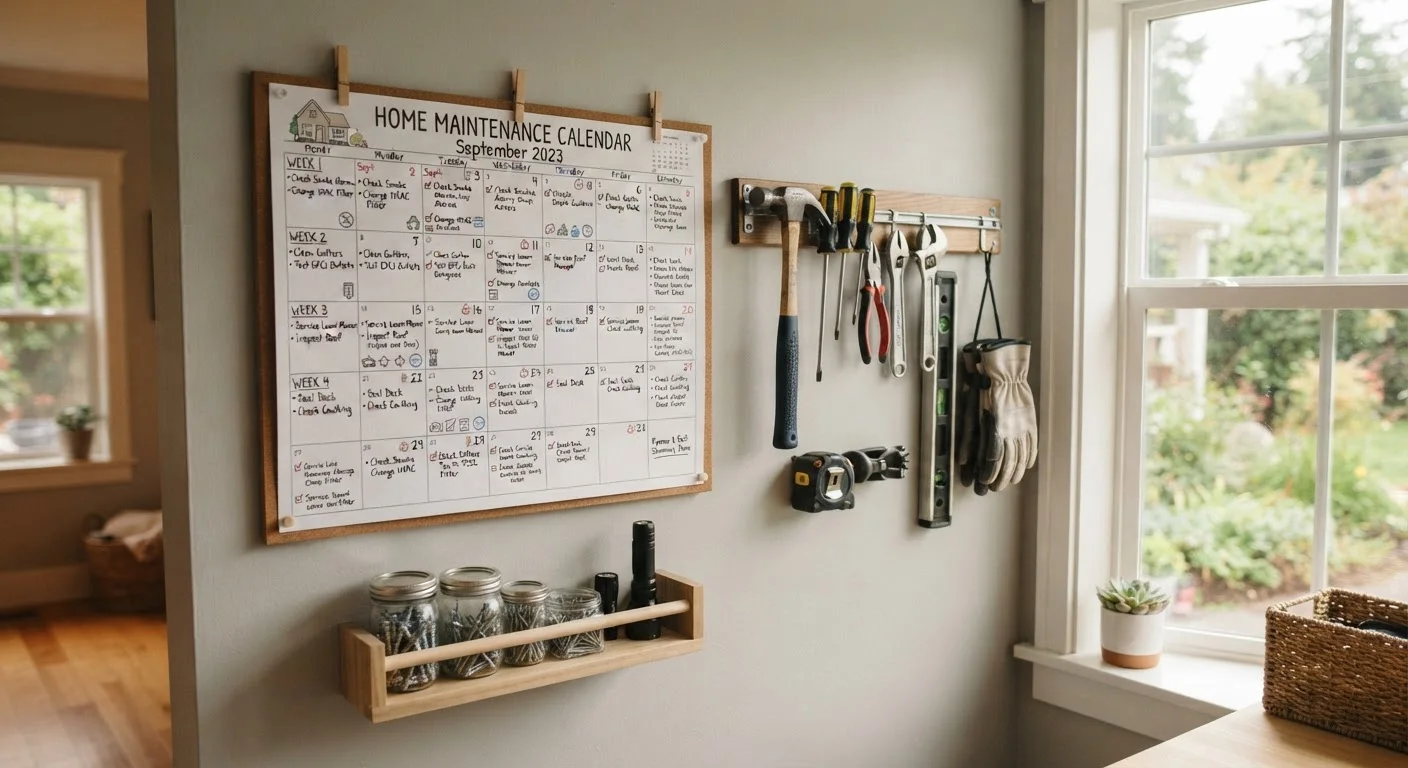
Most home repairs don't appear out of nowhere - they build quietly over months until a minor issue becomes a costly emergency. A structured monthly calendar turns reactive panic into proactive habit, spreading the workload across the year so no single season overwhelms your schedule or your wallet.
If you're new to owning a home, see our first-time owner's maintenance guide for a broader overview of responsibilities. For older homes, the hidden maintenance needs of older homes article covers system-specific quirks you may not find on a standard checklist.
| Recommended annual maintenance budget | 1%-2% of home's purchase value (General industry guideline; actual costs vary by home age, size, and region) |
| HVAC filter replacement frequency | Every 1-3 months (Varies by filter type and household conditions (pets, allergies, etc.)) |
| Water heater flush frequency | Once per year (Standard recommendation for tank-style heaters) |
| Smoke detector battery replacement | At least once per year (U.S. Fire Administration guidance) |
| Chimney inspection frequency | Annually before heating season (Recommended by the Chimney Safety Institute of America) |
| Gutter cleaning frequency | At least twice per year (spring and fall) (More often if near heavy tree cover) |
January Through June: Winter Wind-Down to Summer Prep
January-February: Inspect weatherstripping around doors and windows; cold drafts signal gaps that raise heating costs. Test smoke and carbon monoxide detectors. Check attic insulation for moisture or pest activity.
March: Schedule a professional home maintenance inspection before spring projects ramp up. Clear gutters of winter debris and check downspouts for damage. Walk the perimeter to spot frost-heaved concrete or cracked caulking.
April: Service your HVAC system - replace filters, have a technician inspect the cooling side before peak demand. Test ground-fault circuit interrupter (GFCI) outlets in kitchens, bathrooms, and garages by pressing the test and reset buttons.
May: Inspect the roof for missing or lifted shingles after winter storms - hire a roofing professional for this task if climbing is involved. Flush the water heater tank to remove sediment buildup, which can reduce efficiency and lifespan.
June: Check window and door screens. Examine exterior wood trim and deck surfaces for peeling paint or soft spots indicating moisture damage; recoat or repair as needed. If your home has a crawl space or basement, confirm vapor barriers and sump pumps are functioning - conditions differ significantly between the two foundation types. Our article on crawl spaces vs. basements explains what to look for in each.
GFCI Outlet
A ground-fault circuit interrupter outlet that automatically shuts off electrical power when it detects an imbalance in current, reducing shock risk. Required by code in wet areas like kitchens and bathrooms.
Vapor Barrier
A moisture-resistant sheet installed in crawl spaces or basements to block ground moisture from migrating into the home's structure. Helps prevent mold and wood rot.
Weatherstripping
Flexible sealing material applied around door and window frames to block drafts and improve energy efficiency. It wears out over time and should be inspected annually.
Sump Pump
A pump installed in a basement or crawl space pit that automatically removes groundwater before it can flood the lower level. Requires periodic testing and maintenance.
July Through December: Heat Season to Winter-Ready
July-August: Deep-clean range hood filters and check bathroom exhaust fans for dust buildup - poor ventilation drives up moisture levels. Inspect outdoor hose bibs and irrigation systems for leaks. Keep an eye on attic temperatures; inadequate ventilation can warp roof sheathing over time.
September: This is your most important prep month. Have the heating system serviced before temperatures drop. Clean the dryer vent duct - clogged vents are a leading cause of household fires. Stock basic repair supplies; our homeowner's toolkit guide covers exactly what to keep on hand.
October: Drain and store garden hoses; shut off exterior water supply valves to prevent frozen pipes. Have the chimney and fireplace inspected and swept by a certified technician before first use. Check caulking around tubs, showers, and sinks - worn seals let water reach subfloor framing.
November: Reverse ceiling fan rotation to clockwise for winter circulation. Test all GFCI outlets again and replace any smoke detector batteries on a set schedule. Insulate exposed pipes in unheated spaces.
December: Walk the full property to note anything that needs attention in the new year. Review what you spent on repairs this year to inform next year's maintenance budget - a useful exercise even if you track spending loosely. General budgeting basics apply here: a common rule of thumb is setting aside roughly 1% of your home's value annually for maintenance, though actual costs vary widely.
Permits and Professional Work: Know the Rules
Several tasks on this calendar - including electrical work, gas appliance servicing, structural repairs, and roofing - typically require licensed contractors and may need local permits. Always verify your local building codes before starting any project beyond basic upkeep. Unpermitted work can complicate home sales and may void insurance coverage.