

Key Takeaways
Our Verdict
Neither a crawl space nor a basement is inherently better - each creates a specific set of maintenance responsibilities tied to moisture, access, and structural exposure. Crawl spaces demand consistent vapor management and pest vigilance, while basements require waterproofing attention and flood-readiness. Understanding which foundation you have helps you build a smarter, more targeted maintenance routine.
| Best for | Recommended |
|---|---|
| Homeowners in drier climates with limited budgets | Crawl Space |
| Homeowners wanting storage, utility space, or finished living area below grade | Basement |
| Those seeking easier access to plumbing and electrical runs | Crawl Space |
| Homeowners in regions with high groundwater or flood risk needing active drainage systems | Basement with sump pump |
Why Your Foundation Type Shapes Your Maintenance Priorities
The space beneath your home - whether a crawl space or a basement - is one of the most maintenance-sensitive areas of the entire structure. It houses critical systems like plumbing, electrical wiring, HVAC ducts, and structural beams, all while being directly exposed to soil moisture, temperature swings, and pests. Yet many homeowners don't differentiate between these two foundation types when building their maintenance routines.
That gap can be costly. Crawl spaces and basements fail in different ways, show warning signs in different places, and demand different inspection schedules. If you own a home - especially as a first-time owner - understanding which type of below-grade space you have is a foundational step. For a broader introduction to building your home maintenance habits, see home maintenance for first-time owners.
Crawl Space Maintenance: What You Need to Do and How Often
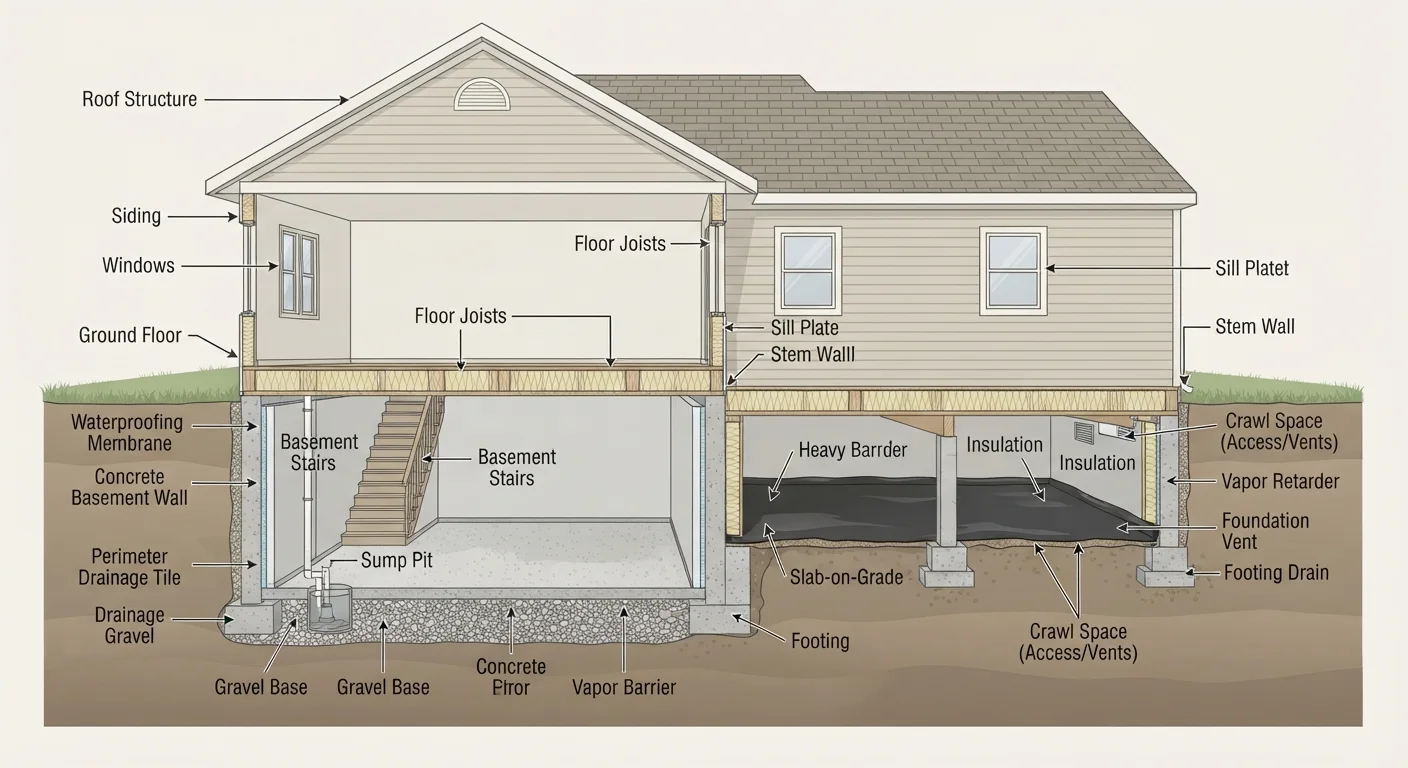
A crawl space is a shallow, unfinished area - typically 18 to 36 inches in height - between the ground and the home's floor system. Because it sits so close to bare soil, moisture is its primary enemy.
Key Maintenance Tasks
- Vapor barrier inspection (annually): A polyethylene vapor barrier laid over the soil is your first line of defense against ground moisture. Check it every spring for tears, gaps, or displacement. In humid climates, a fully encapsulated crawl space - where walls and floor are sealed - offers stronger protection.
- Ventilation assessment (twice yearly): Vented crawl spaces rely on airflow to reduce humidity. Inspect vents each spring and fall to confirm they're unobstructed and functioning. Blocked vents trap moisture and accelerate wood rot.
- Wood structure inspection (annually): Look for soft spots, discoloration, or fungal growth on joists and beams. Wood rot can compromise floor integrity over time.
- Pest inspection (annually): Crawl spaces are prime territory for termites, rodents, and carpenter ants. Have a pest professional inspect yearly, especially in wooded or humid regions.
- Insulation check (annually): Insulation batts in a crawl space can fall, absorb moisture, or become pest habitat. Replace damaged insulation promptly.
Keep Exterior Drainage in Check
The condition of your crawl space or basement is closely tied to how well water is managed around your home's exterior. Ensure grading slopes away from the foundation by at least six inches over ten feet. Even small drainage improvements outside can meaningfully reduce moisture problems below.
Drainage outside your home directly affects what happens beneath it. Keep gutters clear and downspouts directed away from the foundation - learn more in our guide on gutters, downspouts, and drainage.
Basement Maintenance: A Different Kind of Vigilance
A basement offers significantly more headroom - typically 7 to 9 feet - and can serve as storage, utility space, or finished living area. That added utility comes with more surface area exposed to the elements and a greater risk of water intrusion.
Key Maintenance Tasks
- Sump pump testing (seasonally): If your basement has a sump pump, pour a bucket of water into the pit before each rainy season to confirm the float trigger and pump mechanism work. A failed sump pump during heavy rain can mean significant flooding.
- Wall and floor crack monitoring (twice yearly): Hairline cracks are common and often cosmetic, but horizontal or stair-step cracks in block or poured walls may signal structural movement. Document and measure any cracks you find.
- Window well drainage (annually): Basement egress windows require window wells. These wells can fill with debris and direct water inward. Clear them each spring.
- Waterproofing membrane inspection (every 3-5 years): Interior or exterior waterproofing systems degrade over time. A waterproofing contractor can assess whether your system is still performing adequately.
- Dehumidifier maintenance (monthly during humid months): Basements typically run warmer and more humid than above-grade spaces in summer. A dehumidifier helps prevent mold growth - clean the filter and empty or drain it regularly.
| Crawl Space | Basement | |
|---|---|---|
| Primary moisture risk | Ground vapor infiltration | Water intrusion through walls/floor |
| Key annual inspection | Vapor barrier and wood structure | Cracks, sump pump, waterproofing |
| Pest vulnerability | High - termites, rodents, ants | Moderate - rodents, occasional insects |
| Flood risk | Low to moderate | Moderate to high |
| Access difficulty | Cramped - limited mobility required | Easy - standard door or stair entry |
| Typical DIY friendliness | Visual checks; encapsulation needs a pro | Most checks DIY; waterproofing needs a pro |
| Ongoing equipment | Humidity monitor, possibly dehumidifier | Sump pump, dehumidifier |
Older homes with basements often have unique structural and waterproofing histories worth reviewing. See our article on the hidden maintenance needs of older homes for more context.
Shared Concerns and When to Call a Professional
Regardless of which foundation type your home has, several maintenance concerns apply to both - and some tasks should always involve a licensed professional.
Issues Common to Both
- Standing water or persistent dampness: Any pooling water below your home warrants immediate investigation. Moisture damage compounds quickly.
- Mold or musty odors: Mold in a below-grade space can affect indoor air quality throughout the home. Remediation typically requires a certified mold professional.
- Pest evidence: Droppings, tunneling, or damaged wood in either space should prompt a professional inspection.
- Foundation cracks: Any crack that is widening, horizontal, or accompanied by wall bowing in a basement - or sagging floors above a crawl space - should be evaluated by a structural engineer or licensed foundation contractor.
Don't Ignore Structural Warning Signs
Bowing basement walls, sagging floors above a crawl space, or any crack that has visibly widened over time are not DIY repair situations. These may indicate soil pressure, settlement, or compromised structural members. Contact a licensed structural engineer or foundation specialist before attempting any repair - unpermitted or incorrectly executed structural work can void homeowner's insurance and create serious safety hazards.
Scheduling below-grade tasks as part of a broader seasonal routine helps ensure nothing gets missed. Our annual home maintenance calendar can help you integrate these checks. For a clear picture of when to DIY versus when to call someone in, see our guide on DIY maintenance vs. hiring a pro.