

Key Takeaways
Option A
DIY Home Maintenance
The hands-on, cost-saving approach for manageable tasks.
Best for: Routine, low-risk tasks where mistakes are recoverable and no specialized license or permit is required.
Option B
Hiring a Licensed Professional
The safe, code-compliant choice for complex or hazardous work.
Best for: Electrical, gas, structural, or permitted work where errors could result in injury, code violations, or voided insurance coverage.
If you want to stay on top of routine seasonal upkeep
DIY Home Maintenance
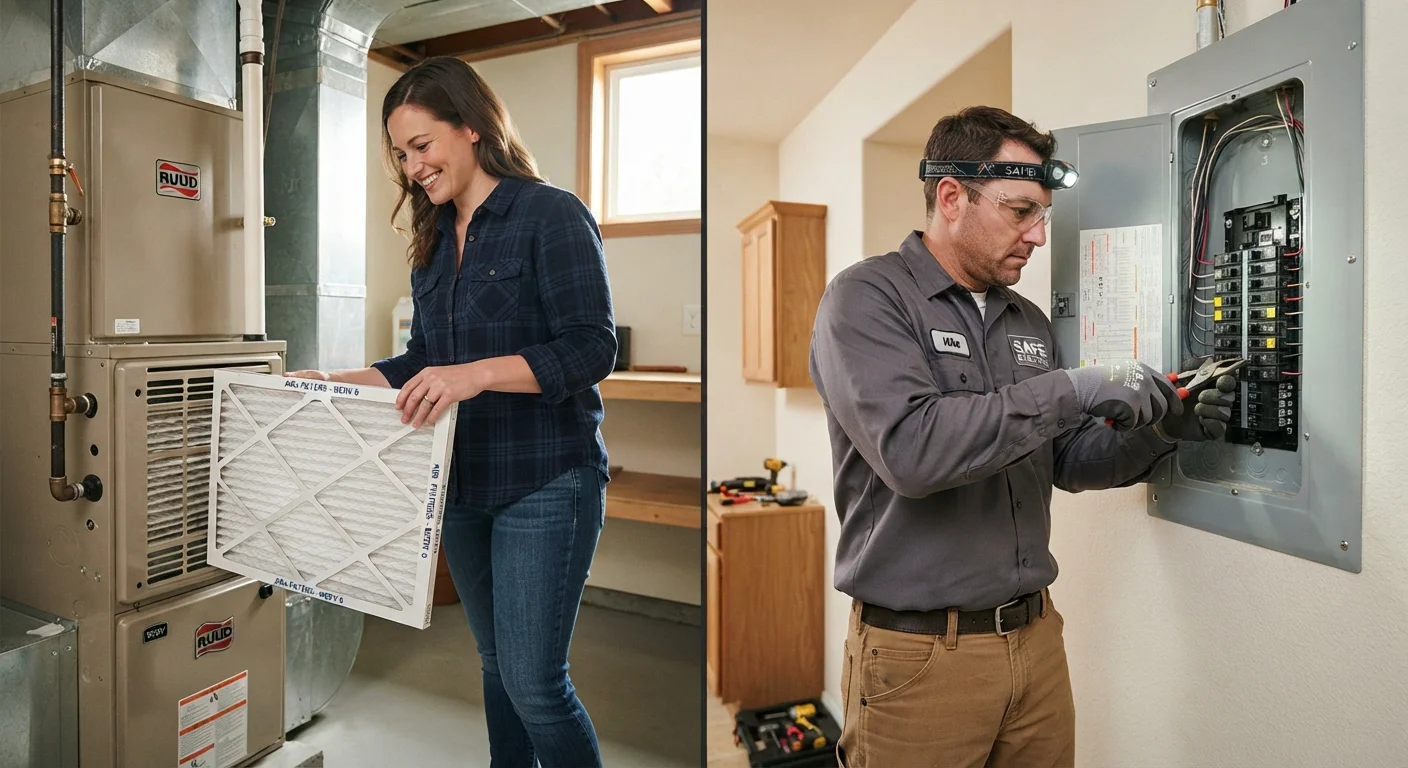
Tasks like replacing HVAC filters, testing smoke detectors, and cleaning gutters are well within reach for most homeowners and require no specialized licensing.
If your project involves your electrical panel, gas lines, or load-bearing structure
Hiring a Licensed Professional
These systems carry serious safety risks and are regulated in virtually every jurisdiction - mistakes can be life-threatening and may violate local codes.
If you're a first-time homeowner still learning the basics
Hiring a Licensed Professional
Building a relationship with reliable tradespeople early helps you understand your home's systems and sets a safe baseline before attempting any DIY work.
If the repair is cosmetic and low-stakes - like patching a small drywall hole or re-caulking a tub
DIY Home Maintenance
These repairs are forgiving, well-documented, and a good way to build hands-on confidence without meaningful risk to your home or safety.
If a permit is likely required for the work
Hiring a Licensed Professional
Licensed contractors are familiar with local permit processes and carry the insurance to back their work - skipping this step can create legal and insurance complications when you sell.
Why the DIY-vs.-Pro Decision Matters More Than You Think
Every homeowner eventually faces a repair or maintenance task and wonders: Can I handle this myself? The answer has real consequences. Get it right, and you save money and build valuable skills. Get it wrong, and you may be looking at a more expensive fix, a failed inspection, or - in the worst cases - a safety hazard.
The decision isn't just about confidence or YouTube tutorials. It comes down to three core factors: safety risk, permit and code requirements, and the cost of a mistake. For a deeper look at the full range of trade-offs, see our balanced breakdown of DIY advantages and limitations.
| Criterion | DIY Home Maintenance | Hiring a Licensed Professional |
|---|---|---|
| Upfront cost | Lower (tools + materials) | Higher (labor + materials) |
| Safety risk | Low for routine tasks | Managed by trained professional |
| Permit handling | Homeowner's responsibility | Contractor typically manages |
| Code compliance | Risk of errors without expertise | Licensed work meets code standards |
| Insurance implications | Unpermitted work may void coverage | Licensed work generally protected |
| Skill required | Varies; best for simple tasks | Specialized trade training |
| Cost of a mistake | Can exceed pro cost | Contractor liable for their work |
Tasks Most Homeowners Can Safely Handle Themselves
A large category of home maintenance is genuinely DIY-friendly. These are tasks that carry low safety risk, require no permit, and have a modest cost if something goes slightly wrong. Building a consistent routine around them is one of the best ways to prevent expensive problems later.
- HVAC filter replacement: Typically done every 1-3 months depending on filter type and household conditions. Skipping it strains the system and degrades air quality.
- Gutter cleaning: Remove debris at least twice a year - more if you have overhanging trees. Clogged gutters can lead to water damage along your roofline and foundation.
- Caulking around tubs, sinks, and windows: Old or cracked caulk lets moisture infiltrate. Removing it and applying a fresh bead is straightforward with basic tools.
- Testing and replacing smoke and CO detector batteries: A simple monthly test button check and annual battery swap. See our safety device maintenance guide for proper placement and replacement schedules.
- Minor drywall patching: Small holes from nails or doorknobs are manageable with a patch kit and a little patience.
- Fixing a leaky faucet: In most cases, a dripping faucet points to a worn washer or cartridge. Understanding what the drip is telling you is the first step to a clean, lasting repair.
35%
DIY projects that end up needing professional repair
Industry estimates suggest roughly a third of attempted DIY repairs require a professional to correct errors, often at greater total cost than hiring out initially.
$1,000-$4,000+
Typical cost to correct unpermitted work
Homeowners who skip permits on regulated projects can face fines and required remediation costs when the work is discovered during a sale or inspection.
Work That Belongs in a Professional's Hands
Some projects look approachable until you're in the middle of them - and that's when trouble starts. The following categories consistently involve safety hazards, permit requirements, or technical complexity that goes beyond the average homeowner's training.
- Electrical panel work: Adding circuits, replacing a breaker panel, or running new wiring requires a licensed electrician in most states. Errors here create fire and electrocution risks - and unpermitted electrical work can void your homeowner's insurance.
- Gas line work: Any repair, extension, or connection involving natural gas or propane lines must be handled by a licensed professional. Even a small leak is a serious hazard.
- Structural modifications: Removing or altering walls - especially load-bearing ones - requires engineering knowledge and almost always a permit. The consequences of a mistake are severe and expensive to correct.
- Roof replacement: Spot repairs and debris removal are often manageable for experienced DIYers, but a full roof replacement involves safety risks at height and waterproofing details that affect your home's long-term integrity. Proper maintenance, however, can extend roof life considerably - learn which habits matter most.
- HVAC installation or major repair: Refrigerant handling requires EPA certification, and improper installation can reduce efficiency or cause equipment failure.
Not sure whether your project needs a permit? This guide to permit requirements by project type is a useful starting point - but always verify with your local building department, since rules vary by municipality.
Insurance and Unpermitted Work: A Real Risk
Most homeowner's insurance policies contain language that limits or excludes coverage for damage caused by unpermitted or unlicensed work. If a DIY electrical or plumbing project causes a fire or flood, your insurer may deny the claim. Before starting any regulated project, contact your insurance provider and local building department to understand your obligations. This article provides general information only - consult a licensed contractor and your insurer for guidance specific to your situation.
How to Make the Call on Borderline Projects
Many projects fall somewhere in between - not obviously dangerous, but not entirely risk-free either. For these, ask yourself four questions before picking up a tool:
- What's the worst-case outcome if I make a mistake? A botched paint job is an inconvenience. A plumbing error behind a wall can cause mold and structural damage.
- Is a permit required? Check with your local building department before starting. Some repairs homeowners commonly attempt turn out to require licensed work and inspections.
- Do I have the right tools and knowledge - not just enthusiasm? Watching a tutorial is a starting point, not a qualification. Be honest about your skill level.
- Will this affect my insurance or ability to sell? Unpermitted work can create legal complications during a home sale and may affect insurance claims.
If you're building your overall maintenance approach from scratch, this guide for first-time homeowners walks through how to structure a routine that keeps your home in good shape year-round.