

Key Takeaways
Why Gutters and Drainage Matter More Than Most Homeowners Realize
Your roof sheds an enormous volume of water during even a moderate rainstorm. Without a functioning gutter and downspout system to capture and redirect that water, it falls directly at the base of your exterior walls - exactly where your foundation begins. Over time, repeated water exposure saturates the soil, increases hydrostatic pressure against foundation walls, and creates conditions that lead to cracks, basement leaks, and in serious cases, structural settling.
Gutter maintenance is one of the simplest and most cost-effective things a homeowner can do to protect a major investment. It's also one of the most frequently neglected. The good news: most of the inspection and cleaning work is entirely DIY-friendly, requires basic tools, and takes only a few hours twice a year. If you're building out a broader maintenance routine, see our first-time owner's maintenance guide for context on how drainage fits into your overall responsibilities.
Homes with basements or crawl spaces are especially vulnerable to drainage failures - the relationship between exterior water management and below-grade moisture is direct and well-established. Our article on crawl spaces and basements covers how each foundation type responds differently to moisture.
Extendable ladder
Provides safe access to gutters along the roofline for inspection and cleaning.
Work gloves
Protects hands from sharp debris, mold, and standing water inside gutters.
Garden hose with spray nozzle
Used to flush gutters and downspouts and confirm water flows freely.
Gutter scoop or small trowel
Scoops out leaves, shingle grit, and compacted debris from the gutter channel.
Plumber's snake or drain auger
Clears stubborn blockages inside downspout pipes that a hose can't dislodge.
Caulk or gutter sealant
Seals small leaks at seams and end caps to prevent water escape.
How to Inspect and Maintain Your Gutters and Downspouts
Plan to clean and inspect your gutters at least twice a year - once in late spring after tree pollen and seeds have fallen, and once in late fall after the last leaves drop. If you have overhanging trees, quarterly checks may be warranted. The steps below walk you through a complete maintenance visit from ground inspection to grading assessment.
What you will need
Inspect the System from the Ground First
Before climbing a ladder, walk the full perimeter of your home and look up at the gutters. Check for visible sagging, sections that have pulled away from the fascia board, rust staining, or paint peeling on the soffit above. Look at the ground near downspouts - erosion channels, mud splatter on siding, or pooling water all indicate drainage problems. This ground-level scan tells you what to prioritize before you go up.
Clear Debris from the Gutter Channels
Using your gutter scoop or trowel, remove leaves, twigs, shingle granules, and any compacted material from the gutter trough. Work from one end toward the downspout outlet. Place debris in a bucket clipped to the ladder or drop it to a tarp below. Pay special attention to corners and the area directly above each downspout inlet, where clogs typically start.
Flush the Gutters with a Garden Hose
Starting at the far end from the downspout, run your hose at full flow along the gutter channel toward the downspout. Watch how water moves - it should flow without pooling. If water sits in the middle of the channel, that section is sagging and needs the hanger adjusted. If it flows out the end cap rather than toward the downspout, the pitch may be incorrect (gutters should slope approximately 1/4 inch per 10 feet toward the downspout).
Clear and Test Each Downspout
Insert the hose directly into the top of each downspout and turn it on full blast. If water backs up immediately, there is a clog. Try a short burst of high-pressure water first. For persistent blockages, insert a plumber's snake from the bottom of the downspout and work upward. Downspout clogs are often caused by compacted shingle grit or a bird nest near the outlet - check both the top and bottom openings.
Check Downspout Extensions and Discharge Points
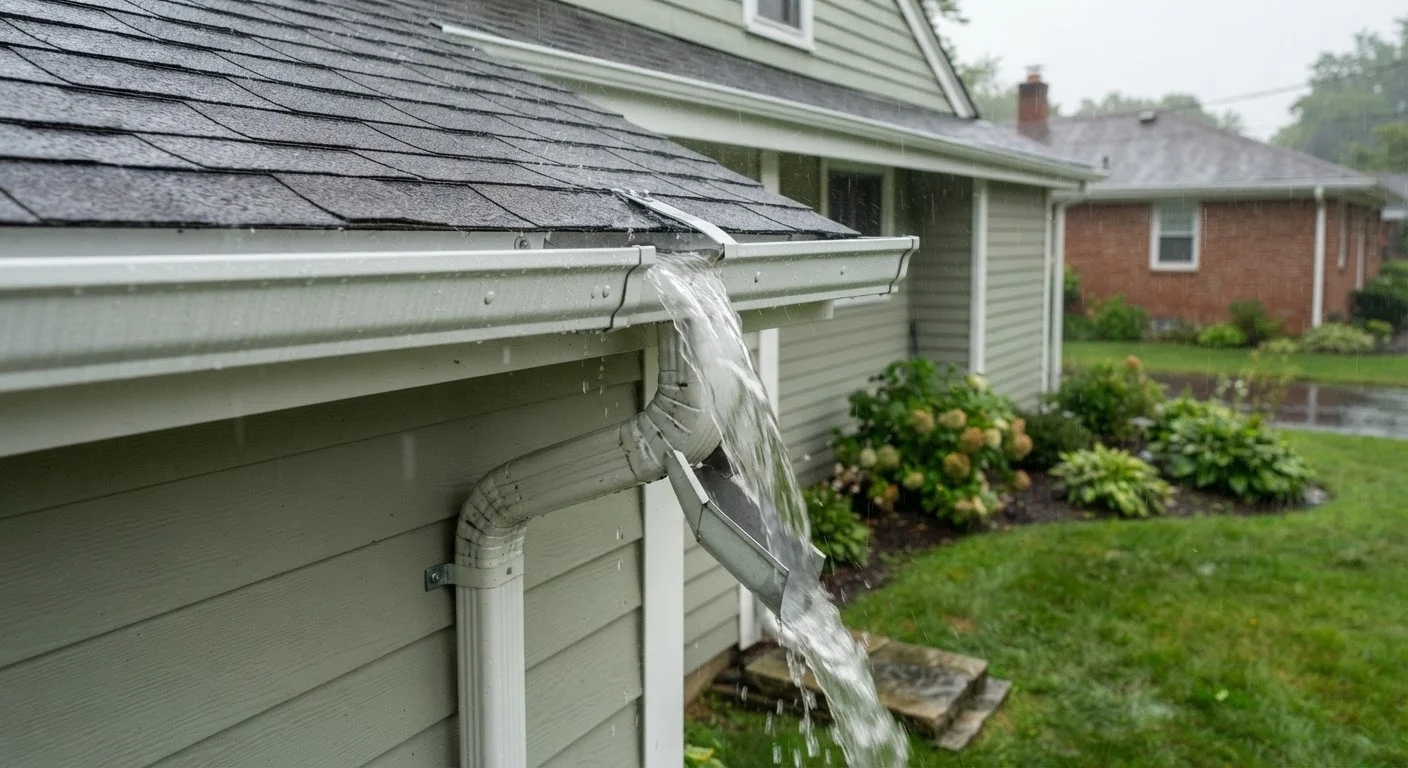
Follow each downspout to where it discharges water. Extensions - the angled elbows or flexible tubes at the base - should direct water at least 4 to 6 feet away from the foundation. If yours fall short, add a downspout extension (available at any hardware store). Make sure extensions aren't buried under mulch or directed toward a neighbor's property or a low spot that drains back toward your home.
Repair Leaking Seams and Refasten Loose Hangers
Dry the inside of any leaking seam with a rag, then apply gutter sealant along the joint from the inside. Smooth it with a gloved finger and allow it to cure fully before the next rain. For gutters that have pulled away from the fascia, replace old spike-and-ferrule fasteners with gutter screws, which hold far more reliably in wood that has expanded and contracted over many seasons.
Evaluate the Grading Around Your Foundation
Even a perfectly functioning gutter system can't compensate for negative grading - ground that slopes toward the house rather than away from it. Stand back and visually assess whether the soil around the foundation drops away from the structure for at least 6 feet. If you notice the ground is flat or slopes inward, adding compacted soil or adjusting the grade is a relatively straightforward improvement that significantly reduces moisture intrusion risk.
Work Safely When Accessing Gutters
Always use a stable, properly rated ladder placed on level ground when cleaning or inspecting gutters. Never lean a ladder against the gutter trough itself - it can bend or detach. Have a second person present to steady the ladder when possible, and avoid working on wet or icy surfaces.
Install Gutter Guards to Reduce Cleaning Frequency
Gutter guards - mesh screens or covers that sit over the gutter channel - can significantly reduce how often debris accumulates. They don't eliminate cleaning entirely, but homeowners with heavy tree coverage often find them worthwhile. Inspect guards at least once a year to make sure debris hasn't built up on top of or beneath them.
Recognizing When to Call a Professional
Most gutter maintenance falls within DIY territory, but some situations call for a professional. If your gutters are mounted above a steep or two-story roofline that makes ladder access genuinely unsafe, hire a gutter cleaning service rather than take an unnecessary risk. Similarly, if you discover significant fascia rot behind the gutter - the fascia board is the wood to which hangers attach - you'll need a carpenter to address the rot before the gutters can be properly reattached.
If water is already appearing inside your basement or crawl space despite a functional gutter system, that points to a grading, waterproofing, or drainage tile issue that warrants a professional assessment. Catching problems at this stage is far less expensive than addressing foundation damage later. A home maintenance inspection can help identify drainage vulnerabilities you may have missed, and is worth considering if your home is more than 15-20 years old or has a history of moisture issues.
Never Ignore Foundation Water Intrusion
If you notice water pooling near your foundation, efflorescence (white mineral deposits) on basement walls, or cracks that seem to be growing, take action promptly. These signs can indicate that your drainage system is already failing. Prolonged water contact with a foundation can lead to significant structural damage that is expensive to repair - far more so than routine gutter maintenance.
Older homes in particular may have original gutters that are undersized by modern standards, or drainage configurations that were never ideal to begin with. Our guide on older home maintenance needs addresses how drainage systems age and what to watch for.