

Key Takeaways
Our Verdict
Neither animal nor plant protein is universally superior - each category offers distinct advantages and limitations. Animal sources deliver complete amino acid profiles and high digestibility, while plant sources contribute fiber, phytonutrients, and lower saturated fat. A diet that draws thoughtfully from both, or that strategically combines plant sources, can meet protein needs effectively for most healthy adults.
| Best for | Recommended |
|---|---|
| Those prioritizing complete amino acid profiles with minimal meal planning | Animal protein sources |
| Those seeking protein alongside fiber, phytonutrients, and lower saturated fat | Plant protein sources |
| Those wanting flexibility and broad nutritional coverage | A mix of animal and plant sources |
Why Protein Quality Is About More Than Grams
When most people compare protein sources, they look at the number on the nutrition label. But protein quality is more nuanced. Two key factors matter alongside quantity: amino acid profile and digestibility.
Proteins are built from 20 amino acids, nine of which are classified as essential - meaning the body cannot make them and must get them from food. A protein source that supplies all nine in adequate amounts is called a complete protein. Animal sources - including meat, poultry, fish, eggs, and dairy - are almost universally complete. Most plant sources are not, though soy, quinoa, and a few others are notable exceptions.
Digestibility also varies. The PDCAAS (Protein Digestibility-Corrected Amino Acid Score) and DIAAS (Digestible Indispensable Amino Acid Score) are the standard measures used by nutrition scientists. Animal proteins typically score higher on both, meaning the body absorbs and uses a greater proportion of what is eaten.
For a deeper look at why food-first strategies often outperform isolated nutrients, see our guide to whole foods vs. supplements.
| Chicken Breast | Eggs | Lentils | Tofu | Greek Yogurt | Black Beans | |
|---|---|---|---|---|---|---|
| Protein per serving | ~26g (3 oz cooked) | ~12g (2 large) | ~18g (1 cup cooked) | ~10g (½ cup) | ~17g (6 oz) | ~15g (1 cup cooked) |
| Complete protein? | Yes | Yes | No | Yes | Yes | No |
| Dietary fiber | None | None | ~16g per cup | ~1g per ½ cup | Minimal | ~15g per cup |
| Saturated fat | Low | Moderate | Very low | Very low | Low-moderate | Very low |
| Key micronutrients | B3, B6, selenium | B12, choline, D | Iron, folate, potassium | Calcium, iron, manganese | Calcium, B12, probiotics | Iron, folate, magnesium |
| Contains B12? | Yes | Yes | No | No | Yes | No |
Animal Protein Sources: Strengths and Trade-Offs
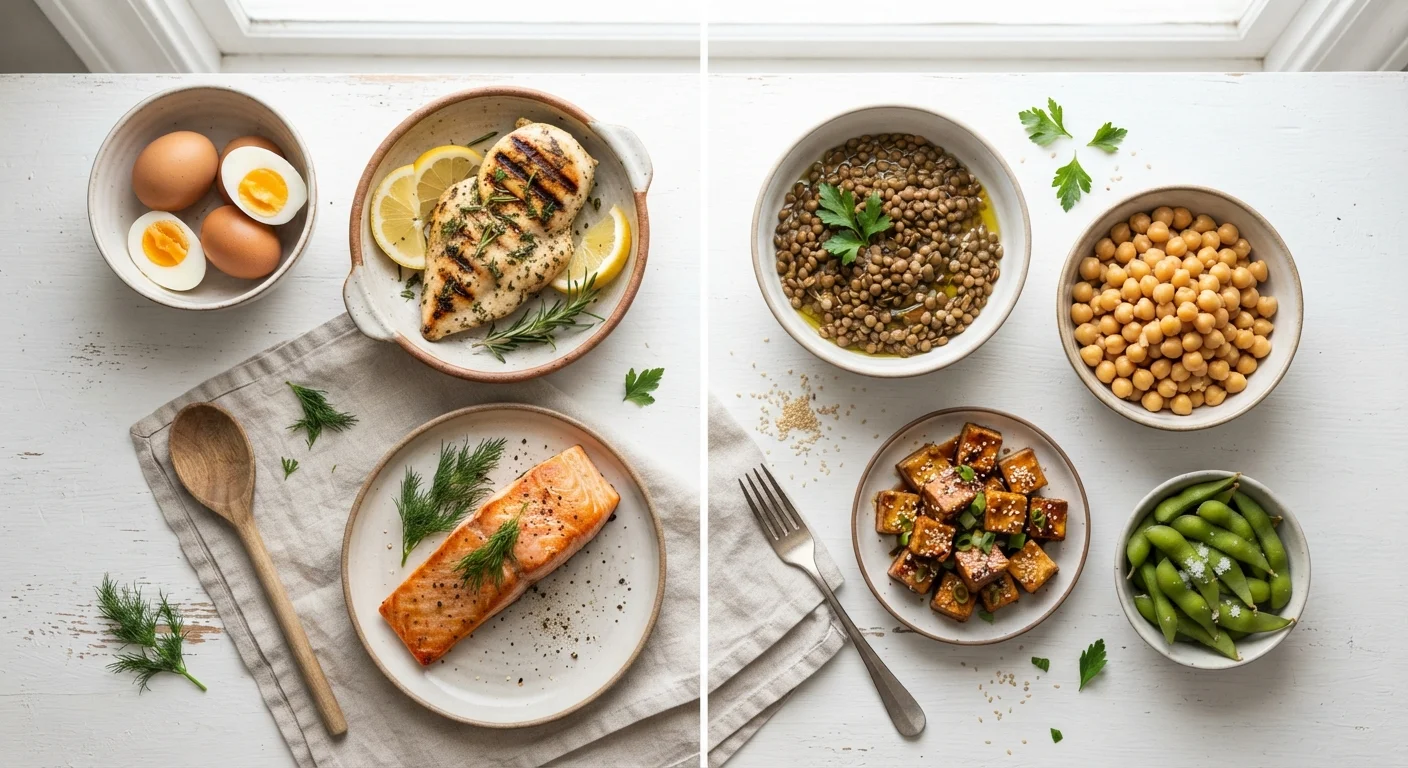
Chicken breast, eggs, canned tuna, Greek yogurt, and cottage cheese are among the most protein-dense animal foods available. Eggs stand out for their near-perfect amino acid profile and digestibility. Fatty fish like salmon and sardines add omega-3 fatty acids alongside their protein content. Dairy products contribute calcium and, in fermented forms, beneficial bacteria.
The trade-offs are real, however. Red and processed meats carry associations with higher saturated fat intake and, in large amounts, have been linked in observational research to certain health risks. Animal products also contain no dietary fiber and generally fewer phytonutrients than plant foods.
Watch Sodium in Processed Meat and Dairy
Many convenient animal-protein foods - deli meats, canned fish, flavored yogurts, processed cheeses - carry significant added sodium or sugar alongside their protein content. Reading nutrition labels helps you get the protein benefit without inadvertently adding excess sodium or calories. Preparation method and product choice make a meaningful difference.
Portion context matters too. A 3-oz serving of cooked chicken provides roughly 26 grams of protein; two large eggs deliver about 12 grams. These figures shift meaningfully based on preparation and accompanying ingredients.
Plant Protein Sources: Strengths and Trade-Offs
Legumes - lentils, black beans, chickpeas, edamame - are workhorses of plant-based protein, delivering 15-18 grams per cooked cup alongside substantial fiber and a range of micronutrients. Tofu and tempeh, both derived from soybeans, are among the most complete plant proteins available. Tempeh also provides natural probiotics from its fermentation process.
Other contributors include seitan (wheat gluten, very high in protein but not suitable for those with celiac disease or gluten sensitivity), hemp seeds, and whole grains like farro and amaranth, which add modest protein alongside complex carbohydrates.
The primary nutritional limitation is amino acid completeness. Most legumes are low in methionine; most grains are low in lysine. Pairing them - rice and beans being the classic example - over the course of a day (not necessarily in the same meal) covers all essential amino acids. This does require a bit more intentionality in meal planning.
Combine Plant Proteins Over the Day
You don't need to pair complementary plant proteins - like rice and beans - in a single sitting. Eating a variety of legumes, grains, nuts, and seeds throughout the day gives your body access to all essential amino acids. Focus on variety across meals rather than engineering every plate.
For a broader picture of plant-forward eating patterns, including their genuine benefits and challenges, our realistic overview of plant-based eating is a useful companion read.
Putting It Together: Practical Considerations for Your Plate
For most healthy adults, the practical goal is not choosing a single category of protein but rather building variety across meals. A diet rich in legumes, whole grains, eggs, fish, and some dairy tends to check most nutritional boxes - providing complete amino acids, fiber, healthy fats, and key micronutrients like iron, zinc, and B12.
Those following a fully plant-based diet should pay particular attention to vitamin B12 (found almost exclusively in animal products), iron bioavailability (plant-based iron is less readily absorbed than heme iron from meat), zinc, calcium, and omega-3 fatty acids. These gaps are manageable but require awareness.
Protein needs also shift with age, activity level, and health status. Older adults, for instance, generally benefit from higher protein intake to help preserve muscle mass. Anyone managing a chronic condition or navigating a significant dietary change should consult a registered dietitian or qualified healthcare professional for guidance tailored to their needs.
Curious how protein-rich dairy alternatives fit into your routine? Our breakdown of dairy and plant-based milks covers the nutritional differences in detail.
~0.8g
Protein per kg of body weight daily (general adult guideline)
This baseline figure is established by the Dietary Reference Intakes published by the National Academies of Sciences, Engineering, and Medicine; individual needs may be higher.
~36%
Of U.S. adults who report trying to eat more plant-based foods
According to the International Food Information Council's Food and Health Survey, a substantial share of Americans are actively shifting toward more plant protein sources.
This article is for general informational and educational purposes only and is not a substitute for personalized medical or dietary advice. Consult a qualified healthcare professional or registered dietitian before making significant changes to your diet.