

Key Takeaways
Our Verdict
Whole milk, oat milk, and almond milk each serve a distinct purpose depending on nutrition goals, dietary needs, and intended use. No single option is universally superior - the right choice depends on what you're making and what your body needs. Reading labels carefully remains the most reliable habit regardless of which you reach for.
| Best for | Recommended |
|---|---|
| Those seeking the highest protein and natural calcium content | Whole Milk |
| Those wanting a creamy, neutral-tasting dairy-free option for coffee or baking | Oat Milk |
| Those prioritizing lower calories with a mild, slightly nutty flavor | Almond Milk |
What You're Actually Looking At on the Shelf
The milk aisle has expanded dramatically over the past decade. Where once you'd choose between whole, 2%, or skim, you now navigate an entire refrigerated wall that includes oat, almond, soy, coconut, and cashew options. Understanding what separates these products - beyond marketing language - starts with knowing what each is made from and how it's processed.
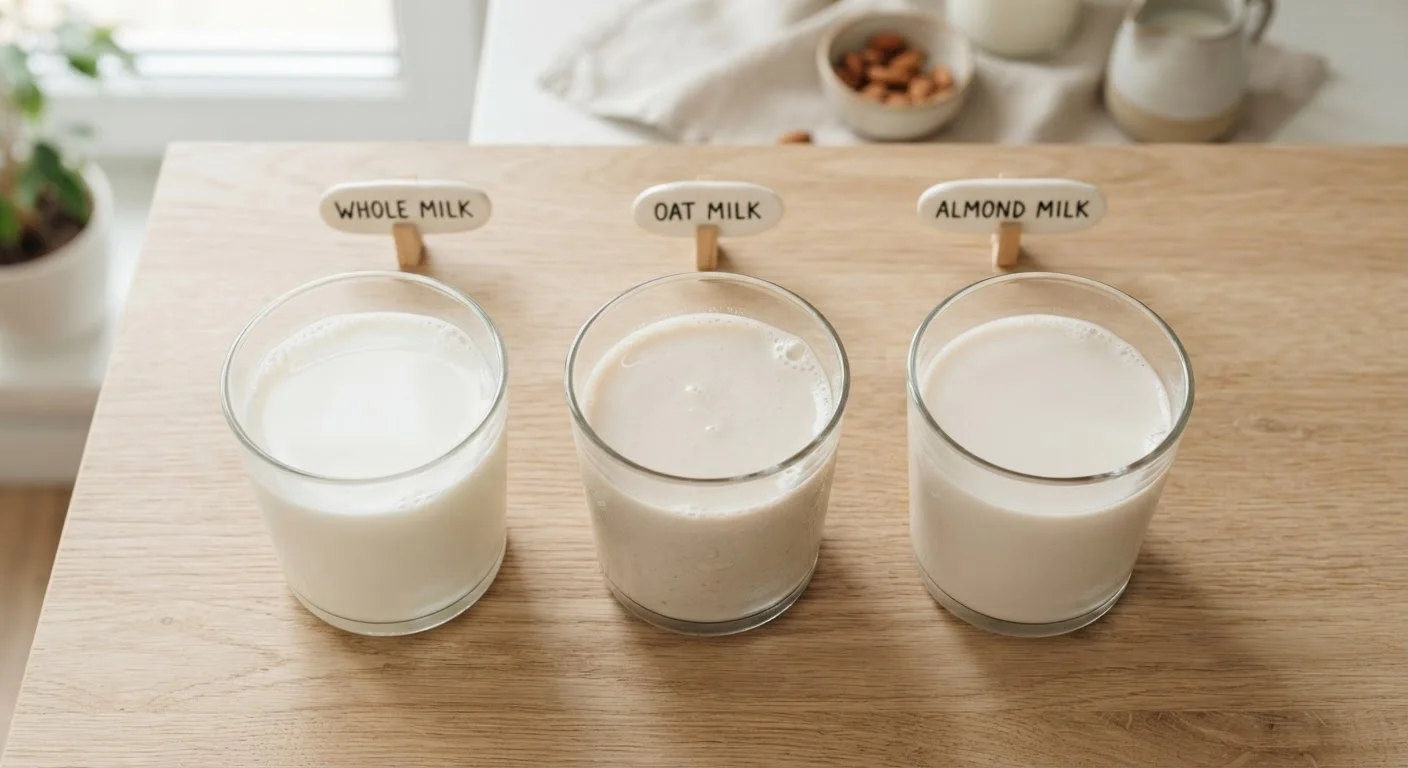
Whole milk is cow's milk with its natural fat content left intact, typically around 3.25% milkfat. It is minimally processed relative to plant-based alternatives. Oat milk is made by blending oats with water and straining out the solids; enzymes are often added during processing to break down starches, which creates its characteristic mild sweetness. Almond milk is made by soaking and blending almonds with water, then straining - resulting in a liquid that is surprisingly low in almonds by weight, often just 2-4% of the final product.
This foundational difference in source ingredient drives most of the variation in taste, texture, and nutrition that follows. For a broader look at how plant-based eating fits into everyday life, see our plant-based eating overview.
Nutritional Profile: A Side-by-Side Look
Nutrition is where the three options diverge most meaningfully. The figures below reflect typical unsweetened, commercially available versions - values can shift with sweetened or flavored varieties.
| Whole Milk | Oat Milk (unsweetened) | Almond Milk (unsweetened) | |
|---|---|---|---|
| Calories (per cup) | ~150 | ~90-120 | ~30-50 |
| Protein (per cup) | ~8g | ~2-4g | ~1g |
| Carbohydrates (per cup) | ~12g | ~15-20g | ~1-2g |
| Fat (per cup) | ~8g (saturated) | ~2-5g (mostly unsaturated) | ~2-3g (mostly unsaturated) |
| Calcium (per cup) | ~300mg (natural) | ~350mg (fortified) | ~350-450mg (fortified) |
| Texture / Creaminess | Rich and creamy | Creamy, closest to dairy | Light and thin |
| Best cooking use | Sauces, baking, custards | Baking, coffee, soups | Smoothies, cereal, light baking |
A few points deserve emphasis. Whole milk's protein (about 8g per cup) is complete, meaning it contains all essential amino acids. Most plant milks, including oat and almond, deliver far less protein unless specifically fortified. If protein intake matters to your diet, this gap is worth understanding - our protein sources comparison covers this in more depth.
Oat milk tends to be higher in carbohydrates - often 15-20g per cup versus roughly 12g in whole milk and 1-2g in unsweetened almond milk. This is worth noting for anyone monitoring carbohydrate intake. On the other hand, oat and almond milks are frequently fortified with calcium, vitamin D, and vitamin B12, which can make them nutritionally competitive with dairy when you factor in those additions.
~8g
Protein per cup in whole milk
Whole milk delivers complete protein with all essential amino acids, unlike most plant-based milks.
2-4%
Typical almond content in almond milk
Most commercially produced almond milks contain only a small fraction of actual almonds by volume.
40%+
U.S. market share held by oat milk among plant-based milks
Oat milk overtook almond milk as the leading plant-based milk in U.S. retail sales in recent years, according to industry tracking data.
Taste and Texture: How Each Performs
Flavor and mouthfeel matter just as much as nutrition for everyday use. Whole milk has a rich, slightly sweet, creamy flavor that is familiar to most Americans. Its fat content gives it body and a coating quality that works well in coffee, cereal, and baked goods.
Oat milk is notably creamy for a plant-based option - its natural starch content gives it a texture closer to low-fat dairy milk than most alternatives. It foams reasonably well, which is why it became popular in coffee shops. Its flavor is mild and slightly sweet without added sugar, making it versatile.
Almond milk has a lighter, thinner texture and a faintly nutty taste. Unsweetened versions are quite neutral, but the low viscosity means it won't behave exactly like dairy milk in sauces or custards. It works well in smoothies and cold cereals but can separate or produce thinner results in baking.
Barista Versions Are Formulated Differently
Many plant-based milks now offer a 'barista edition' that contains added oils or modified starch to improve frothing and heat stability. If you're using oat or almond milk in hot drinks or cooked dishes and finding the results thin or separated, a barista-style version often solves the problem without switching products entirely.
Cooking and Baking Considerations
How a milk performs under heat is a practical concern that often gets overlooked at the shelf. Whole milk is reliable: it emulsifies, thickens sauces, and adds richness to baked goods predictably. Its fat content helps with browning and texture in items like pancakes, custards, and creamy soups.
Oat milk is the most stable plant-based substitute for baking and cooking. It holds up to heat better than almond milk and can substitute for dairy milk in most recipes at a 1:1 ratio, though the slight sweetness may be noticeable in savory dishes. Some oat milks contain added oils or stabilizers that improve their performance in sauces.
Almond milk, being so low in fat and protein, can curdle or thin out sauces when heated. For most baking applications it works adequately at 1:1, but in custards or cream-based dishes the results will be noticeably lighter. Choosing a barista-style or full-fat almond milk version, if available, can help close that gap.
Understanding what's in any food product comes down to reading labels carefully. Our guide on reading nutrition labels offers transferable skills for decoding fortification claims and serving-size details on food packaging too.