

| Oldest U.S. BBQ tradition | Carolina whole hog (Culinary historians widely cite Carolina as among the earliest continuous American barbecue traditions) |
| Central Texas primary seasoning | Salt and black pepper only |
| Kansas City signature item | Burnt ends (brisket point) |
| South Carolina's defining sauce base | Yellow mustard (Linked to German immigrant communities settling in the region) |
| Memphis rib styles | Wet (sauced) and dry (rub only) |
| Alabama's distinctive sauce | White sauce (mayo, vinegar, pepper) |
Why American BBQ Isn't One Thing
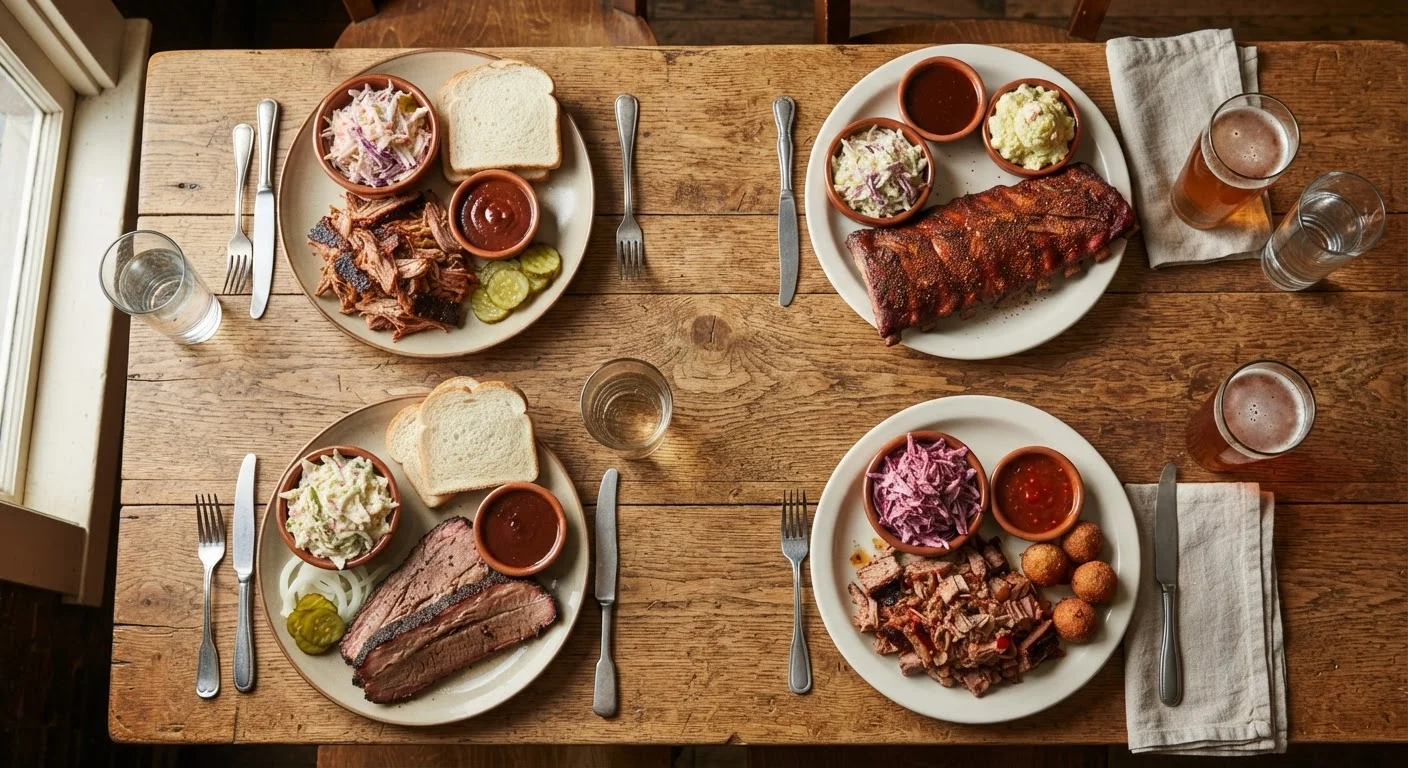
Ask ten Americans what barbecue means and you'll get ten different answers - and all of them will be correct. In the United States, barbecue isn't a single dish or method. It's a regional identity. The meat, the wood, the rub, and especially the sauce shift dramatically depending on where you are. Understanding those differences is the first step to appreciating one of America's most deeply rooted food cultures.
At its core, barbecue is a form of low-and-slow cooking - meat cooked indirectly over wood or charcoal at relatively low temperatures for several hours. This is distinct from grilling, which uses direct, high heat. That slow application of smoky, indirect heat is what transforms tough cuts into tender, flavourful food. For a deeper look at how heat type affects texture and taste, see our article on cooking with dry heat vs. moist heat.
| Oldest U.S. BBQ tradition | Carolina whole hog (Culinary historians widely cite Carolina as among the earliest continuous American barbecue traditions) |
| Central Texas primary seasoning | Salt and black pepper only |
| Kansas City signature item | Burnt ends (brisket point) |
| South Carolina's defining sauce base | Yellow mustard (Linked to German immigrant communities settling in the region) |
| Memphis rib styles | Wet (sauced) and dry (rub only) |
| Alabama's distinctive sauce | White sauce (mayo, vinegar, pepper) |
The Four Major Regional Styles
While dozens of local variations exist, most American barbecue traditions trace back to four core regional styles. Each is defined by a signature meat, preparation method, and sauce profile.
Carolina
The Carolinas may represent the oldest continuous barbecue tradition in America. The style splits internally: Eastern North Carolina favors whole hog barbecue, dressed with a thin, sharp vinegar-and-pepper sauce. Western North Carolina and South Carolina often focus on pork shoulder, with the Palmetto State famously featuring a mustard-based sauce - a legacy of German immigrant influence. Both rely on wood smoke (often hickory or oak) and an intensely vinegar-forward flavor profile. Pulled pork is the near-universal format.
Kansas City
Kansas City style is perhaps the most widely recognized nationally. It embraces virtually every cut of meat - ribs, brisket, chicken, sausage - cooked over hickory and finished with a thick, sweet, tomato-and-molasses sauce. Burnt ends, the caramelized cubes trimmed from the flat of a smoked beef brisket point, originated here and remain a Kansas City specialty.
Texas
Texas barbecue centers on beef, reflecting the state's cattle ranching heritage. Central Texas style is the most influential: beef brisket and beef ribs smoked over post oak, seasoned with little more than salt and black pepper, and served without sauce - or with sauce strictly on the side. The smoke and the meat speak for themselves. East Texas traditions lean more toward pork and sauce, while South Texas incorporates elements of Mexican barbacoa.
Memphis
Memphis is famous for pork ribs prepared two ways: wet (mopped with a tomato-based sauce during and after cooking) or dry (rubbed with a blend of spices and served without sauce). The dry-rub approach has influenced backyard cooking across the country. Memphis also has a strong pulled pork tradition, typically served on sandwiches topped with coleslaw.
Low-and-slow
A cooking method in which meat is cooked at low temperatures (typically 225-275°F) over several hours using indirect heat and wood smoke. This breaks down connective tissue and produces tender, deeply flavored results.
Bark
The dark, flavorful crust that forms on the outside of smoked meat. It develops from the interaction of rub, smoke, and moisture over a long cook, and is highly prized in many regional traditions.
Burnt ends
Cubes of meat cut from the fatty point end of a smoked beef brisket, then returned to the smoker to caramelize further. Originally a Kansas City tradition, they are now popular nationwide.
Dry rub
A blend of dried spices and seasonings applied to meat before cooking, without any liquid marinade or sauce. The rub forms a flavorful crust during the long smoke, particularly associated with Memphis-style ribs.
Whole hog
A traditional barbecue method in which an entire pig is cooked at once, typically over a wood-burning pit. This technique is central to Eastern North Carolina barbecue and requires many hours of tending.
Sauce, Wood, and Regional Identity
Beyond the four major traditions, regional nuance continues to deepen. Alabama contributed a white barbecue sauce - a mayonnaise, vinegar, and pepper blend most commonly applied to smoked chicken. Kentucky is known for its mutton barbecue, a tradition centered in Owensboro that reflects the area's sheep-farming history. Hawaiian barbecue, influenced by Japanese and Filipino communities, incorporates shoyu, pineapple, and ginger marinades that differ entirely from mainland traditions.
The choice of wood is also a defining regional variable. Hickory dominates in the Carolinas and Memphis. Post oak defines Central Texas. Fruit woods like apple and cherry are common in the Pacific Northwest and parts of the Midwest. Each wood imparts a different smoke character - hickory is bold and assertive; apple is milder and slightly sweet.
Sauce philosophy may be the starkest dividing line. Texas purists often reject sauce entirely. Carolina cooks use thin, acidic vinegar sauces. Kansas City style leans sweet and thick. These aren't just flavor preferences - they're regional declarations. For another lens on how condiments reflect regional American identity, our piece on hot sauce culture in the United States explores a parallel story.
If you're planning to explore these traditions in person, a state-by-state road trip through the American South offers a practical starting point for understanding the geography behind many of these styles.
BBQ vs. Grilling: Not the Same Thing
In everyday American speech, 'barbecue' is sometimes used loosely to describe any outdoor cooking. In culinary terms, however, barbecue specifically refers to low-and-slow indirect cooking with wood smoke - a fundamentally different process from grilling over direct high heat. Most of what happens at a backyard cookout is technically grilling. Regional barbecue traditions described here all rely on the slow, indirect method.