

Key Takeaways
A Brief History of Hot Sauce in America
Chili peppers have been cultivated in the Americas for thousands of years, and their transformation into bottled hot sauce is a distinctly American story. Indigenous peoples across Central and North America used ground and steeped chilies as both flavoring and medicine long before European contact.
Commercial hot sauce production in the United States took off in the 19th century. Edmund McIlhenny introduced Tabasco sauce on Avery Island, Louisiana, in 1869, using aged red peppers, vinegar, and salt - a formula largely unchanged today. That product helped legitimize hot sauce as a shelf-stable pantry item for mainstream households. By the mid-20th century, Louisiana-style sauces and Tex-Mex varieties had carved out strong regional followings, each reflecting local agricultural and culinary traditions.
Today, hot sauce is one of the fastest-growing condiment categories in the United States. Its journey from a niche regional product to a national obsession mirrors broader shifts in American food culture: a growing appetite for bold flavors, multicultural culinary influence, and a desire for artisanal, small-batch foods.
$1.65B+
U.S. hot sauce market size
According to Statista and industry reports, the U.S. hot sauce market has surpassed $1.65 billion in retail sales, driven by growing demand for bold flavors.
150+ years
Age of Tabasco sauce production
McIlhenny Company has produced Tabasco sauce on Avery Island, Louisiana, continuously since 1869, making it one of America's longest-running condiment brands.
3x
Growth in craft hot sauce producers
Industry observers have noted a dramatic rise in small-batch hot sauce producers at U.S. farmers' markets and specialty retailers over the past decade.
Regional Styles and What Makes Them Distinct
American hot sauce is not a monolith. Regional traditions produce vastly different flavor profiles, heat levels, and intended uses.
- Louisiana-style: Thin, vinegar-forward, and bright red. Made from aged cayenne peppers, these sauces are built for splashing generously over eggs, fried chicken, or gumbo. Low viscosity means they integrate quickly into food rather than sitting on top.
- Tex-Mex and Southwestern: Often thicker and earthier, incorporating dried chiles like ancho or guajillo. These sauces lean smoky and complex - closer in spirit to a salsa roja than a vinegar-based condiment.
- Caribbean-influenced: Found especially in Florida and coastal cities, these sauces frequently use Scotch bonnet or habanero peppers blended with fruit, giving them a fruity heat that builds slowly.
- Fermented styles: Influenced by the same traditions behind kimchi and lacto-fermented vegetables, these sauces develop deep, tangy complexity through controlled fermentation before vinegar is added or omitted entirely. For more on fermentation principles, see our guide on fermented foods in the American kitchen.
Regional hot sauce pairs naturally with regional cooking - just as each BBQ tradition has its own sauce logic. If you're curious how local flavor philosophies carry across condiments, our feature on regional BBQ styles across America is a useful companion read.
The Rise of Craft Hot Sauce
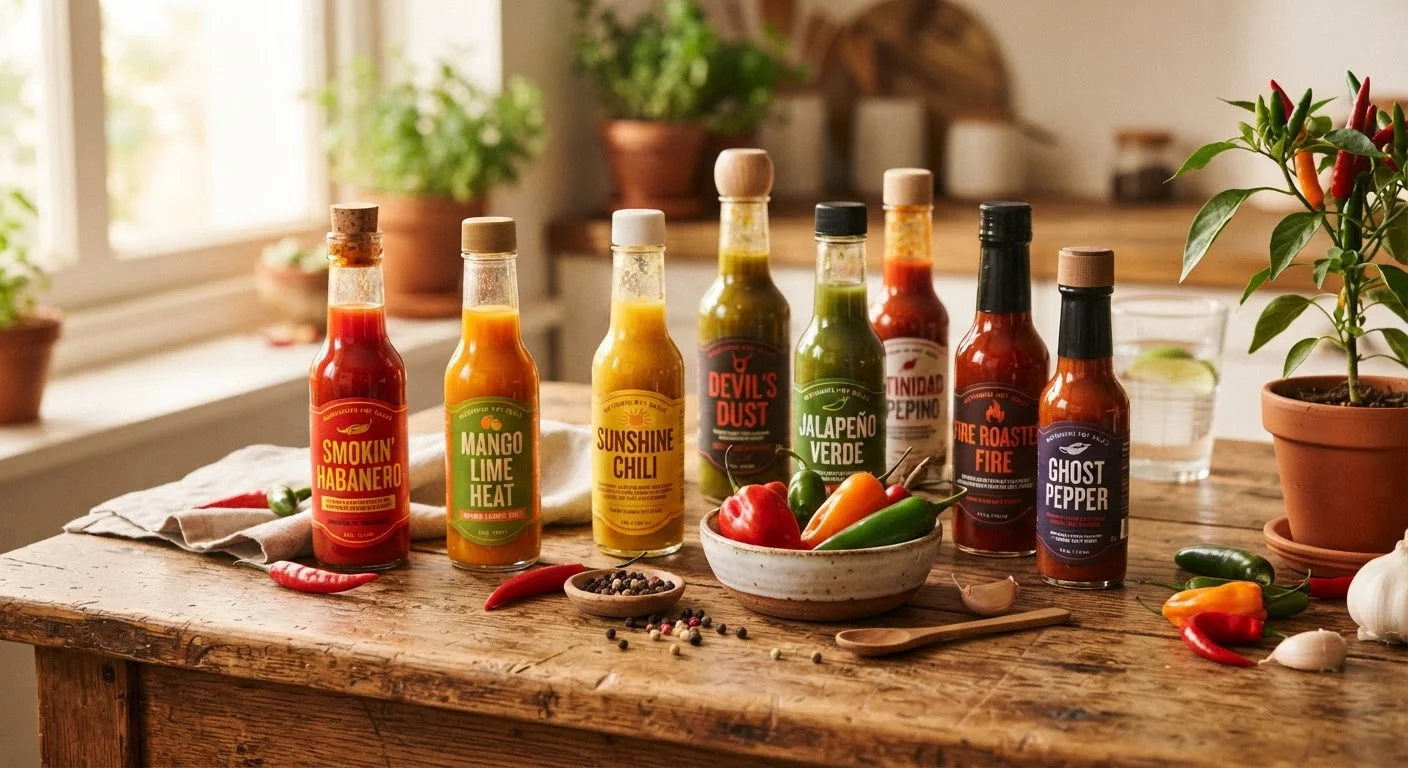
The craft hot sauce movement accelerated significantly in the 2010s. Farmers' markets became proving grounds for small producers experimenting with unusual chili varieties, fermentation, and unexpected ingredients like mango, turmeric, or roasted garlic. Today, independent hot sauce makers operate in nearly every state.
What separates craft bottles from mass-market options isn't always heat - it's depth of flavor and ingredient transparency. Many small producers use fresh, locally sourced peppers and avoid artificial additives, allowing the natural character of the chili to come through.
When tasting an unfamiliar hot sauce for the first time, try it with a neutral starch - plain rice or a plain cracker - so the pepper and fermentation flavors aren't masked by competing seasonings.
This approach is standard practice among food judges and sauce developers because it isolates the sauce's true flavor profile before you decide how to use it in cooking.
Store opened hot sauce in the refrigerator, even if the label says refrigeration is optional. Cold temperatures slow oxidation and help the sauce retain its fresh pepper character for months longer.
Heat and light degrade capsaicin compounds and volatile aromatic oils over time, which is why refrigeration preserves both heat intensity and flavor complexity.
The popularity of competitive heat challenges and hot sauce subscription services has also broadened the audience, pulling in younger consumers who approach hot sauce more like collectors than casual condiment users.
How Heat Is Measured: The Scoville Scale
The Scoville scale, developed by pharmacist Wilbur Scoville in 1912, measures the concentration of capsaicinoids - the compounds responsible for the sensation of heat - in a pepper or sauce. The result is expressed in Scoville Heat Units (SHU).
| Pepper / Sauce Type | Approximate SHU Range |
|---|---|
| Bell pepper | 0 |
| Jalapeño | 2,500-8,000 |
| Tabasco sauce (original) | 2,500-5,000 |
| Cayenne pepper | 30,000-50,000 |
| Habanero | 100,000-350,000 |
| Ghost pepper (Bhut jolokia) | ~1,000,000 |
Modern testing uses high-performance liquid chromatography (HPLC) rather than Scoville's original human taste panel, producing more precise results. It's worth noting that perceived heat varies considerably between individuals based on genetics and tolerance built through regular exposure.
Extremely High-SHU Products Carry Real Risks
Extracts and ultra-concentrated sauces exceeding 1 million SHU are not typical culinary products - they are used in tiny quantities, if at all. Consuming large amounts of very high-SHU products can cause significant gastrointestinal discomfort, and direct contact with eyes or skin can cause pain and irritation. Approach novelty heat products with caution and keep them away from children.
How to Explore Hot Sauce Like a Pro
Approaching hot sauce as a flavor experience - rather than a test of endurance - opens up considerably more enjoyment. Here are some practical principles:
- Start with vinegar-based sauces if you're new to the category. Their thinner consistency and lower heat make them versatile and approachable on everyday dishes.
- Taste sauces alongside food, not alone. A sauce that seems face-meltingly hot on a spoon may be perfectly balanced on a piece of grilled fish or a bowl of rice.
- Work your way up the Scoville scale gradually. Regular exposure does build tolerance, but there's no culinary reason to chase maximum heat - complexity and flavor should be the goal.
- Read the ingredient list. A short list of recognizable ingredients - peppers, vinegar, garlic, salt - is often a sign of quality. Long lists of stabilizers and artificial colorings may indicate a sauce built more for shelf life than flavor.
- Explore fermented varieties. If you enjoy tangy, umami-rich flavors, naturally fermented hot sauces offer a depth that vinegar-only versions can't replicate.
Whether you're building a small collection or simply looking for a new go-to for your kitchen table, American hot sauce offers more range and craft than most people realize. The best bottle isn't the hottest one - it's the one that makes your food taste better.
Pair Heat Level to the Dish
A high-heat sauce with complex fruit notes works beautifully with fatty proteins like pork or duck, where richness can absorb the intensity. Save your thinnest, brightest vinegar sauces for lighter dishes like fried seafood, eggs, or greens. Matching the sauce's weight and heat to the food's richness produces the most balanced results.