

Key Takeaways
Body Condition Score (BCS)
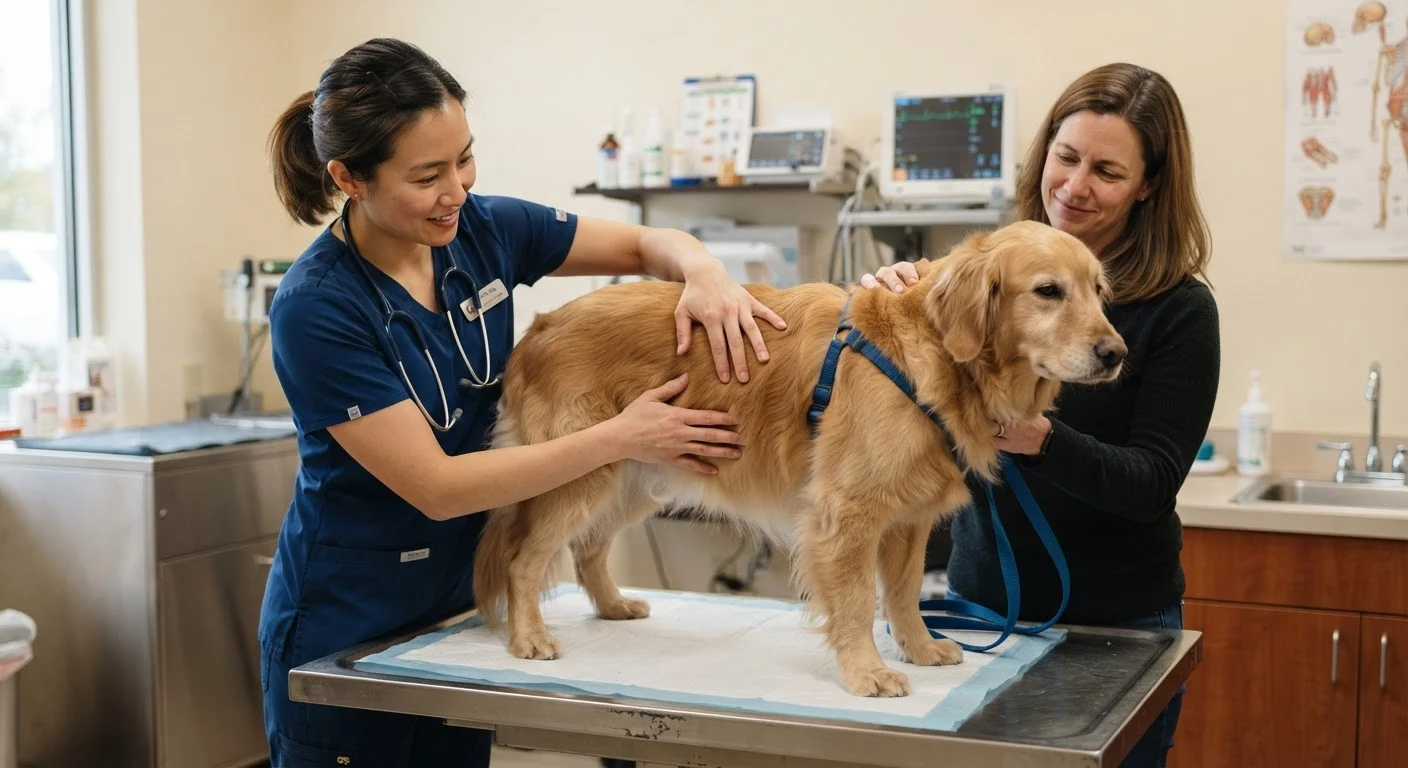
A body condition score is a standardized, hands-on assessment vets use to evaluate whether an animal is underweight, at a healthy weight, or overweight. It relies on feeling and visually examining key areas of the body - like the ribs, spine, and waist - rather than just reading a number on a scale. Scores are typically rated on a 1-9 scale (or sometimes 1-5), where a score in the middle range generally indicates a healthy body composition.
The 1-9 scale is widely used in small animal practice; a score of 4-5 is considered ideal for most dogs and cats. BCS complements weight measurements and helps account for breed, frame size, and muscle mass variability.
Why the Scale Doesn't Tell the Whole Story
When pet owners want to know if their animal is at a healthy weight, the first instinct is often to step on the scale. It's a natural starting point - but veterinarians know that a number alone tells an incomplete story.
Two dogs of the same breed can weigh exactly the same and have completely different body compositions. One might carry excess fat around the abdomen and ribs; the other could be muscular and lean. A scale can't distinguish between fat and muscle, and it can't account for natural variation in bone structure and frame size.
This is why veterinary professionals rely on a hands-on, standardized method called body condition scoring - and why it's worth understanding as a pet owner. For a deeper look at what healthy weight management involves over time, see our article on managing a pet's weight.
~60%
U.S. dogs and cats classified as overweight or obese
According to the Association for Pet Obesity Prevention's annual surveys, roughly 60% of dogs and cats in the United States are estimated to be above a healthy body weight.
1-9
Standard BCS scale range used in small animal practice
The 9-point body condition scoring scale is widely used by veterinarians in the United States to evaluate dogs and cats, with a score of 4-5 considered optimal for most animals.
4-5
Ideal body condition score for most dogs and cats
Veterinary guidelines generally describe a BCS of 4 or 5 out of 9 as the healthy target range for the majority of companion dogs and cats.
How Body Condition Scoring Works
Body condition scoring (BCS) is a structured physical evaluation that combines touch and visual observation to estimate the ratio of body fat to lean tissue. Most small animal vets use a 1-9 scale, where 1 represents severely underweight and 9 represents severely obese. A score of 4 or 5 is the target range for most healthy dogs and cats.
The assessment focuses on a few key anatomical landmarks:
- Ribs: Can they be felt with light pressure, without being visually prominent or buried under fat?
- Spine and hip bones: Are they palpable but cushioned, or sharp and protruding?
- Waist: Is there a visible narrowing behind the ribs when viewed from above?
- Abdominal tuck: When viewed from the side, does the belly slope upward from the chest toward the hind legs?
Vets combine these findings into a single score that guides dietary and lifestyle recommendations - making it a more complete picture than weight alone.
“Body condition scoring is one of the most useful tools we have in practice because it gives us a reproducible, objective way to talk with owners about their pet's weight - free from the emotion that often surrounds a number on the scale.”
— A small animal veterinary internist, Board-certified veterinary specialist in small animal internal medicine
Why Pet Weight Is So Easy to Misjudge
Most pet owners are surprised when a vet describes their animal as overweight. There are several reasons this disconnect is so common.
Gradual gain is nearly invisible. An extra pound added over six months feels like nothing - but in a 12-pound cat, that's an 8% body weight increase, equivalent to a significant gain in human terms.
Coat and fur mask body shape. Long-haired dogs and cats can carry substantial fat deposits that simply aren't visible under a thick coat. Fluffy pets especially benefit from a hands-on assessment rather than a visual one.
Our baseline has shifted. Research in veterinary medicine has noted that as pet obesity rates have risen over time, owners are increasingly likely to perceive overweight animals as normal. What looks healthy to the eye may not reflect actual body condition.
Pets also rarely display clear discomfort until a condition is more advanced, which is why subtle physical checks matter. Our guide on signs your pet may be in pain explores the quiet cues that often go unnoticed.
Make the Rib Check a Monthly Habit
Set a monthly reminder to run your hands along your pet's sides and spine. Consistency is key - gradual weight changes are easiest to catch when you're checking regularly rather than relying on memory. If the ribs feel harder to find than they did last month, it's worth mentioning at your next vet visit.
What Owners Can Do Between Vet Visits
You don't need clinical training to perform a useful informal check at home. Here's a simplified approach to get a general sense of your pet's condition:
- Feel the ribs: Place your thumbs on your pet's spine and spread your fingers along the ribcage. You should be able to feel individual ribs with gentle pressure - similar to feeling the back of your knuckles. If you can't feel them without pressing firmly, excess fat may be present.
- Look from above: Is there a clear waist - a narrowing between the ribs and hips? A straight or oval shape suggests the pet may be carrying extra weight.
- Check the tuck from the side: The belly should rise up toward the hind legs, not hang level or sag downward.
These informal checks work best as a complement to regular veterinary assessments, not a replacement. For context on what your pet is actually eating that may be affecting their condition, it's also worth reviewing what your pet's food label actually tells you.
This article is for general informational purposes only and is not a substitute for professional veterinary advice. Always consult your veterinarian for guidance specific to your pet's health and nutritional needs.