

Key Takeaways
Deferred Maintenance
Deferred maintenance refers to repairs, upkeep tasks, and inspections that a homeowner postpones - often to save money or time in the short term. The problem is that most home systems are interconnected, so a small neglected issue rarely stays contained. Over time, the original problem grows, often triggering secondary damage that costs far more to fix than the original repair would have.
In property management and real estate appraisal, deferred maintenance is formally defined as any needed repair that has been postponed, and it is typically factored into a property's assessed value as a reduction.
How Small Problems Become Big Ones
Every home has a handful of imperfections at any given moment - a slightly loose shingle, a slow-draining sink, a hairline crack in the caulk around a window frame. These seem trivial, and individually they often are. But homes are systems of interconnected materials, and when one component starts failing, surrounding components bear the stress.
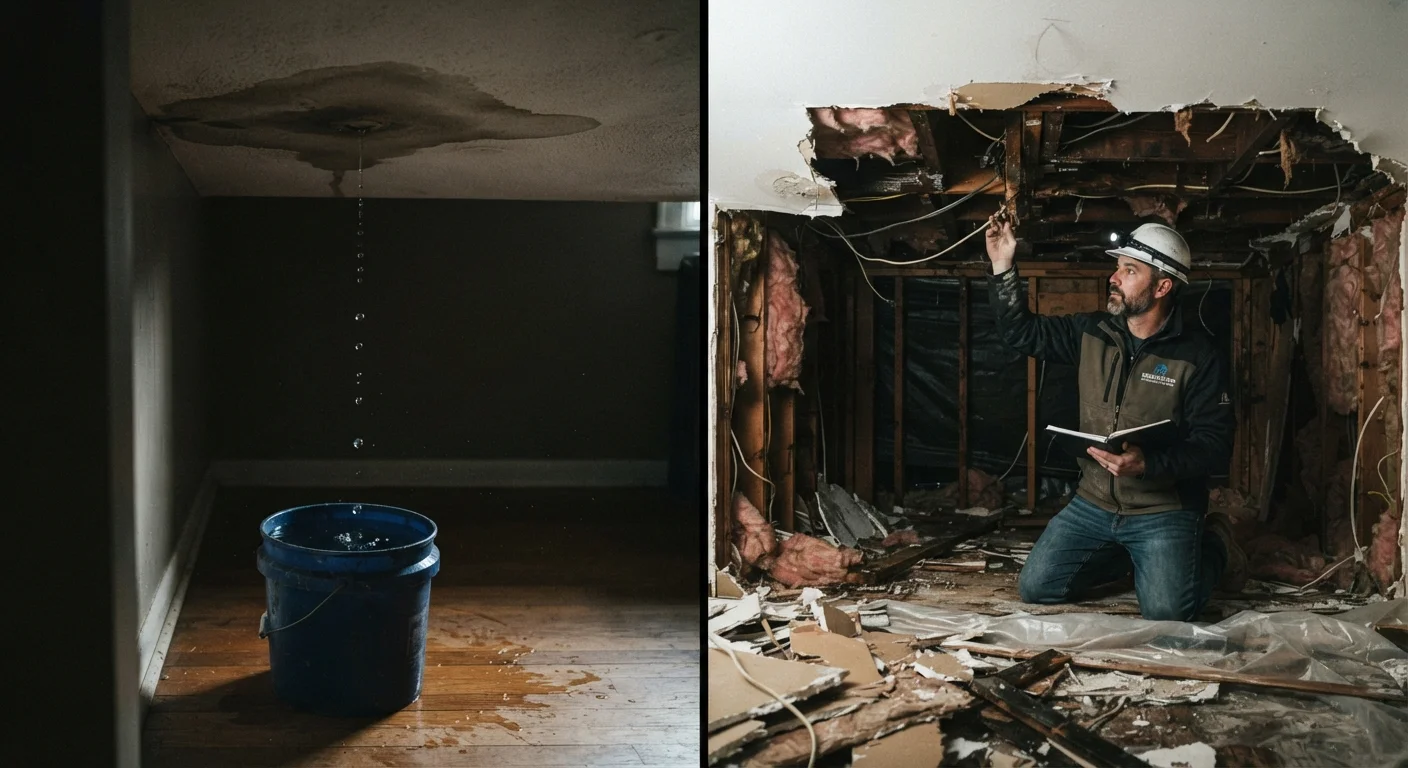
Consider a small roof leak. Water finds the path of least resistance, soaking into the decking, then the insulation, then the drywall below. Mold can begin colonizing wet materials within 24 to 48 hours under the right conditions. What might have been a straightforward shingle replacement becomes a project involving decking repair, insulation replacement, drywall remediation, and potentially mold treatment - all from a single missed maintenance call. The same cascading pattern applies to plumbing, HVAC systems, and foundations.
1%-2%
Of home value suggested for annual maintenance budget
A commonly cited rule of thumb among home inspectors and real estate professionals for annual upkeep costs.
24-48 hrs
Time for mold to begin growing in wet building materials
According to the U.S. Environmental Protection Agency (EPA), mold can begin to grow on wet surfaces within 24 to 48 hours under suitable conditions.
3x-10x
Cost multiplier when routine maintenance is deferred to emergency repair
Industry estimates from home inspection and contracting professionals suggest emergency repairs frequently cost several times more than the preventive maintenance that would have avoided them.
The core reason deferred maintenance snowballs is straightforward: materials degrade continuously, and degradation rarely pauses. A crack in a foundation wall admits water each rainstorm, slowly widening under freeze-thaw cycles. A worn HVAC filter makes the system work harder, shortening the lifespan of a compressor that can cost thousands to replace. Delay compounds the damage.
The Real Cost of Waiting
Many homeowners defer repairs because the immediate out-of-pocket cost feels like a burden. This instinct is understandable, but the financial math usually runs in the opposite direction. Routine maintenance tasks - sealing a cracked driveway, cleaning gutters, servicing a furnace - typically cost a fraction of the repairs they prevent.
Schedule Repairs During Off-Peak Seasons
Contractors are typically busier - and sometimes more expensive - during peak seasons like summer for roofing or winter for heating emergencies. Scheduling non-urgent but needed repairs in shoulder seasons (spring and fall) can make it easier to get appointments and may reduce wait times. Even so, never delay a safety-related repair to find a better time.
Water damage is one of the clearest examples. A plumber's service call to fix a slow leak under a kitchen sink might run a few hundred dollars. Leave that leak untreated, and over months it can rot the cabinet floor, warp adjacent flooring, and create a moisture environment behind the wall - each of those secondary repairs carries its own separate price tag. Emergency repair visits also tend to cost more than scheduled maintenance appointments, adding an urgency premium on top of the expanded scope of work.
For homeowners managing tight budgets, this is worth thinking of in terms of risk management rather than savings. Spending a modest, predictable amount on upkeep reduces the likelihood of a large, unpredictable expense. See our guide on DIY vs. hiring a professional to understand where it makes sense to handle maintenance yourself and where it's worth paying for expertise.
Which Systems Carry the Most Risk
Not all deferred maintenance carries equal urgency. Some systems are more prone to rapid, expensive deterioration when ignored:
- Roofing and gutters: Water is the most destructive force in a home. Clogged gutters redirect water against the fascia, into the soffit, and toward the foundation. Damaged roofing accelerates the damage further.
- HVAC systems: Skipping annual servicing and filter changes forces equipment to work harder, wearing components prematurely and reducing efficiency.
- Plumbing: Slow leaks and deteriorating supply lines are often invisible until they cause significant damage. Periodic inspection under sinks and around appliances catches problems early.
- Foundation and drainage: Grading issues that allow water to pool against a foundation can cause significant structural damage over years. This is among the most expensive category of home repair.
- Electrical systems: Older wiring, overloaded circuits, and outdated panels are both fire hazards and costly replacements. Licensed electrician inspections are essential - do not attempt electrical troubleshooting without professional guidance.
Homeowners with older properties face particular exposure. Older homes often have systems that require different care, from aging electrical panels to original plumbing materials that have reached the end of their functional lifespan.
Permits and Licensed Trades Matter
Many structural, electrical, plumbing, and HVAC repairs require permits and licensed contractors under local building codes. Unpermitted work can create problems when you sell, complicate insurance claims, and in some cases create safety hazards. Always check local requirements before starting or hiring for any significant repair - your local building department is the right starting point.
Building a Maintenance Habit That Sticks
The most effective defense against deferred maintenance is a consistent inspection routine - seasonal walkthroughs that catch emerging issues before they compound. Each season brings different stress points: spring reveals winter's damage to roofing and gutters; fall is the time to service heating systems and seal gaps before cold sets in.
Keep a simple home maintenance log - even a notes app or a paper notebook works - where you record what was inspected, what was repaired, and when. This creates a useful history and makes it easier to spot patterns, like a recurring leak that suggests a more systemic problem rather than a one-time fix. It also becomes valuable documentation if you ever sell the home.
The same logic that applies to homes applies to vehicles. Ignoring small car problems escalates into major repair bills in the same compounding way - a principle that spans nearly every system you depend on. For homeowners managing household finances, treating maintenance as a non-negotiable line item rather than a discretionary expense is a practical step toward avoiding larger financial disruptions. Visit our saving and debt resource hub for guidance on budgeting strategies that can help you prepare for predictable home expenses.
If you're unsure whether a repair is within your skillset, review repairs that homeowners commonly overestimate their ability to handle before starting. Some projects look straightforward until they aren't - and the cost of an error can exceed what a professional would have charged from the outset.