

Key Takeaways
Option A
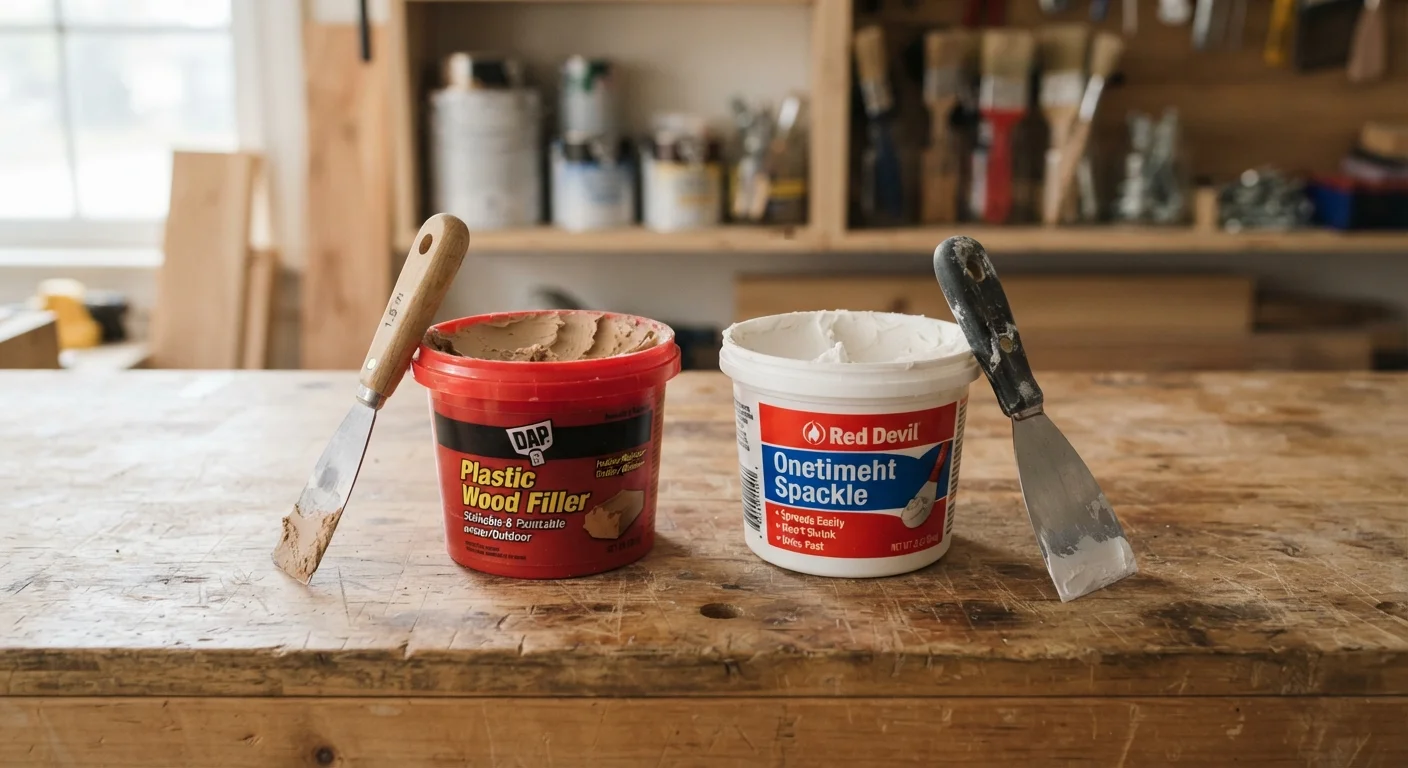
Wood Filler
The purpose-built solution for wood repair and carpentry.
Best for: Repairing cracks, gouges, nail holes, and rot damage in wood trim, furniture, and flooring.
Option B
Spackle
The fast, easy fix for interior wall and ceiling imperfections.
Best for: Filling nail holes, small dents, and hairline cracks in drywall, plaster, and similar wall surfaces.
If you're repairing a gouge, crack, or nail hole in wood trim, furniture, or flooring
Wood Filler
Wood filler bonds specifically to wood fibers, flexes slightly with the wood's natural movement, and can be sanded smooth without crumbling.
If you're patching a small dent or nail hole in drywall or plaster walls
Spackle
Spackle dries faster, shrinks less than joint compound, and is formulated to adhere to gypsum-based surfaces - making it the right match for wall repairs.
If you need a repair that will be stained or finished with a clear topcoat
Wood Filler
Many wood fillers are tintable or available in wood-tone shades, making them compatible with stain or clear finishes. Spackle cannot be stained.
If you're prepping walls before painting and need to cover multiple small imperfections quickly
Spackle
Lightweight spackle dries in as little as 30 minutes, making it ideal for a quick pre-paint touch-up workflow on walls and ceilings.
What Each Product Is Actually Made For
Both wood filler and spackle come in small tubs, go on with a putty knife, and dry to a paintable finish. That surface similarity leads to one of the most common DIY mistakes: using them interchangeably. They aren't.
Wood filler is engineered to bond with wood. Most formulas contain wood fibers, cellulose, or epoxy components that grip the porous structure of lumber, MDF, and wood composites. Once cured, the repair can be sanded flush, shaped with a rasp, and - depending on the product - stained or painted. Some two-part epoxy wood fillers are rigid enough to replace missing sections of rotted trim.
Spackle (sometimes called spackling compound) is a gypsum- or acrylic-based paste designed for drywall and plaster. It cures by evaporation, dries relatively hard, and adheres well to the mineral-based surfaces found on interior walls. Lightweight versions shrink very little, which is why they're popular for filling nail holes before painting.
The core issue is adhesion. Apply spackle to bare wood and it may seem fine at first - but wood expands and contracts with humidity. Spackle doesn't flex with it, so the repair cracks and falls out. Wood filler is formulated to tolerate that movement.
| Criterion | Wood Filler | Spackle |
|---|---|---|
| Primary substrate | Wood (lumber, MDF, trim, floors) | Drywall, plaster, gypsum surfaces |
| Bonds to wood grain | Yes - formulated to grip wood | No - poor long-term adhesion on wood |
| Can be stained | Yes (many formulas) | No |
| Flexibility after cure | Slight flex with wood movement | Rigid; may crack on moving surfaces |
| Typical dry time | 1-4 hours (water-based) | 30 min-2 hours (lightweight) |
| Sandable | Yes | Yes |
| Paintable | Yes (after priming) | Yes (after priming) |
| Best repair size | Nail holes to large gouges | Nail holes to small dents |
When to Use Wood Filler
Reach for wood filler when the damaged surface is made of wood - or when the repair will be exposed to conditions that cause wood to move.
- Nail and screw holes in trim: Baseboards, door casings, and window trim shift seasonally. Wood filler handles that flex; spackle doesn't.
- Gouges and cracks in hardwood floors: Use a filler specifically labeled for floors, since foot traffic demands a harder cure.
- Rotted wood repair: Two-part epoxy fillers can rebuild missing sections of wood trim or sills - a job spackle cannot come close to handling.
- Furniture and cabinetry: When the finished repair needs to be sanded smooth and blended with stain or clear finish, wood-tone filler is the correct tool.
Allow wood filler to cure fully before sanding - check the label, but most water-based fillers are ready in one to four hours. Solvent-based and epoxy versions may take longer. After sanding, prime the repair before painting for the cleanest result. For a full walkthrough on surface prep before you pick up a brush, see our guide to painting interior walls.
When to Use Spackle
Spackle is the go-to for wall and ceiling repairs where the substrate is drywall or plaster - not wood.
- Nail and picture-hook holes in drywall: Lightweight spackle fills these in one thin application and dries quickly enough to paint the same day.
- Small dents and dings: Doorknob impacts and minor surface damage on drywall respond well to spackle, especially when the paper face is still intact.
- Hairline cracks in plaster: For fine cracks, flexible acrylic spackling can bridge the gap and resist re-cracking better than rigid compounds.
For larger drywall damage - anything bigger than roughly a quarter - spackle alone won't give you a durable result. Those repairs typically need joint compound (also called drywall mud) reinforced with mesh tape or a patch kit. Our article on patching drywall from small holes to large sections covers that process in detail.
Joint Compound Is Not the Same as Spackle
Spackle and joint compound (drywall mud) are both used on walls, but they serve different purposes. Spackle is for small, isolated repairs - it dries fast and is ready to sand quickly. Joint compound is for taping seams, larger patches, and skim-coating entire walls; it takes longer to dry and typically requires multiple coats. Using spackle where joint compound is needed - such as over mesh tape - often leads to cracking and a poor finish.
Side-by-Side: What the Label Won't Always Tell You
Hardware stores stock dozens of patching products, and marketing language like "all-purpose" or "interior/exterior" can blur the lines. Here are a few practical clarifications:
- "Painter's putty" or "glazing compound" is not the same as wood filler or spackle - it's typically oil-based and used specifically to seal window glazing around glass panes.
- "All-purpose" wood filler usually means it can be painted or stained, not that it works on walls. Read the substrate compatibility, not just the front label.
- Lightweight vs. standard spackle: Lightweight dries faster and sands easily but is less durable for deeper fills. Standard spackle is denser and better for slightly larger voids, though it may shrink slightly more.
When in doubt about which product fits your repair, the surface material - wood vs. drywall vs. plaster - is your primary guide. The right product adheres correctly to that substrate; everything else is secondary.
90%
Of common wall repairs suitable for spackle
Industry finishing guides estimate the vast majority of routine interior wall touch-ups - nail holes, small dents - fall within spackle's effective range.
3x
Faster dry time vs. standard joint compound
Lightweight spackling compounds commonly dry in 30 to 60 minutes, compared to several hours or overnight for standard all-purpose joint compound.