

| Total essential vitamins | 13 (4 fat-soluble, 9 water-soluble) (National Institutes of Health (NIH)) |
| Most common U.S. nutrient shortfalls | Vitamin D, calcium, potassium, magnesium (2020-2025 Dietary Guidelines for Americans) |
| Adults at risk for B12 deficiency | Up to 15% of the general population (NIH Office of Dietary Supplements) |
| Vitamin D synthesis source | Sunlight (UVB exposure to skin) |
| Iron absorption enhancer | Vitamin C consumed with plant-based iron sources |
| Recommended nutrition starting point | Food first; supplements to fill confirmed gaps (2020-2025 Dietary Guidelines for Americans) |
Why Every Adult Needs a Nutrition Reference
Most Americans get a passing grade on some nutrients and quietly fall short on others. The challenge is that deficiencies often develop slowly, with symptoms - fatigue, brittle nails, poor concentration - that are easy to dismiss. Understanding what each vitamin and mineral actually does, and where to find it, is the first step toward making more informed choices about what you eat.
This guide covers the key micronutrients most relevant to adult health. It is a general educational reference, not a substitute for personal medical advice. If you have concerns about your nutritional status, a healthcare provider can order blood tests and offer guidance tailored to your situation.
For a closer look at how nutrients stack up when you compare food sources to bottled supplements, see Whole Foods vs. Supplements.
| Total essential vitamins | 13 (4 fat-soluble, 9 water-soluble) (National Institutes of Health (NIH)) |
| Most common U.S. nutrient shortfalls | Vitamin D, calcium, potassium, magnesium (2020-2025 Dietary Guidelines for Americans) |
| Adults at risk for B12 deficiency | Up to 15% of the general population (NIH Office of Dietary Supplements) |
| Vitamin D synthesis source | Sunlight (UVB exposure to skin) |
| Iron absorption enhancer | Vitamin C consumed with plant-based iron sources |
| Recommended nutrition starting point | Food first; supplements to fill confirmed gaps (2020-2025 Dietary Guidelines for Americans) |
The Major Vitamins: Functions and Food Sources
Vitamins are organic compounds the body needs in small amounts to regulate metabolism, support immunity, and maintain healthy tissues. They split into two broad categories.
Fat-Soluble Vitamins (A, D, E, K)
These dissolve in fat and are stored in the body's fatty tissue and liver, which means both deficiency and excess can have consequences over time.
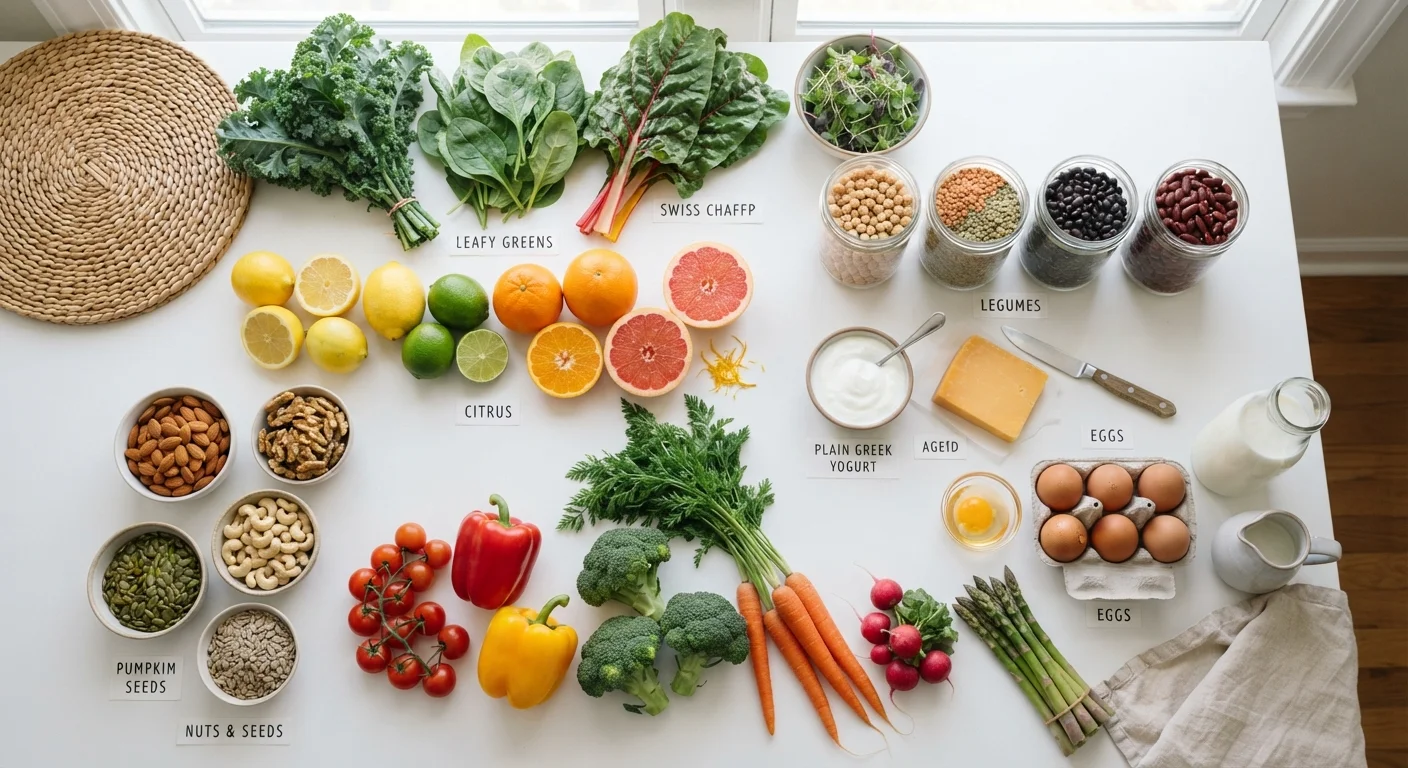
- Vitamin A - Supports vision (especially night vision), immune function, and skin cell turnover. Found in liver, dairy, eggs, and in the form of beta-carotene in orange and yellow vegetables like sweet potato and carrots.
- Vitamin D - Essential for calcium absorption and bone health; also involved in immune regulation. Synthesized by the skin in response to sunlight; dietary sources include fatty fish, egg yolks, and fortified foods. Deficiency is widespread in the U.S., particularly in northern latitudes and in people who spend little time outdoors.
- Vitamin E - Acts as an antioxidant, protecting cell membranes from oxidative damage. Found in nuts, seeds, vegetable oils, and leafy greens.
- Vitamin K - Critical for blood clotting and bone metabolism. K1 is abundant in leafy greens; K2 is found in fermented foods and some animal products.
Water-Soluble Vitamins (C and the B Vitamins)
Because these are not stored in significant amounts, regular dietary intake matters more consistently.
- Vitamin C - Supports collagen synthesis, wound healing, and immune function; also aids iron absorption from plant sources. Found in citrus, bell peppers, strawberries, and broccoli.
- B Vitamins - This family of eight includes thiamine (B1), riboflavin (B2), niacin (B3), pantothenic acid (B5), B6, biotin (B7), folate (B9), and B12. Collectively they support energy metabolism, nerve function, and red blood cell production. B12 is found almost exclusively in animal foods, making it a common concern for people following plant-based diets.
Micronutrients
Vitamins and minerals the body requires in small amounts to function properly. Unlike macronutrients (protein, carbohydrates, fat), they provide no calories but are essential for hundreds of biological processes.
Fat-soluble vitamins
Vitamins A, D, E, and K, which dissolve in fat and are stored in fatty tissue and the liver. Because they accumulate in the body, excessive intake from supplements can reach harmful levels over time.
Water-soluble vitamins
Vitamins C and the eight B vitamins, which dissolve in water and are not stored in large amounts. Excess is generally excreted in urine, but regular dietary intake is still important to maintain adequate levels.
Adequate Intake (AI)
A reference value used when there is insufficient evidence to establish a full Recommended Dietary Allowance (RDA). It represents the intake level assumed to be nutritionally adequate for most healthy people.
Heme iron
A form of iron found in animal foods such as red meat, poultry, and seafood. It is absorbed more efficiently by the body than non-heme iron, which comes from plant sources.
Antioxidant
A compound that helps neutralize free radicals - unstable molecules that can damage cells. Several vitamins, including C and E, have antioxidant properties.
Key Minerals: What They Do and Where to Find Them
Minerals are inorganic elements that support structural functions - like building bone - as well as fluid balance, nerve signaling, and enzymatic reactions.
- Calcium - The most abundant mineral in the body, primarily in bones and teeth. Also involved in muscle contraction and nerve transmission. Sources include dairy, fortified plant milks, tofu made with calcium sulfate, and leafy greens such as kale and bok choy.
- Magnesium - Involved in more than 300 enzymatic reactions, including energy production, protein synthesis, and blood pressure regulation. Found in nuts, seeds, whole grains, and leafy greens. Many Americans consume less than the recommended amount.
- Iron - Central to hemoglobin, the protein that carries oxygen in red blood cells. Heme iron from red meat and seafood is more readily absorbed than non-heme iron from legumes and fortified cereals. Pairing plant iron sources with vitamin C improves absorption.
- Potassium - Supports healthy blood pressure, fluid balance, and muscle function. Found in bananas, potatoes, beans, and dairy. Most Americans fall short of the adequate intake level.
- Zinc - Needed for immune function, wound healing, and DNA synthesis. Found in meat, shellfish (oysters are an especially rich source), legumes, and pumpkin seeds.
- Iodine - Required for thyroid hormone production, which regulates metabolism. Iodized salt and seafood are primary sources; people who avoid both may need to pay close attention to intake.
If you are considering supplementation to address any of these nutrients, learning to read supplement labels can help you interpret the information on the bottle before purchasing. And if you are new to supplements altogether, starting supplements for the first time walks through how to assess your needs and what to discuss with a doctor.
Food First, Supplements Second
Regulatory bodies including the NIH and the Dietary Guidelines Advisory Committee consistently recommend obtaining nutrients from whole foods whenever possible, since food provides a matrix of fiber, phytochemicals, and co-nutrients that supplements cannot replicate. Supplements can be appropriate to address confirmed deficiencies or specific life-stage needs - such as folate during pregnancy - but should not replace a varied diet. Always discuss supplementation with a healthcare provider. For more context, see a practical reference for everyday foods.
This article is for general informational purposes only and does not constitute medical or nutritional advice. Consult a qualified healthcare provider before making changes to your diet or supplement routine.