

Key Takeaways
Option A
Probiotics
The live microorganisms that populate your gut.
Best for: People looking to restore or maintain a healthy balance of beneficial bacteria in the digestive tract.
Option B
Prebiotics
The specialized fibers that feed your gut bacteria.
Best for: People focused on nourishing and sustaining the existing beneficial bacteria already living in the gut.
If you want to actively introduce beneficial bacteria into your gut
Probiotics
Probiotics deliver live microorganisms directly into the digestive tract, making them the appropriate choice when the goal is to add or replenish specific beneficial bacterial strains.
If you want to nourish and sustain the bacteria already in your gut
Prebiotics
Prebiotics selectively fuel existing beneficial bacteria, helping them thrive and outcompete less helpful microbes over time.
If you want comprehensive, long-term gut microbiome support
Probiotics
For the most complete approach, pairing probiotics with prebiotic-rich foods gives introduced bacteria a food source to survive and flourish - most gut health researchers emphasize both together.
What Probiotics Actually Are
The word probiotic comes from Latin and Greek roots meaning "for life." In nutritional science, probiotics are defined as live microorganisms that, when consumed in adequate amounts, confer a health benefit on the host. That's the working definition established by the World Health Organization and the Food and Agriculture Organization.
In practical terms, probiotics are bacteria - and sometimes yeasts - that survive digestion well enough to reach the large intestine, where most of the gut microbiome lives. Common strains belong to the Lactobacillus and Bifidobacterium genera, though dozens of distinct strains exist and they don't all behave identically.
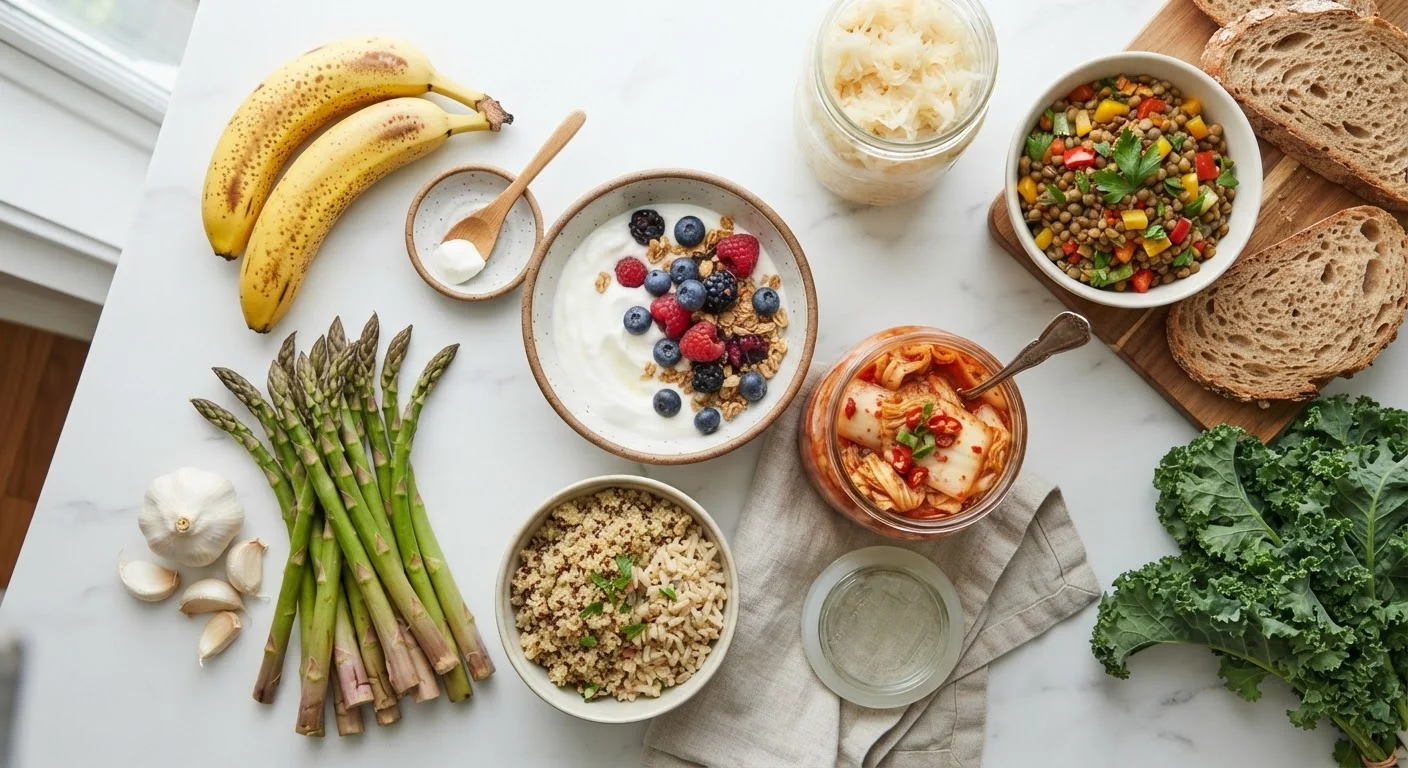
Dietary sources of probiotics include fermented foods: yogurt with live active cultures, kefir, kimchi, sauerkraut, miso, tempeh, and kombucha. Probiotic supplements are also widely available, though the research on specific supplement formulations varies considerably by strain and health goal. For more on how supplements interact with the body generally, see what supplements actually do inside the body.
What Prebiotics Actually Are
Prebiotics are a category of dietary fiber - specifically, non-digestible compounds that humans cannot break down but that certain beneficial gut bacteria can. When those bacteria ferment prebiotics in the colon, they produce short-chain fatty acids and other byproducts that support intestinal lining integrity and broader metabolic function.
The key characteristic of a prebiotic is selectivity: it preferentially feeds beneficial bacteria like Bifidobacterium and Lactobacillus rather than harmful microbes. Well-studied prebiotic compounds include inulin, fructooligosaccharides (FOS), and galactooligosaccharides (GOS).
Food sources include garlic, onions, leeks, asparagus, bananas (particularly slightly underripe ones), oats, barley, chicory root, and Jerusalem artichokes. These are all ordinary, whole plant foods - not exotic or processed products. This is consistent with broader evidence showing the value of a food-first approach to nutrition, explored further in whole foods vs. supplements.
| Criterion | Probiotics | Prebiotics |
|---|---|---|
| What they are | Live microorganisms (bacteria, yeasts) | Non-digestible plant fibers |
| Primary role | Add beneficial bacteria to the gut | Feed and sustain existing beneficial bacteria |
| Common food sources | Yogurt, kefir, kimchi, tempeh, miso | Garlic, oats, bananas, asparagus, chicory |
| Where they act | Large intestine (colon) | Colon (fermented by bacteria there) |
| Heat sensitivity | Killed by high heat - preparation matters | Generally stable through most cooking |
| Supplement availability | Widely available in capsule/powder form | Available; also easy to get from whole foods |
| Research maturity | Extensive but strain-specific; varies widely | Well-established for several fiber types |
How They Work Together - and Why Both Matter
Probiotics and prebiotics aren't competing strategies - they're complementary ones. A useful analogy: probiotics are the seeds, and prebiotics are the soil and fertilizer. Introducing beneficial bacteria through probiotics has more limited lasting impact if those bacteria don't have an adequate food supply. Conversely, prebiotics can only nourish bacteria that are already present in sufficient quantities.
~38 trillion
Microbial cells in the human gut
Estimates from researchers at the Weizmann Institute suggest the human body contains roughly as many microbial cells as human cells, most concentrated in the large intestine.
95%
Americans falling short on fiber intake
The Dietary Guidelines for Americans identifies dietary fiber as a nutrient of public health concern, with the vast majority of adults consuming well below recommended daily amounts.
1,000+
Distinct bacterial species in the gut microbiome
Research published in leading microbiology journals estimates that the human gut can host over a thousand different bacterial species, varying considerably by individual.
This relationship has led researchers to study synbiotics - combinations of probiotics and prebiotics designed to work in tandem. While the science is still developing, current evidence generally supports eating a varied, fiber-rich diet alongside fermented foods as a practical, food-based way to support microbiome diversity.
It's also worth noting that the gut microbiome is highly individualized. What meaningfully shifts one person's bacterial profile may have a smaller effect on another's, depending on baseline microbiome composition, diet, medications, and genetics. Anyone with persistent digestive symptoms should speak with a qualified healthcare provider rather than self-treating with supplements.
For a broader look at how the body processes different nutrient sources, our piece on animal vs. plant protein sources illustrates how food composition shapes what the body actually absorbs and uses.
This article is for general informational and educational purposes only and is not a substitute for professional medical advice, diagnosis, or treatment. Always consult a qualified healthcare provider with questions about your digestive health or before starting any supplement regimen.