

| Number of essential vitamins | 13 (National Institutes of Health, Office of Dietary Supplements) |
| Essential dietary minerals | 16 (major + trace) (National Academies of Sciences, Engineering, and Medicine) |
| Fat-soluble vitamins | A, D, E, K |
| Water-soluble vitamins | C and all 8 B vitamins |
| Nutrient most lacking in American diets | Vitamin D, calcium, potassium (commonly under-consumed) (2020-2025 Dietary Guidelines for Americans) |
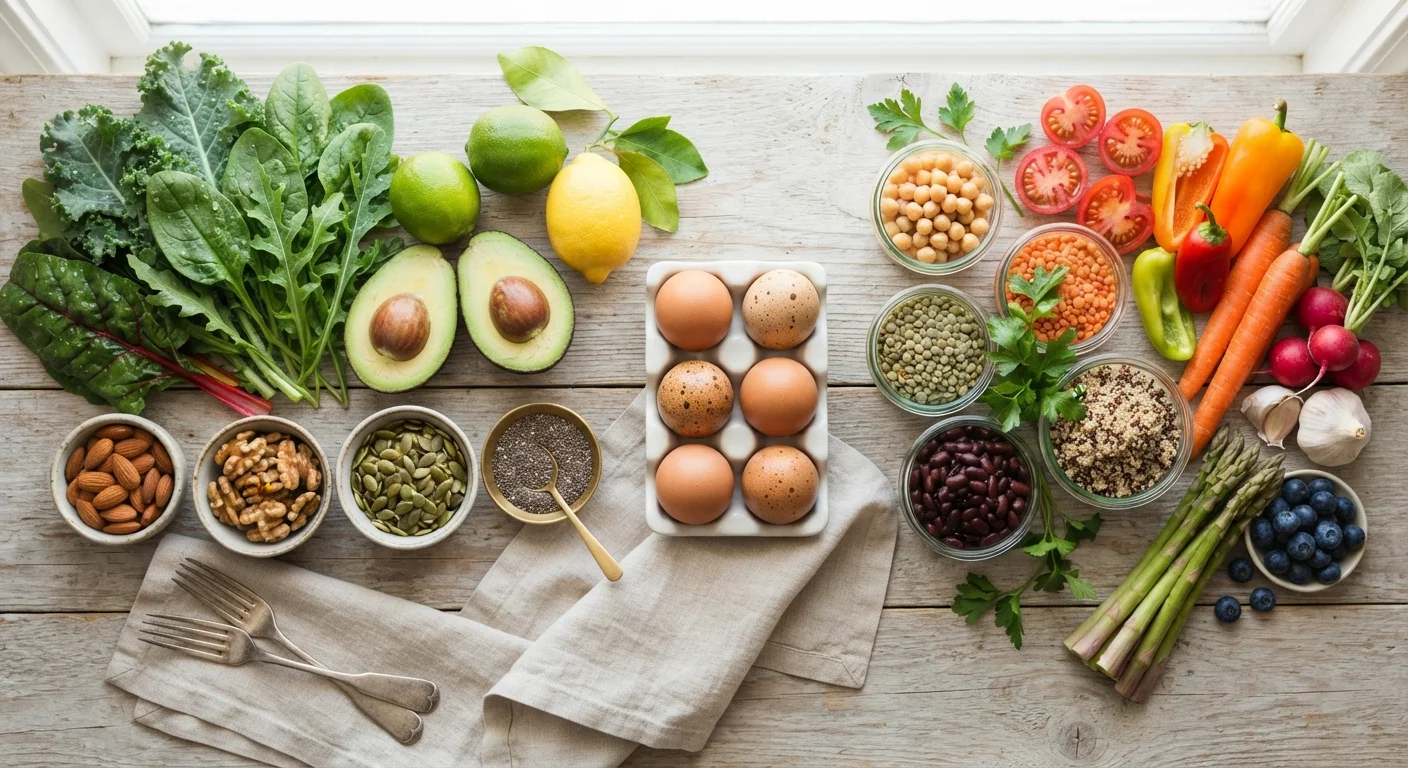
| Best broad strategy for nutrient coverage | Varied whole-food diet across all food groups (USDA Dietary Guidelines Advisory Committee) |
Why This Reference Exists
Nutrition labels and health headlines can make vitamins and minerals feel complicated. In reality, most Americans can get what they need from a well-rounded diet - the challenge is knowing which foods deliver which nutrients and why those nutrients matter.
This article works as a practical lookup guide. It won't tell you what to eat every day or prescribe targets for your situation - that's a conversation for a registered dietitian or your doctor. What it will do is give you a clear, jargon-light reference you can return to whenever you want to understand a nutrient better.
For a deeper dive into how the body handles vitamins differently, see our article on fat-soluble vs. water-soluble vitamins. And if you're weighing whether food or supplements better fills a gap in your diet, our piece on whole foods vs. supplements offers balanced context.
This article is for general informational and educational purposes only and is not a substitute for personalized medical or nutritional advice. Consult a qualified healthcare professional for guidance specific to your health needs.
| Number of essential vitamins | 13 (National Institutes of Health, Office of Dietary Supplements) |
| Essential dietary minerals | 16 (major + trace) (National Academies of Sciences, Engineering, and Medicine) |
| Fat-soluble vitamins | A, D, E, K |
| Water-soluble vitamins | C and all 8 B vitamins |
| Nutrient most lacking in American diets | Vitamin D, calcium, potassium (commonly under-consumed) (2020-2025 Dietary Guidelines for Americans) |
| Best broad strategy for nutrient coverage | Varied whole-food diet across all food groups (USDA Dietary Guidelines Advisory Committee) |
Key Vitamins and the Foods That Contain Them
The vitamins below are grouped by whether they dissolve in fat or water - a distinction that shapes how your body stores and uses them. Fat-soluble vitamins (A, D, E, K) accumulate in body tissue, while water-soluble vitamins (C and the B family) are used more quickly and need regular replenishment through food.
Fat-soluble vitamins
Vitamins A, D, E, and K dissolve in fat and are stored in body tissues and the liver. Because they accumulate, excessive intake from supplements can be harmful over time.
Water-soluble vitamins
Vitamins C and all the B vitamins dissolve in water and are not stored in large amounts. Excess is typically excreted in urine, so regular dietary intake is important.
Bioavailability
The proportion of a nutrient that the body actually absorbs and uses after you eat it. Bioavailability varies by food source, preparation method, and what you eat alongside the nutrient.
Dietary Reference Intake (DRI)
A set of nutrient reference values established by the National Academies of Sciences used as benchmarks for planning and assessing nutrient intake for healthy populations.
Micronutrients
Vitamins and minerals needed by the body in relatively small amounts compared to macronutrients like carbohydrates, fat, and protein, but no less essential for health.
Fortified food
A food that has had nutrients added to it that were not originally present, or were present in lower amounts - for example, vitamin D added to milk or folic acid added to bread.
Vitamin A
What it supports: Vision (especially in low light), immune function, cell growth, and skin integrity.
Found in: Beef liver, sweet potato, carrots, spinach, kale, fortified dairy.
Vitamin D
What it supports: Calcium absorption, bone strength, immune regulation.
Found in: Fatty fish (salmon, mackerel), egg yolks, fortified milk, fortified orange juice. Sunlight also triggers the body to produce it.
Vitamin E
What it supports: Antioxidant protection of cells, immune function.
Found in: Sunflower seeds, almonds, wheat germ oil, peanut butter, spinach.
Vitamin K
What it supports: Blood clotting and bone metabolism.
Found in: Leafy greens (kale, collards, spinach), broccoli, Brussels sprouts, fermented foods.
Vitamin C
What it supports: Collagen synthesis, immune defense, iron absorption from plant sources.
Found in: Bell peppers, citrus fruits, strawberries, broccoli, kiwi.
B Vitamins (as a group)
The B vitamins - including B1 (thiamine), B2 (riboflavin), B3 (niacin), B6, B12, and folate - collectively support energy metabolism, red blood cell formation, and nervous system function. Food sources vary by type but include whole grains, legumes, eggs, meat, dairy, leafy greens, and nutritional yeast. B12, notably, is found almost exclusively in animal products, making it a nutrient to watch for those eating plant-based diets.
Key Minerals and Where to Find Them
Minerals are inorganic elements that support everything from bone density and fluid balance to oxygen transport and muscle contraction. Here are the ones most relevant to everyday American diets.
~42%
U.S. adults with vitamin D insufficiency
According to research published in Nutrition Research analyzing NHANES data from a nationally representative sample of U.S. adults.
~90%
Americans not meeting potassium recommendations
The 2020-2025 Dietary Guidelines for Americans identifies potassium as a nutrient of public health concern due to widespread under-consumption.
1 in 3
Women aged 20-49 with low iron intake
CDC and NHANES surveillance data indicate iron deficiency remains one of the most common nutritional deficiencies in women of childbearing age in the U.S.
Calcium
What it supports: Bone and tooth structure, muscle contraction, nerve signaling.
Found in: Dairy (milk, yogurt, cheese), fortified plant milks, tofu made with calcium sulfate, canned salmon with bones, bok choy, broccoli.
Iron
What it supports: Oxygen transport in the blood via hemoglobin.
Found in: Red meat, poultry, shellfish (especially oysters), lentils, tofu, spinach, fortified cereals. Pairing plant-based iron sources with vitamin C improves absorption.
Magnesium
What it supports: Muscle and nerve function, blood pressure regulation, blood sugar control, protein synthesis.
Found in: Pumpkin seeds, chia seeds, almonds, black beans, edamame, brown rice, avocado.
Potassium
What it supports: Fluid and electrolyte balance, heart rhythm, blood pressure.
Found in: Bananas, potatoes (with skin), white beans, lentils, spinach, dried apricots, salmon.
Zinc
What it supports: Immune function, wound healing, DNA synthesis, taste and smell.
Found in: Oysters, beef, crab, pork, chickpeas, pumpkin seeds, cashews.
Selenium
What it supports: Thyroid hormone metabolism, antioxidant defense.
Found in: Brazil nuts (high concentration - one or two is typically sufficient), tuna, halibut, sardines, eggs, sunflower seeds.
For a broader overview of these nutrients in one place, our vitamin and mineral reference guide is a useful companion. If you're considering whether a supplement might help cover any gaps, see our guide on starting supplements for the first time.
This article is for general informational and educational purposes only. Consult a registered dietitian or healthcare provider for personalized dietary guidance.