

Key Takeaways
Dietary Hydration
Dietary hydration refers to the water your body receives not just from drinking liquids, but from the foods you eat and the way different nutrients interact with fluid levels. Every meal influences how well your body holds onto or expels water. Foods high in sodium can cause the body to retain fluid, while water-rich fruits and vegetables actively contribute to your daily intake.
Approximately 20% of daily water intake for most adults comes from food rather than beverages, according to general nutritional guidance from public health authorities.
The Food-Fluid Connection Most People Overlook
When most people think about staying hydrated, they picture a water bottle. What rarely comes to mind is the bowl of watermelon, the cucumber slices in a salad, or the broth-based soup at lunch - yet these foods are active contributors to your daily water balance.
Nutrition research broadly estimates that food accounts for roughly 20% of total daily fluid intake for most adults. That means your diet is doing more hydration work than many people realize, and it also means that your food choices can either support or undermine how well-hydrated you stay.
Understanding this connection doesn't require a nutrition degree. A few core principles explain most of the relationship between what you eat and how your body manages water.
Thirst Is a Late Signal
By the time you feel thirsty, mild dehydration may have already set in. Urine color is a more reliable real-time indicator - pale yellow generally suggests adequate hydration, while dark yellow or amber may indicate a need for more fluid. Paying attention to your diet throughout the day, rather than reacting to thirst alone, is a more consistent approach.
Water-Rich Foods: Hydration You Can Eat
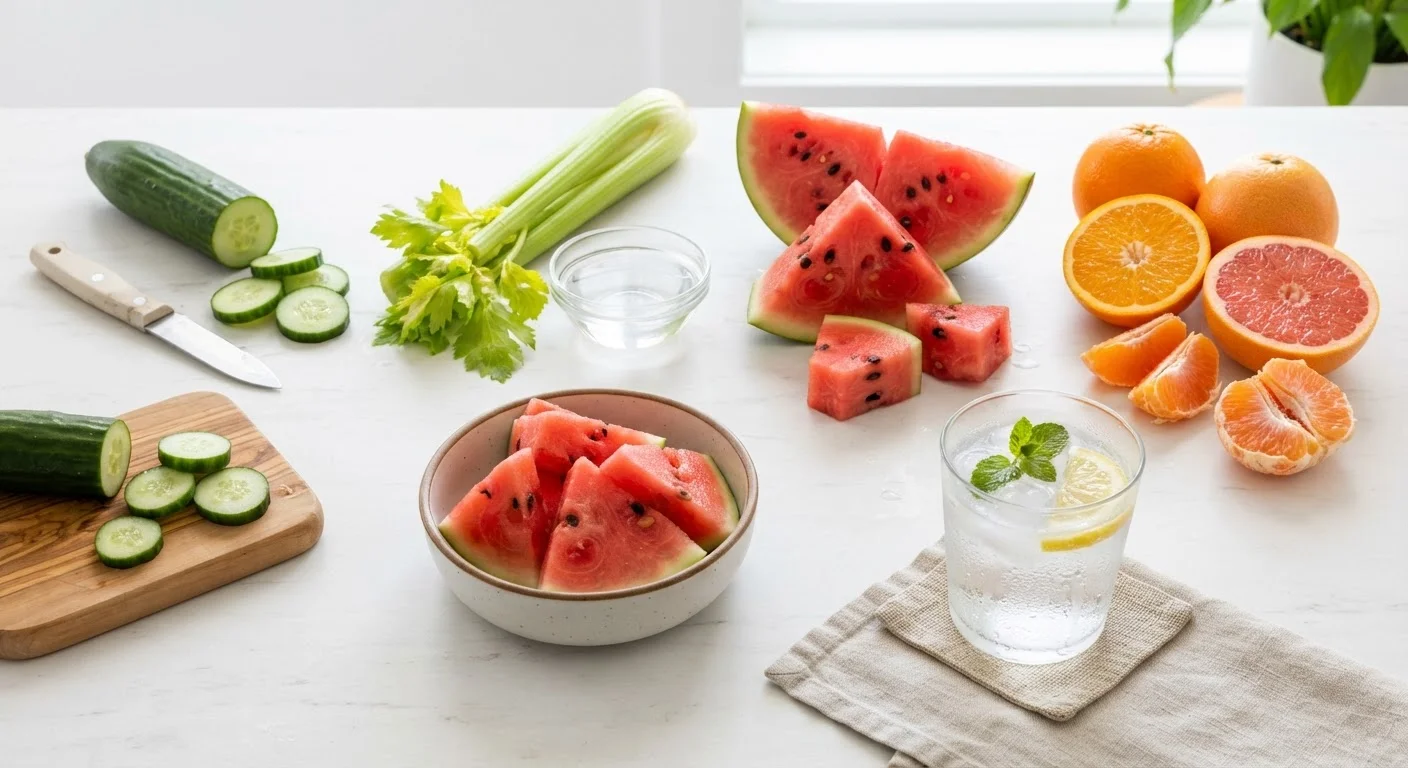
Some foods are composed almost entirely of water. Cucumbers clock in at around 96% water by weight. Iceberg lettuce, celery, zucchini, and tomatoes all sit above 90%. Watermelon, strawberries, and oranges are close behind. When these foods are regular parts of your meals and snacks, they quietly add meaningful fluid volume to your day.
Broth-based soups are another underrated hydration vehicle. A bowl of vegetable or chicken broth soup delivers both water and electrolytes - particularly sodium and potassium - which help the body absorb and retain fluid more efficiently.
This doesn't mean you can skip drinking water, but it does mean that a diet heavy in fresh produce and minimally processed foods naturally supports better hydration than one dominated by dry, packaged, or heavily processed options.
Sodium, Sugar, and Foods That Work Against Hydration
Just as some foods support hydration, others create extra demand for water. Sodium is the most significant factor. When you consume a high-sodium meal - a salty snack, fast food, cured meats - your body pulls water from cells to dilute the sodium concentration in the bloodstream. That's the biological reason a salty meal makes you thirsty. Your kidneys also retain water to balance sodium levels, which can lead to temporary bloating.
Very high-sugar foods and drinks, including many sodas and sweetened beverages, can also contribute to fluid imbalance. The body requires water to process and metabolize sugar, and sugary drinks are generally less effective at hydrating than plain water.
Swap One Salty Snack for Fresh Produce
Replacing even one daily snack - such as chips or crackers - with raw cucumber slices, apple wedges, or a small bowl of berries can shift both your sodium intake and your hydration contribution in a positive direction. Small, consistent substitutions tend to be more sustainable than dramatic dietary overhauls.
Highly processed, low-moisture foods - crackers, chips, dried snacks - add almost no fluid and often deliver substantial sodium, creating a double draw on your hydration reserves. Replacing some of these snacks with fresh fruit or raw vegetables can shift the balance noticeably.
Caffeine and Alcohol: What the Evidence Actually Says
Two of the most common beverages in American daily life - coffee and alcohol - each affect hydration differently, and both are commonly misunderstood.
Caffeine does have a mild diuretic effect, meaning it increases urine output modestly. However, current evidence suggests that for regular caffeine consumers, the body adapts to this effect. Moderate coffee or tea consumption - generally up to three or four cups per day - does not appear to cause net fluid loss that meaningfully impairs hydration. The water in the beverage largely compensates for the diuretic effect.
Alcohol is a different story. It suppresses antidiuretic hormone (ADH), a hormone that signals the kidneys to conserve water. With ADH suppressed, the kidneys release more water than usual - this is why frequent urination accompanies alcohol consumption and why hangover symptoms often include thirst, headache, and fatigue. Drinking water alongside alcoholic beverages and afterward is a practical way to mitigate this effect.
Interestingly, the habits that support good hydration overlap with habits that support overall wellbeing. Good sleep hygiene, for example, is also influenced by hydration status - mild dehydration has been linked to disrupted sleep quality.
Practical Ways to Let Your Diet Work for Your Hydration
No single food or drink rule guarantees optimal hydration, and individual needs vary considerably based on body size, activity level, climate, and health conditions. That said, a few practical habits can meaningfully support fluid balance through diet:
- Prioritize produce. Build meals and snacks around fruits and vegetables with high water content. Raw forms generally retain more moisture than cooked.
- Watch sodium intake. The Dietary Guidelines for Americans suggest limiting sodium to under 2,300 mg per day. Being mindful of sodium in packaged and restaurant foods can reduce unnecessary thirst signals.
- Don't skip soups. Broth-based soups are one of the most efficient combinations of fluid and electrolytes available in everyday cooking.
- Pair alcohol with water. Drinking a glass of water between alcoholic drinks is one of the simplest ways to slow the dehydrating effect of alcohol.
- Eat breakfast. Many people wake up mildly dehydrated after hours without fluid. A morning meal that includes water-rich foods - berries, yogurt, fruit - helps restart hydration alongside morning beverages.
~20%
Daily water from food, not beverages
Public health nutrition guidance broadly estimates that food accounts for around one-fifth of total daily fluid intake for most adults.
96%
Water content of cucumbers by weight
Cucumbers are among the most water-dense whole foods readily available in American grocery stores and are easy to incorporate into everyday meals.
2,300 mg
Daily sodium limit per Dietary Guidelines
The Dietary Guidelines for Americans recommend keeping sodium intake below 2,300 mg per day to support overall health, including fluid balance.
If you ever wonder how pets navigate similar dietary influences on their water needs, it's worth noting that the same food-water principles apply in the animal world. Why pets drink more water in some seasons explores how diet and environment shape thirst in animals, too.
This article is for general informational and educational purposes only and is not medical or nutritional advice. Individual hydration needs vary. Consult a qualified healthcare professional for guidance tailored to your health situation.