

Key Takeaways
What Sleep Hygiene Actually Means
Sleep hygiene refers to the collection of behavioral and environmental practices that influence how well you sleep - not just what you do at bedtime, but throughout the entire day. The term originates in clinical sleep research and has become a standard part of how healthcare providers approach insomnia and sleep complaints without medication.
What makes it useful is also what makes it easy to underestimate: sleep hygiene is cumulative. No single habit is a cure, but several practiced consistently create the conditions your brain needs to fall asleep, stay asleep, and cycle through the restorative stages of sleep that make waking feel worthwhile. It sits within a broader picture of mental and physical wellbeing - for context, see the full dimensions of mental wellness.
Sleep Hygiene Is Not Medical Treatment
The practices described here reflect general health information for adults without diagnosed sleep disorders. If you experience persistent insomnia, excessive daytime sleepiness, or symptoms like loud snoring and gasping, consult a licensed healthcare provider. Conditions such as sleep apnea or chronic insomnia require professional evaluation and targeted treatment.
The Core Practices That Make a Difference
Most sleep hygiene guidance draws from the same body of research, which has consistently identified a handful of behaviors with the clearest influence on sleep outcomes. These aren't optional refinements - they're the foundation.
Anchor your schedule to a fixed wake time, even on weekends.
Your circadian rhythm - the internal biological clock governing sleep and wakefulness - is calibrated largely by when you wake up, not just when you go to bed. Sleeping in on weekends shifts this rhythm, a phenomenon researchers call social jet lag, which can impair alertness and mood throughout the week.
Get natural light exposure within the first hour of waking.
Morning light suppresses residual melatonin and signals the circadian system to begin its countdown toward the next sleep cycle. Research from sleep science indicates that outdoor light - even on overcast days - is substantially brighter than indoor lighting and more effective at entraining the body clock.
Limit caffeine to the morning hours and avoid it after early afternoon.
Caffeine blocks adenosine receptors, reducing the natural sleepiness signal that builds throughout the day. Its half-life in the body is roughly five to seven hours, meaning an afternoon coffee may still be active in your system at bedtime - delaying sleep onset and reducing deep sleep duration even if you feel like you fall asleep normally.
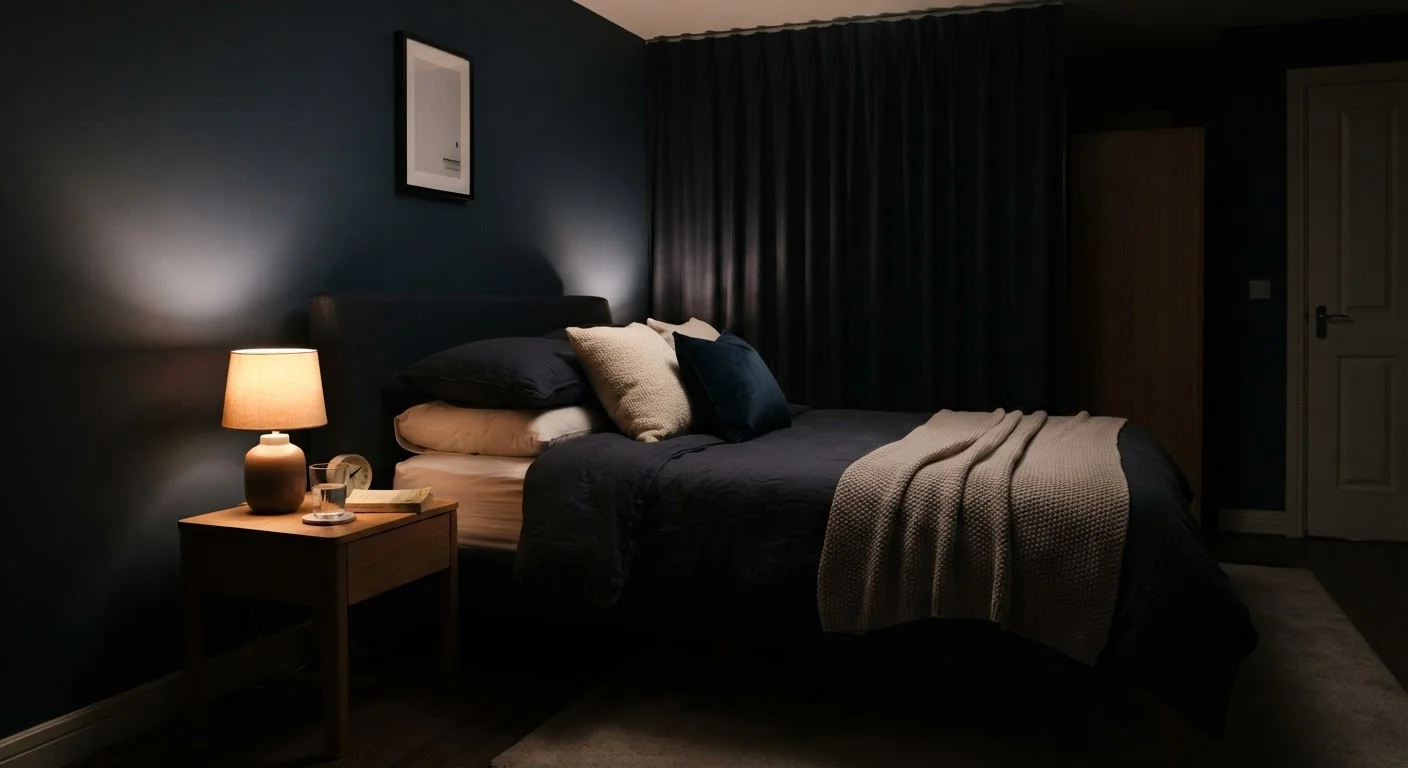
Keep your bedroom cool, dark, and as quiet as possible.
Core body temperature drops naturally as part of the sleep initiation process. A bedroom environment that is too warm can interfere with this drop and reduce slow-wave (deep) sleep. Similarly, light and noise - even at levels that don't fully wake you - can fragment sleep architecture and reduce its restorative quality.
Build a consistent wind-down routine in the hour before bed.
The nervous system needs transitional time to shift from active, alert states to the calmer physiological state that supports sleep onset. Abrupt transitions - from a bright screen or stressful task directly to bed - prolong the time it takes to fall asleep and can increase nighttime wakefulness.
Reserve your bed primarily for sleep.
Stimulus control is a well-established behavioral technique: the more consistently your brain associates the bed with sleep (rather than work, scrolling, or watching TV), the more reliably it initiates sleep when you lie down. Weakening this association can contribute to the conditioned arousal that underlies many cases of chronic insomnia.
Your Environment Is Part of the Equation
Sleep science consistently shows that the physical space where you sleep is nearly as important as the behaviors surrounding it. Temperature, light, and noise are the three variables with the most direct influence on sleep architecture - how your body moves through light, deep, and REM sleep stages across the night.
Small environmental adjustments are among the quickest changes to implement. Unlike shifting a years-long caffeine habit, reorganizing a bedroom takes minutes.
Track Your Patterns for One Week
Before overhauling your routine, spend one week simply noting your bedtime, wake time, caffeine intake, and how rested you feel each morning. Patterns often emerge quickly - a late-night scroll habit, inconsistent wake times, or afternoon coffee that's quietly affecting your nights. This brief self-awareness exercise is also a core element of the weekly mental wellness check-in framework.
Building good sleep habits also parallels the discipline required in other health domains. The evidence-informed principles behind sustainable fitness routines map closely onto what makes sleep hygiene stick: consistency, realistic expectations, and attention to how daily choices accumulate.
Quick Wins to Start Tonight
Comprehensive sleep hygiene can take time to build, but a handful of actions are simple enough to begin immediately. Each targets one of the most evidence-supported levers in sleep quality.
This article is for general informational purposes only and does not constitute medical advice. If you have concerns about your sleep health, please consult a qualified healthcare provider.