

Key Takeaways
Seasonal Thirst Changes in Pets
Pets naturally drink more or less water depending on temperature, activity level, humidity, and what they eat. These shifts are usually normal responses to their environment. However, a sudden or dramatic change in drinking habits - unrelated to season or diet - can be an early sign of an underlying health condition worth discussing with a veterinarian.
Excessive thirst (polydipsia) is clinically defined in dogs and cats as drinking more than approximately 100 ml per kg of body weight per day; significant deviations from a pet's personal baseline warrant veterinary evaluation.
How Season and Environment Shape Your Pet's Thirst
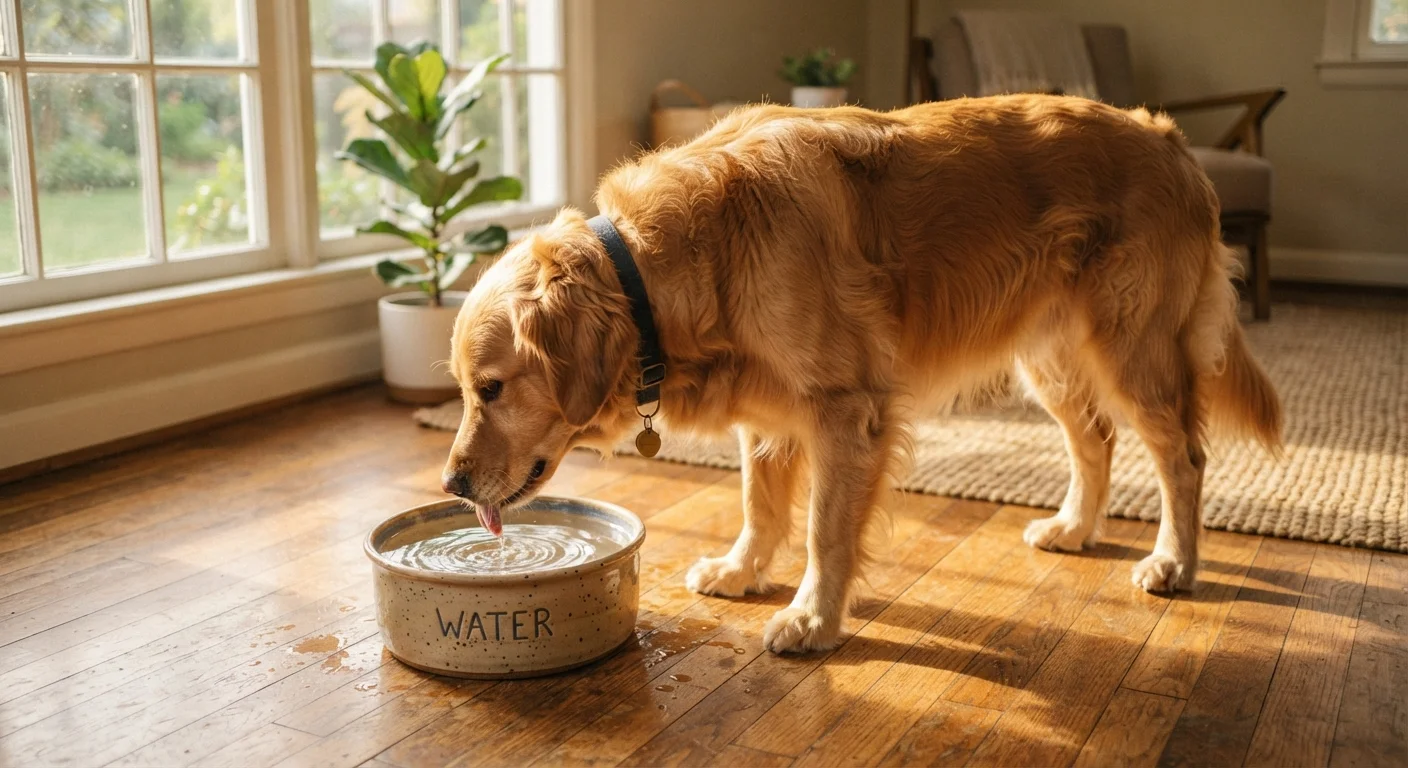
Just as people reach for water more readily on a hot July afternoon than a cold February morning, pets respond to their environment in predictable ways. Dogs cool themselves almost entirely through panting, expelling significant moisture with every breath. On warm days or after vigorous play, that fluid loss accelerates - and so does their drive to drink.
Cats are more subtle. Because they descended from animals adapted to dry climates, they often don't signal thirst as obviously. In summer, you may notice your cat visiting the water bowl more frequently, or seeking out dripping faucets. In winter, a slight dip in drinking is common and usually benign.
Humidity matters too. Dry winter air - especially indoors with forced-heat systems running - can increase a pet's need for water even when temperatures are low. Keeping bowls filled and clean year-round supports healthy hydration regardless of season.
A Simple Way to Track Normal Intake
Fill your pet's water bowl with a measured amount each morning and note how much remains at the end of the day. Do this over several days during different seasons to build a sense of your pet's personal baseline. That reference point makes genuinely unusual changes much easier to spot.
Diet's Surprisingly Big Role in How Much Pets Drink
What your pet eats has a direct effect on how much they drink - often more than owners realize. Dry kibble typically contains only about 10% moisture, while wet or canned food can be 70-80% water. A pet transitioning from wet to dry food may suddenly seem to be drinking constantly, which is simply their body compensating for the change in dietary moisture.
For more on how food moisture and diet composition affect hydration, our article on how diet and fluid intake interact offers useful context that applies to humans - many of the same principles hold for pets.
High-sodium treats or foods can also temporarily spike thirst. If your pet has gotten into something salty, drinking more for a day is expected. The concern arises when no dietary explanation exists for a sustained increase.
~70-80%
Moisture content in wet pet food
Compared to roughly 10% in dry kibble, wet food provides substantial hydration as part of each meal, significantly reducing how much a pet needs to drink from a bowl.
100 ml/kg/day
Clinical threshold for excessive thirst in pets
Veterinary guidelines generally use this figure as a starting point for evaluating polydipsia (abnormal thirst) in dogs and cats, though individual baselines vary.
Signs That Deserve a Veterinarian's Attention
Most seasonal and diet-related shifts in water intake are nothing to worry about. What warrants closer attention is a change that is persistent, dramatic, or accompanied by other symptoms. Increased thirst paired with frequent urination, weight loss, lethargy, or changes in appetite can indicate conditions such as diabetes mellitus, kidney disease, Cushing's disease, or hyperthyroidism - all of which are manageable when caught early.
Senior pets are particularly worth monitoring. As dogs and cats age, their risk for several thirst-altering conditions rises. Our guide on health changes that come with age in senior pets explains what shifts are normal versus what should prompt a vet call. Similarly, changes in thirst can sometimes be mistaken for aging when they're actually early warning signs - a pattern covered in our article on early warning signs often attributed to aging.
Keep Water Fresh and Accessible Year-Round
Pets are more likely to drink adequate amounts when water is clean, cool, and easy to reach. Change bowl water daily, wash bowls regularly to prevent bacterial buildup, and consider placing multiple water stations in a multi-story home. Some cats prefer a slow-dripping fountain - small adjustments can meaningfully support hydration.
This article is for general informational purposes only and is not a substitute for professional veterinary advice. If you have concerns about your pet's health or hydration, please consult a licensed veterinarian.