

Key Takeaways
Why Fresh Herbs Go Bad So Fast
Fresh herbs are essentially cut plant material - and once separated from their roots, they begin losing moisture and vitality almost immediately. The speed of that decline depends on the type of herb and how it's treated after you get it home. Most Americans toss herbs straight into the crisper drawer, where uneven humidity and cold air accelerate wilting. Understanding the difference between tender herbs (basil, cilantro, parsley, dill, mint) and hardy herbs (rosemary, thyme, sage, oregano) is the first step toward storing each one correctly.
This matters practically: if you're trying to cook more at home - something a weekly prep routine can support - having usable herbs on hand mid-week makes all the difference.
The Right Methods for Each Herb Type
There's no single storage rule that works for every herb. Here's what the evidence from culinary professionals and food scientists supports:
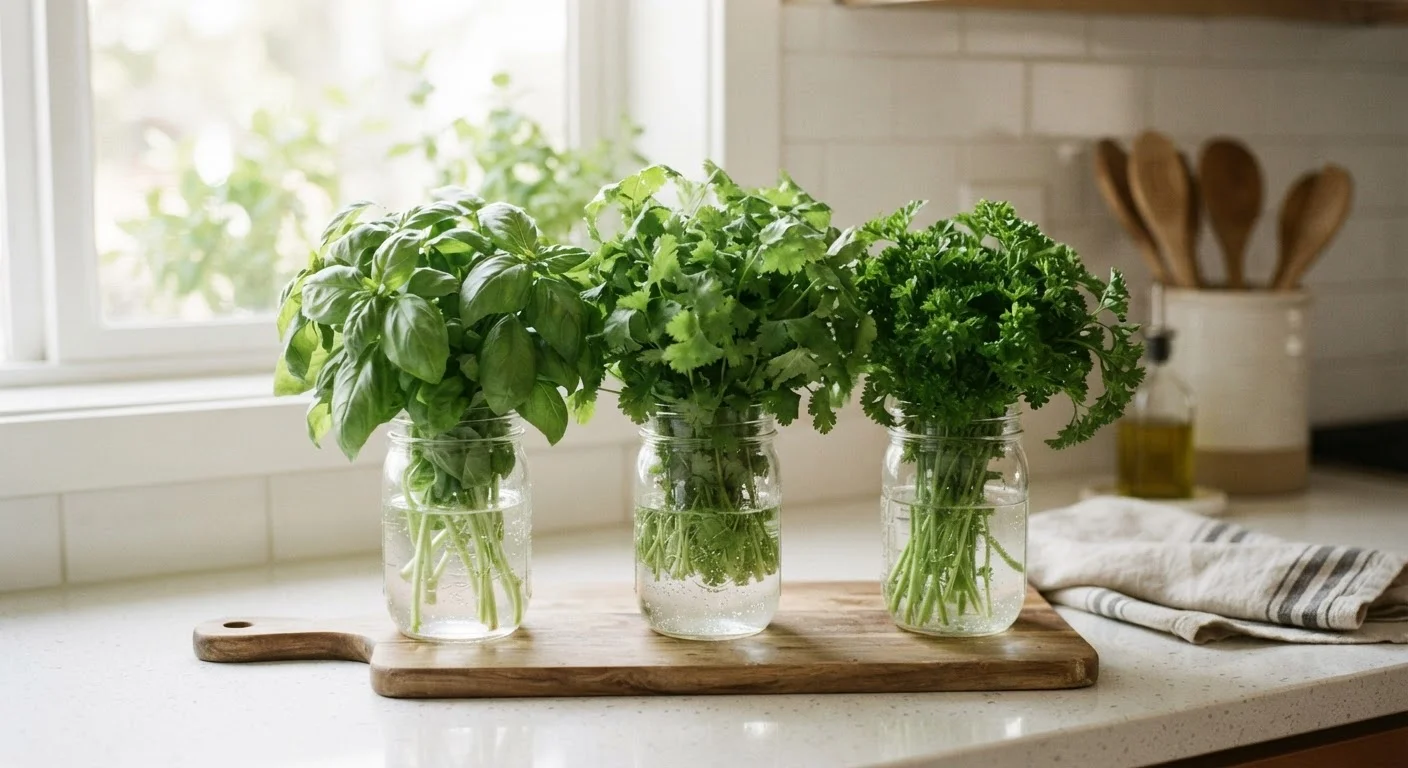
Store tender herbs upright in a jar of water, loosely covered with a plastic bag.
Cilantro, parsley, dill, and mint stay hydrated when their stems sit in water, much like fresh-cut flowers. A loose bag over the top creates a humid microenvironment that slows wilting without causing condensation damage.
Keep basil at room temperature - never in the refrigerator.
Basil is cold-sensitive: refrigerator temperatures cause the leaves to blacken and deteriorate rapidly. Room-temperature storage in a water jar, away from direct sunlight, mimics the plant's natural climate far better.
Wrap hardy herbs in a slightly damp paper towel and store in a sealed container in the fridge.
Rosemary, thyme, sage, and oregano are woodier and more resilient, but they still need light moisture to prevent drying out. A damp - not wet - paper towel keeps humidity controlled without promoting mold.
Trim stems at a slight angle just before storing.
A fresh angled cut increases the surface area available for water uptake, much like the technique used for bouquets. Even a small trim removes the sealed, dried-out end that blocks hydration.
Freeze herbs you won't use within the week rather than letting them go to waste.
Freezing halts enzymatic deterioration. While texture changes make frozen herbs unsuitable for garnishing, they work perfectly in cooked dishes - soups, sauces, braises, and stews.
Getting these methods right also connects to reducing waste - every wilted herb bundle you toss is money lost at the store. The pantry-first approach to grocery shopping pairs well with better ingredient storage habits.
Quick Wins You Can Do Right Now
You don't need special equipment or a complete kitchen overhaul. These small actions, done today, will extend the life of whatever herbs you currently have sitting in your fridge.
Label Your Herb Jars
If you regularly keep multiple herbs in similar jars, a small piece of masking tape with the herb name and storage date takes seconds but saves real confusion mid-week. It also helps you rotate older herbs to the front so they get used first - a small habit with an outsized effect on reducing waste.
If you're working on making kitchen prep less stressful overall, sharpening your knife skills is another high-return habit worth developing alongside smarter storage.