

Key Takeaways
Option A
Collision Coverage
The coverage that steps in when your car hits something.
Best for: Drivers who want protection when their vehicle is damaged in an accident, regardless of fault.
Option B
Comprehensive Coverage
The coverage that handles damage outside of collisions.
Best for: Drivers who want protection from theft, weather events, and other non-collision hazards.
If you have a car loan or lease
Both Collision and Comprehensive Coverage
Most lenders and leasing companies require both coverages for the duration of the loan or lease agreement.
If you drive in areas prone to severe weather or wildlife
Comprehensive Coverage
Hail storms, flooding, and deer strikes are common comprehensive claims - this coverage is designed for exactly those risks.
If you frequently drive in heavy traffic or urban areas
Collision Coverage
Higher accident exposure in dense traffic makes collision coverage particularly valuable for urban and commuter drivers.
If your vehicle has a low market value
Neither may be cost-effective
When a car's actual cash value approaches or falls below the combined cost of premiums and deductible, dropping both coverages is worth considering.
What Each Coverage Actually Does
Collision and comprehensive are both physical damage coverages - meaning they pay to repair or replace your own vehicle rather than covering damage you cause to others. But they apply to completely different types of incidents.
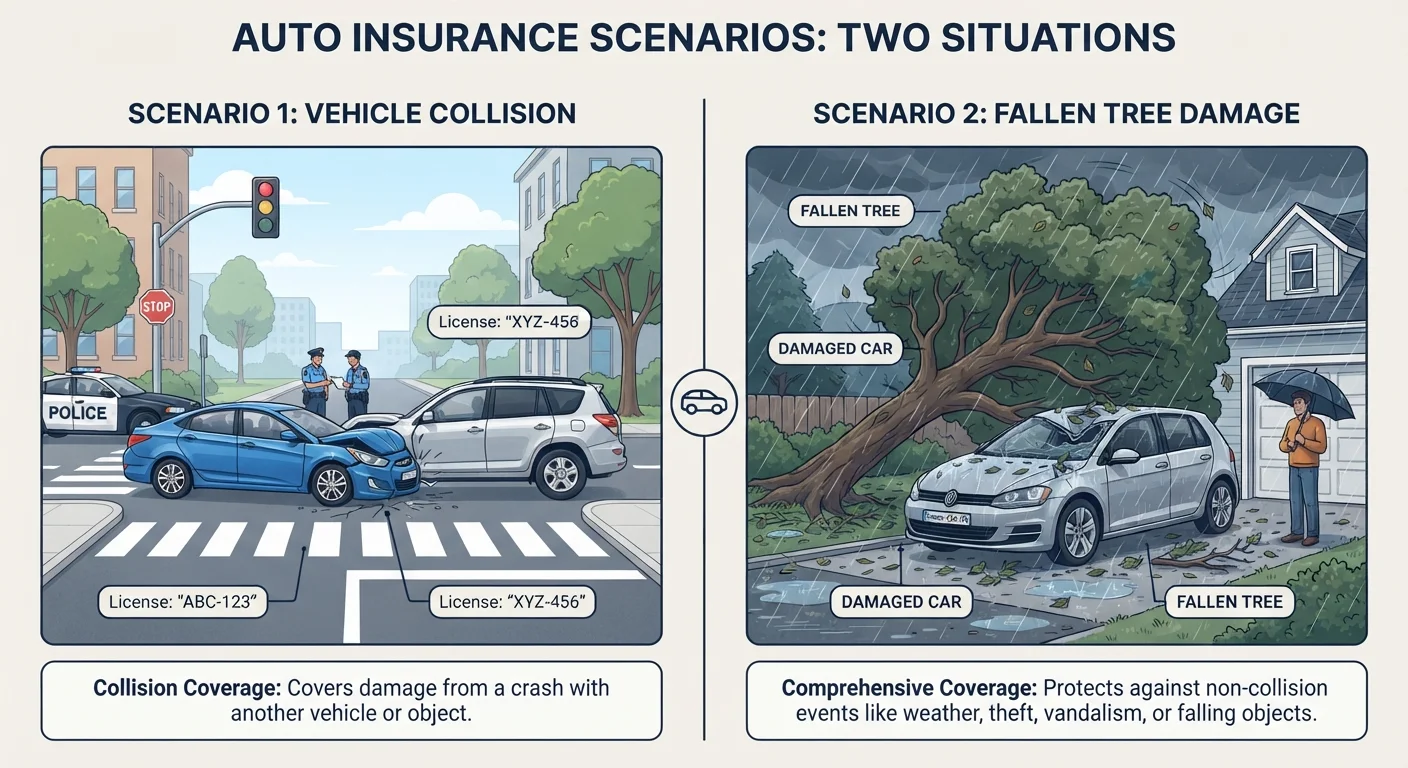
Collision coverage pays for damage to your car when it makes physical contact with another vehicle or object. That includes rear-ending another car, sideswiping a guardrail, hitting a pothole hard enough to damage the vehicle, or rolling over. Fault doesn't change whether coverage applies - even if you caused the accident, collision pays for repairs to your car (up to its actual cash value, minus your deductible).
Comprehensive coverage (sometimes called "other than collision") handles damage from events that aren't the result of a driving accident. Theft, vandalism, fire, flooding, hailstorms, falling objects, and animal strikes - hitting a deer, for example - all fall under comprehensive. If a tree branch crushes your roof during a storm, that's a comprehensive claim, not collision.
For a broader look at how these fit alongside liability protection, see what each core coverage type actually pays for.
| Criterion | Collision Coverage | Comprehensive Coverage |
|---|---|---|
| What triggers a claim | Accident with vehicle or object | Theft, weather, fire, animal, vandalism |
| Fault matters? | No - covers regardless of fault | No - non-collision events only |
| Deductible applies? | Yes | Yes (separate deductible) |
| State-mandated? | Generally no | Generally no |
| Lender/lessor required? | Usually yes | Usually yes |
| Pays for total loss? | Yes, up to actual cash value | Yes, up to actual cash value |
| Covers theft? | No | Yes |
| Covers flood damage? | No | Yes |
How Deductibles and Payouts Work
Both collision and comprehensive coverage come with a deductible - the amount you agree to pay out of pocket before your insurer covers the remaining repair cost. Common deductible amounts range from $250 to $1,500. Choosing a higher deductible typically lowers your premium, but it means more out-of-pocket expense after a claim.
If your car is totaled - meaning repair costs exceed its actual cash value - your insurer pays the vehicle's market value at the time of loss, minus your deductible. Neither collision nor comprehensive coverage pays more than the car is worth, which is why carrying both on an aging, low-value vehicle may not make financial sense.
~$290/yr
Average annual collision coverage cost
According to the National Association of Insurance Commissioners (NAIC), the average annual expenditure for collision coverage in the U.S. has hovered near this range in recent reporting periods.
~$168/yr
Average annual comprehensive coverage cost
NAIC data consistently shows comprehensive coverage costs less on average than collision, reflecting lower claim frequency for non-collision events.
It's worth noting that collision and comprehensive deductibles are separate. If your car is both stolen and damaged after recovery, the two types of damage could be handled by different coverages - each with its own deductible applied.
When Are These Coverages Required?
State laws typically do not require collision or comprehensive coverage - most states mandate only liability insurance, which covers damage you cause to others. However, if you financed your vehicle through a lender or are currently leasing it, the financing or leasing agreement almost certainly requires you to carry both collision and comprehensive until the loan is paid off or the lease ends.
Once you own your vehicle outright, the choice is yours. At that point, the decision comes down to your car's current market value, how much you'd pay in premiums over time, and how much financial risk you're comfortable absorbing if the car were damaged or stolen.
Understanding your full coverage picture is important before making any changes. The article full coverage vs. minimum coverage walks through the tradeoffs in more detail. And if you're thinking about switching insurers, switching policies without a coverage gap explains how to time it correctly.
Glass Damage: A Comprehensive Claim
Cracked or shattered windshields are one of the most common comprehensive claims. Many insurers offer a separate glass or zero-deductible glass endorsement, meaning windshield repair or replacement may not cost you anything out of pocket. Check your policy or ask your agent whether this option is available.
This article is for general informational purposes only and does not constitute personalized insurance advice. Coverage terms, deductibles, and requirements vary by insurer and state. Consult a licensed insurance agent or review your policy documents for guidance specific to your situation.