

Key Takeaways
Option A
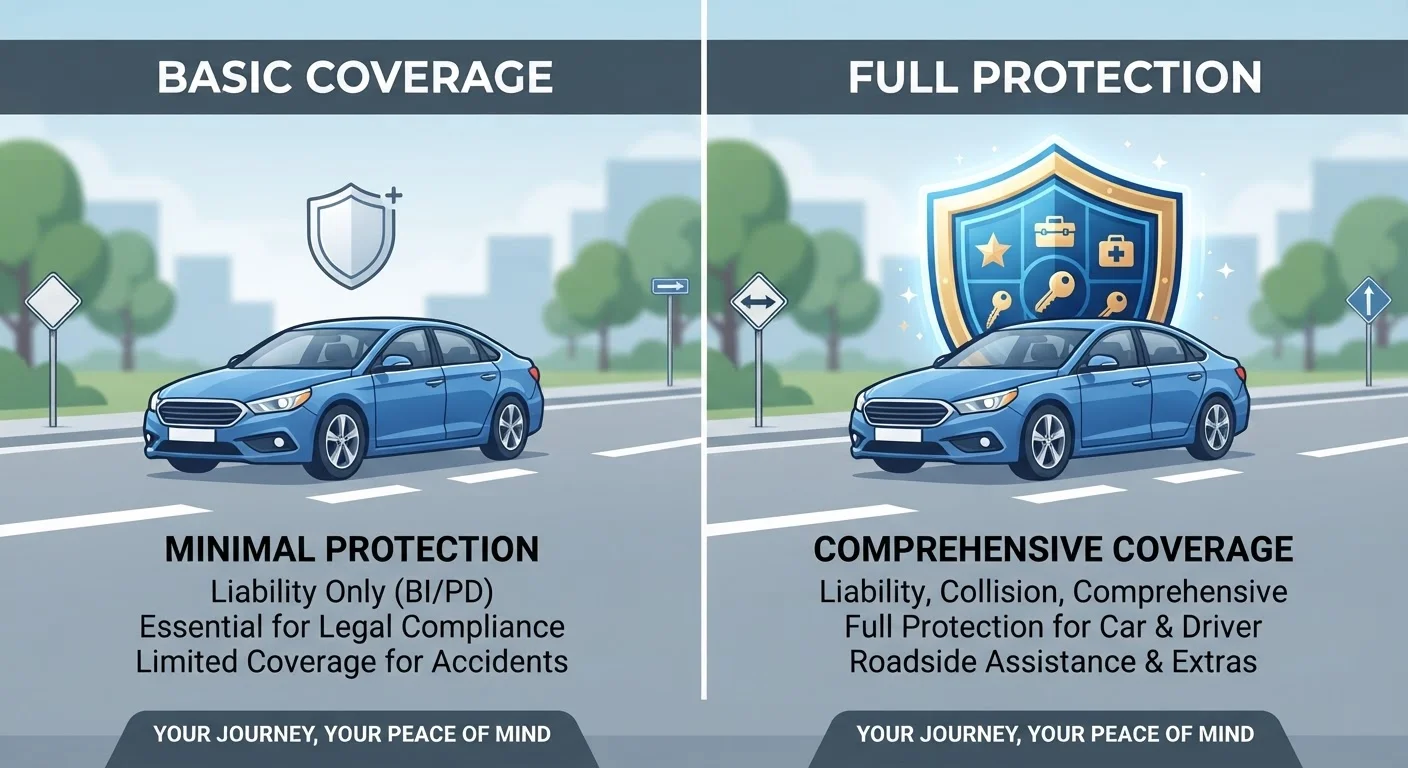
Minimum Coverage
The legally required baseline - and nothing more.
Best for: Drivers with older, low-value vehicles who can absorb out-of-pocket repair costs and want to reduce monthly premiums.
Option B
Full Coverage
Broader protection that goes well beyond state minimums.
Best for: Drivers with newer or financed vehicles who want financial protection against damage to their own car, theft, and weather events.
If you own an older vehicle outright and have savings to cover repairs
Minimum Coverage
When a car's market value is low, the added premium cost of full coverage may outweigh the potential payout from a claim.
If you're financing or leasing your vehicle
Full Coverage
Most lenders and lessors contractually require collision and comprehensive coverage for the duration of the loan or lease.
If you drive a newer or high-value vehicle you couldn't easily replace
Full Coverage
Full coverage protects your investment against collision damage, theft, and weather events that minimum policies ignore entirely.
If your budget is extremely tight and your car is paid off
Minimum Coverage
Staying insured at the legal minimum is always better than lapsing coverage entirely - just understand the gaps you're accepting.
What Each Type of Coverage Actually Includes
The phrase minimum coverage refers to the lowest level of auto insurance required by your state to legally operate a vehicle. Every state sets its own limits, but the core requirement is almost always liability insurance - which pays for injuries and property damage you cause to others in an at-fault accident. It does not pay to repair or replace your own vehicle under any circumstances. For a closer look at how state requirements vary, see our article on state minimum auto insurance requirements.
Full coverage is not an official insurance industry term - it's shorthand for a policy that layers collision and comprehensive coverage on top of a liability base. Collision coverage pays to repair or replace your car after an accident with another vehicle or object, regardless of fault. Comprehensive coverage handles losses from non-collision events: theft, vandalism, fire, hail, flooding, and animal strikes. Together, they protect the vehicle you're driving - something minimum coverage never does. For a detailed breakdown of how those two coverages differ, our guide on collision vs. comprehensive coverage explains exactly when each one applies.
| Criterion | Minimum Coverage | Full Coverage |
|---|---|---|
| Legal requirement | Yes - meets state minimums | No - exceeds minimums |
| Covers damage to others | Yes (liability only) | Yes (liability included) |
| Covers your own vehicle | No | Yes (collision + comprehensive) |
| Covers theft or weather damage | No | Yes (comprehensive) |
| Required for financed vehicles | No - lenders require more | Yes - satisfies lender requirements |
| Typical monthly premium | Lower | Higher |
| Out-of-pocket risk if your car is totaled | Full replacement cost | Deductible amount only |
The Hidden Gaps Worth Knowing About
Minimum coverage leaves obvious holes: if you're at fault in a crash and your car is totaled, you're paying out of pocket. But even full coverage has limits that catch drivers off guard. Standard policies - regardless of coverage level - often exclude rental car reimbursement, roadside assistance, and gap insurance (which covers the difference between what you owe on a loan and what the car is worth after depreciation).
Uninsured and underinsured motorist (UM/UIM) coverage is another commonly overlooked layer. In many states it's optional, yet roughly one in eight drivers on U.S. roads carries no insurance at all. If one of them hits you, minimum liability coverage offers you nothing for your own injuries or repairs. Learn more in our overview of uninsured and underinsured motorist coverage.
Before assuming a policy covers what you think it does, our article on gaps drivers discover only after filing a claim walks through the surprises that commonly surface at the worst possible time.
1 in 8
U.S. drivers with no auto insurance
According to the Insurance Research Council, an estimated 12-14% of motorists on American roads are uninsured at any given time.
~$700+
Average annual cost difference
Industry data consistently shows full coverage costs several hundred dollars more per year than minimum coverage, though the gap varies widely by driver profile and location.
How to Decide What Level Is Right for You
The decision comes down to three practical factors: your vehicle's current market value, your financial cushion, and whether you have a loan or lease.
A useful rule of thumb: if your annual full-coverage premium exceeds 10% of your car's current market value, the math starts to favor dropping down - but only if you have savings to self-insure against a total loss. If you can't comfortably pay to replace the vehicle out of pocket, full coverage remains the more financially sound position.
Keep in mind that insurance decisions interact with your broader budget. Resources on budgeting basics and building savings and managing debt can help you figure out where an insurance premium fits into your monthly picture. Whatever you decide, if you're considering switching policies, make sure you do it carefully - our guide on switching car insurance without a coverage gap explains how to avoid leaving yourself unprotected in the transition.
This article provides general educational information about auto insurance concepts and is not personalized insurance, financial, or legal advice. Coverage terms, costs, and requirements vary by state and insurer. Always read your actual policy documents and consult a licensed insurance professional before making coverage decisions.
"Full Coverage" Has No Standard Definition
No official insurance standard defines what "full coverage" must include. One insurer's full-coverage policy may differ meaningfully from another's. Always ask specifically what collision limits, comprehensive deductibles, and optional endorsements are included - and get it in writing. Never assume a policy covers a situation just because it carries a broad label.