

Key Takeaways
Why Tourist-Area Restaurants Cost More and Deliver Less
Restaurants clustered around major attractions, hotel lobbies, and popular waterfronts operate on a captive-audience model. Foot traffic is guaranteed, so there's little incentive to compete on quality or price. Menus are simplified for speed, portions are calibrated for turnover, and markups can be substantial. This isn't a conspiracy - it's basic economics - but recognizing it lets you opt out.
The good news: nearly every destination has a parallel food ecosystem one or two blocks away, or in a neighborhood locals actually frequent. Finding it takes minimal effort and pays off at every meal. As part of a broader approach to spending less without seeing less, rethinking where you eat is one of the highest-leverage changes you can make to a travel budget.
~40%
Average food budget savings mixing self-catered meals with dining out
Travel budget analysts commonly estimate that replacing two out of three daily restaurant meals with market or grocery options reduces overall food spend by roughly 40% per trip day.
3x
Price premium common at tourist-area restaurants vs. local spots
Consumer travel research has noted that restaurants adjacent to high-traffic tourist attractions frequently charge two to three times more than comparable local establishments for similar dishes.
Best Practices for Eating Well Without Overspending
The following practices apply whether you're traveling domestically or abroad, in a major city or a small town. They don't require advance booking or special tools - just a bit of intention before and during your trip.
Shop at local grocery stores or supermarkets for at least one meal per day.
Grocery stores reveal what a place actually eats - local cheeses, regional breads, prepared foods from the deli counter - at everyday prices. A well-assembled meal from a supermarket can be genuinely excellent and costs a fraction of restaurant dining.
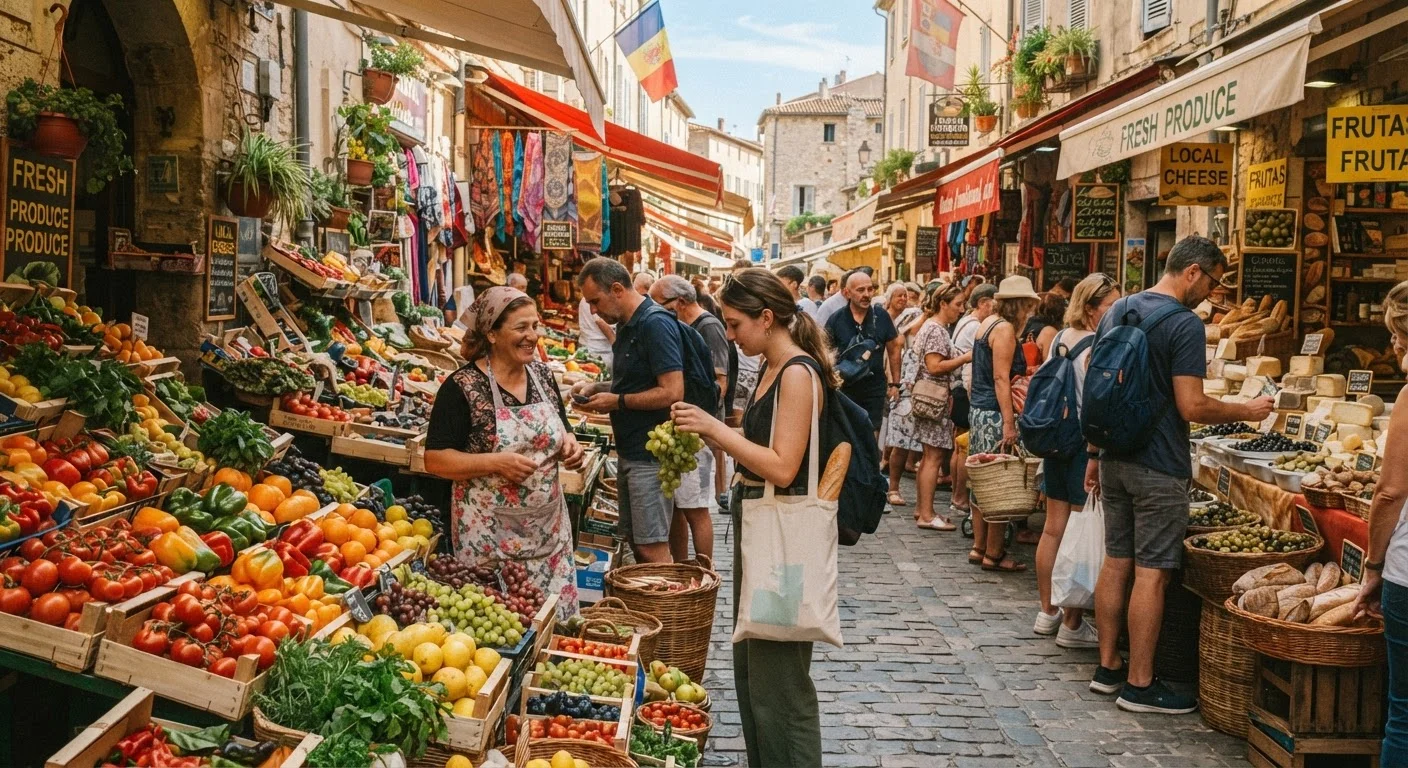
Seek out covered markets, food halls, and farmers markets before choosing a restaurant.
These venues concentrate local vendors, seasonal ingredients, and prepared foods in one place. Competition among stalls tends to keep quality high and prices honest. They're also far more interesting than a generic dining room.
Ask hotel front desk staff, Airbnb hosts, or local contacts where they eat lunch on a weekday.
The weekday lunch question is specific enough to get a genuine answer. Locals don't go to tourist restaurants on their lunch breaks. The spots they recommend are priced for real budgets and rely on repeat customers - a strong signal of quality.
Eat your largest meal at lunch instead of dinner.
Many restaurants offer lunch menus at significantly lower price points than dinner, sometimes with identical dishes or portions. Shifting your main meal earlier saves money and often means shorter waits and a more relaxed atmosphere.
Use mapping and review apps filtered for neighborhoods away from the main tourist district.
Most review platforms let you search by neighborhood or map area. Dragging the search window away from the tourist core reveals restaurants serving local clientele, which typically translates to lower prices and higher authenticity.
Pack portable snacks from a grocery store to avoid expensive impulse purchases at attractions.
Hunger at a museum, theme park, or scenic overlook leads directly to overpriced, low-quality food. A small bag of fruit, nuts, or a sandwich from a nearby store eliminates that pressure entirely.
Quick Moves You Can Make Right Now
You don't need a fully planned food strategy to eat better on your next trip. A few immediate habits make a meaningful difference from day one.
Combining these moves with a relaxed itinerary pays double dividends - you eat better and feel less rushed. See how to build a realistic daily itinerary that leaves room for spontaneous food discoveries.
Making It Part of Your Broader Travel Budget
Food spending is one of the most variable line items in any travel budget, and also one of the most controllable. Travelers who mix self-catered breakfasts and lunches with one sit-down dinner often spend 40-50% less on food per day than those who eat all meals at restaurants - without feeling like they're cutting corners.
Set a Daily Food Budget Before You Depart
Decide in advance how much you want to spend on food each day, then work backward to plan how many meals you'll prepare versus buy. Even a loose target - say, $30 per person per day - creates useful guardrails. Tracking actual spending for the first two days usually reveals where money is leaking and makes the rest of the trip easier to manage.
If you're building out a full trip cost picture, the complete budget travel guide walks through every stage from planning to coming home, including how to set realistic daily spending targets. And if you want destinations where the value equation is already favorable, domestic destinations that deliver big experiences on smaller budgets is a practical starting point.
“The people who eat best on the road are rarely the ones with the biggest budgets. They're the ones who pay attention to where the locals are eating.”
— Travel Editorial Team, Editorial perspective based on travel coverage and reader-reported experiences
When dining out is a deliberate choice rather than a default, every restaurant meal becomes more enjoyable - and more affordable. For guidance on making nutritious choices when you do sit down in a restaurant, reading a menu nutritionally offers a straightforward framework.